Staying warm in a pop-up camper during brisk nights is a top priority for travelers. This guide highlights five reliable heater solutions and related gear that perform well in small, enclosed spaces typical of pop-up campers. Each option balances safety, efficiency, and portability while addressing the unique needs of RV living. The list below includes compact radiant heaters, portable propane units, tank warming pads, and compact engine or bilge heaters designed for occupied campers. Compare features, heat output, and intended usage to choose the best fit for your setup.
| Product | Brand | Type |
|---|---|---|
| 9,000 BTU Portable Buddy Radiant Heater | Mr. Heater | Portable Radiant |
| Mr. Heater F215100 MH4B Little Buddy | Mr. Heater | Indoor Safe Propane Heater |
| RV Holding Tank Heater Pad, 3PCS | JIANBENKJ | Water Tank Heater Pad |
| Boat Engine Compartment Heater | 400w | Xtreme Heaters | Engine Compartment Heater |
| FOGATTI RV Furnace 35,000 BTU | FOGATTI | Complete RV Furnace |
9,000 BTU Portable Buddy Radiant Heater

The 9,000 BTU Portable Buddy Radiant Heater from Mr. Heater is designed for versatility in outdoor or indoor use with careful ventilation. It delivers 4,000 or 9,000 BTU per hour of radiant heat, offering quick warmth for small to mid-sized spaces such as a pop-up camper living area. The unit is engineered for safe operation in environments that require dependable heat sources, and it is widely used in camping scenarios where a compact, portable heater is preferred. When used properly with adequate airflow and CO detectors, it can be a reliable nighttime heat option for cold-weather excursions.
Key considerations include the requirement for proper clearance around the heater, ensuring the propane supply is secure, and adhering to safety guidelines for indoor propane use. Users should monitor for any emissions and verify that the space is adequately ventilated. The heater heats up to roughly 225 square feet in radiant mode, which makes it a solid choice for small campers that need a fast warm-up without consuming excessive space or power. This model pairs well with other compact camping gear for a balanced winter setup.
Mr. Heater F215100 MH4B Little Buddy
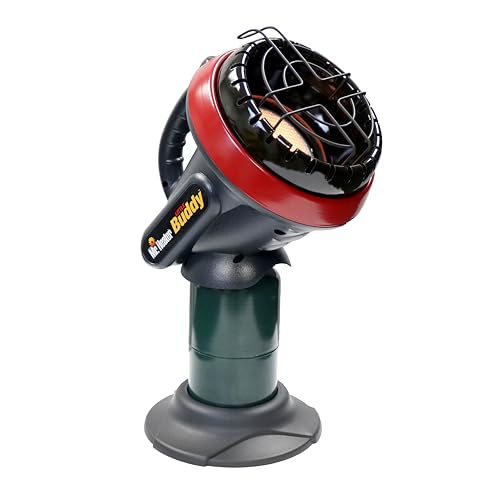
The Little Buddy 3,800-BTU propane heater is a compact, indoor-safe option with ODS, tip-over protection, and cross-threading safeguards. It’s well suited for small camper spaces where a gentle, steady heat is preferred. The heater provides a 45-degree heating angle and is efficient in enclosed areas, with a typical runtime of several hours on a 1-pound cylinder. The built-in safety features, including automatic low oxygen shut-off (ODS) and tip-over protection, help manage risk in portable camping environments. Elevation performance is noted, ensuring warmth even at higher altitudes up to about 7,000 feet.
For pop-up campers, consider this unit when you need a compact heat source that’s easy to store and quick to deploy. Its portability is a strong point for seasonal setups or occasional use. Always use in a well-ventilated area, pair with a working CO detector, and ensure proper cylinder handling. The Little Buddy remains a popular choice for campers who prioritize light weight and straightforward operation without sacrificing safety.
RV Holding Tank Heater Pad

While not a heater in the traditional sense, the RV Holding Tank Heater Pad helps maintain reservoir temperatures in cold weather, reducing the risk of freezing in pop-up campers. The 12″ x 18″ pads are designed for water tanks up to 50 gallons and feature an automatic thermostat that cycles on at 45°F and off at 68°F. This energy-saving control helps keep fresh, grey, and black water tanks from freezing, which is common in cold campsites. It complements space heaters by addressing the broader winterization needs of an RV.
When evaluating options for cold-weather use, pairing heater pads with portable heat sources can extend the comfort of your space. The built-in thermostat offers convenience, and the product’s wide compatibility with various tanks makes it easy to integrate into most pop-up configurations. Always follow manufacturer instructions to avoid overheating or electrical concerns in damp environments.
Boat Engine Compartment Heater

The 400W Boat Engine Compartment Heater by Xtreme Heaters is designed for use in boat engines, cabins, or camper underbellies, offering a compact solution for maintaining engine compartments and other enclosed spaces. This self-regulating PTC element turns on at 40°F and off at 55°F, providing steady, low-power heating to prevent freezing and protect sensitive components. The unit’s anodized housing, sealed electronics, and waterproof fan contribute to durability in harsh environments. It can be mounted in various orientations, including upside down, which is practical for tight camper installations.
For campers facing cold nights, this heater provides a steady baseline warmth that helps protect machinery, pipes, and confined spaces. It’s best used in conjunction with a larger, primary heat source to achieve overall comfort. Safety considerations include proper wiring, secure mounting, and ensuring adequate clearance around the heater to avoid heat-related damage to nearby materials.
FOGATTI RV Furnace 35,000 BTU
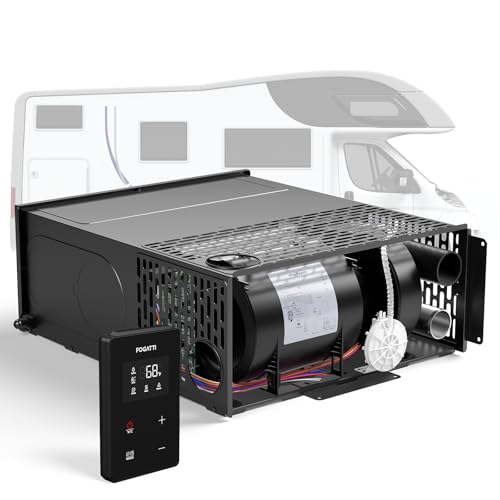
The FOGATTI 35,000 BTU RV Furnace is a complete unit that includes motor, chamber, housing, and thermostat. This high-capacity system is designed for rapid heating in larger campers, motorhomes, or travel trailers, delivering up to 35,000 BTU with multiple power levels down to 17,000 BTU. A smart control suite includes quick heat, standard, and sleep modes along with fault monitoring for troubleshooting. This option suits users seeking a full RV heating solution with robust performance and integrated control, reducing the need for multiple components.
Consider installation requirements, ducting needs, and electrical or propane supply constraints when evaluating this option. A complete furnace provides strong warmth, but it also entails more complex setup and ongoing maintenance. For pop-up campers, ensure the unit’s footprint fits your chassis and that you have sufficient space for safe venting and service access. Safety devices and regular inspections are essential for long-term reliability in mobile environments.
Buying Guide: Key Considerations for Pop Up Camper Heaters
- Space and heat needs: Pop-up campers are compact; match BTU output to the size of your living area and how well you ventilate the space.
- Fuel type and availability: Propane is common for mobile campers, but consider availability, storage, and stability in cold weather. Electric options require a suitable power source.
- Ventilation and safety: Ensure CO detectors are installed and used in any occupied space with propane or fuel-burning devices. Follow manufacturer clearance and installation guidelines.
- Portability vs. capacity: Portable heaters offer flexibility and lighter weight, while a full RV furnace provides consistent warmth for larger campers but requires more space and installation work.
- Maintenance and service: Look for heaters with robust safety features (ODS, tip-over protection, fault indicators) and easy maintenance access.
- Tank and plumbing protection: In freezing conditions, protect water tanks and lines. Accessories like heater pads can help prevent freezing and support overall comfort.
- Altitude performance: Some units are designed to function well at higher elevations; verify performance specs if you camp in mountains.
- Energy efficiency: Prioritize models with adjustable heat settings and efficient fuel use to extend runtime and reduce consumption.
- Installation considerations: For permanent or semi-permanent installations, check venting requirements, mounting options, and electrical/gas connections.
These options span portable radiants, indoor-safe propane units, tank warming aids, and compact engine or furnace systems. When choosing, balance heat output, space, safety features, and the practicality of installation for your pop-up camper. A layered approach—primary heat plus supplemental solutions like tank pads—often yields the best overall comfort in diverse climates.