Looking for a reliable portable AC extension cord to power large appliances or tools without clutter and heat risk? This guide highlights five top options, each suited to different needs such as length, gauge, and outdoor use. Choose a cord based on wattage, distance, and environmental conditions to ensure safety and performance. The selections below are ideal for homeowners coordinating multiple appliances, DIY enthusiasts, and professionals needing extra reach with strong insulation and grounded protection.
| Product | Length | Gauge | Best For | Notes |
|---|---|---|---|---|
| POWTECH Heavy Duty 6 FT Air Conditioner Extension Cord | 6 ft | 14 gauge | Mid-range appliances, compact spaces | UL Listed; grounded; angled plug |
| HUANCHAIN 12 GA Outdoor 25 ft Extension Cord | 25 ft | 12 gauge | Outdoor use, higher wattage loads | Lighted end; ETL listed; weatherproof |
| POWTECH 3 ft Heavy Duty Extension Cord | 3 ft | 14 gauge | Tight spaces, close-in appliances | Angle plug; compact short length |
| POWTECH 9 ft Heavy Duty Extension Cord | 9 ft | 14 gauge | Medium distances; versatile use | UL Listed; grounded; angled plug |
| DDON USA Appliance Extension Cord – 20 ft | 20 ft | 14 gauge | Large appliances, home office setups | Flat-end design; indoor use |
Note: Each product below is presented with why it’s best for certain buyers, plus a practical caution to help you avoid common pitfalls like heat buildup or space constraints.
POWTECH Heavy Duty 6 FT Extension Cord
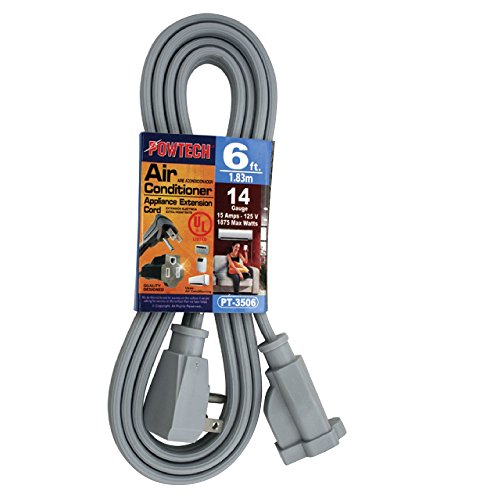
Reference features: Air Conditioner and Major Appliance Extension Cord UL Listed. 14 gauge, 125V, 15 Amps, up to 1875 watts. Grounded 3-prong design, heavy-duty vinyl insulation. Angled plug allows flush wall fit in tight spaces. Best for mid-size appliances and places where wall clearance is limited. Caution: Higher wattage loads should remain within the 1875W rating to avoid overheating.
HUANCHAIN 25 ft Outdoor Extension Cord with Lighted End

Reference features: 12 AWG, 25 ft, ETL/cETL listed. Lighted end for power confirmation; heavier gauge supports higher wattage and safer operation outdoors. Flat, thicker male plug improves durability and reduces tripping risk. Best for outdoor use, weather resistance, and long runs. Caution: Ensure the circuit can handle 1875W at the distance; longer cords can reduce voltage under load.
POWTECH 3 ft Heavy Duty Extension Cord

Reference features: UL Listed; 14 gauge; 125V; 15A; 1875W. Angled plug design to stay flush against walls in tight spaces. Best for shorter distances where clutter is an issue and load is substantial but within rating. Caution: Very short length may require extra repositioning for larger appliances.
POWTECH 9 ft Heavy Duty Extension Cord

Reference features: UL Listed; 14 gauge; 125V; 15A; 1875W. Grounded 3-prong with an angled plug for space-saving setup. Best for medium-length runs to power large appliances or tools with reliable safety. Caution: Avoid using with cords exceeding 15A on circuits already near capacity.
DDON USA Appliance Extension Cord – 20 ft

Reference features: 20 ft length, 14 gauge, 125V, 15A; flat-end 3-prong design for flush-to-wall use. Indoor-friendly design intended for air conditioners, refrigerators, microwaves, and other major appliances. Best for maximizing floor space in cramped rooms. Caution: Long runs in outdoor environments should use a weather-rated cord to avoid damage.
Buying Guide: Key Considerations For Portable AC Extension Cords
What length do you actually need?
Choose a length that avoids extra slack while providing enough reach. Longer cords add resistance and potential voltage drop, especially with high-wattage appliances. For fixed setups near outlets, shorter cords reduce risk.
Which gauge is appropriate?
16 AWG cords carry less load and are better for light-duty devices. For major appliances like air conditioners or large tools, 14 AWG or thicker is safer and more reliable, reducing heat buildup over time.
Indoor vs outdoor use
Outdoor cords need insulation rated for weather, UV exposure, and temperature variations. ETL or cETL listings indicate compliance with safety standards for exterior use. Indoor cords can be simpler but still require a grounded design for high-power loads.
Plug design and space constraints
Flat plugs or angled plugs help the cord stay flush against walls, saving space behind furniture. If outlets are blocked by fixtures, choose a cord with a low-profile plug.
Safety and ratings
Adhere to the labeled wattage and amperage (1875W at 15A for these products). If multiple high-wattage devices run simultaneously, consider a dedicated outlet or a heavier-gauge extension cord to prevent overheating.
Durability and insulation
Heavy-duty vinyl insulation and thicker jackets improve longevity in busy workspaces. Look for cords with robust insulation and flexible construction to resist bending and pulling.
Usage scenarios comparison
- Best for tight spaces: 3 ft or flat-end designs to minimize wall intrusion.
- Better for long outdoor runs: 25 ft or longer, weatherproof and ETL-listed.
- Choose this if you need both power and visibility: bright color and lighted-end options reduce trip hazards.
- Avoid this if your outlet distance requires more power than the cord can safely carry.
FAQ
Can I use any extension cord with a portable air conditioner?
Only if the cord meets or exceeds the required current rating and is appropriate for the environment (indoor vs outdoor). High-wattage loads should use 14 AWG or thicker cords.
Is a longer cord always better?
No. Longer cords add voltage drop and heat. Use the shortest cord that meets reach requirements.
What does ETL listed mean?
ETL listing indicates compliance with safety standards in the United States. Look for ETL or cETL labeling on outdoor cords for reliability.
Should I use a ground-fault circuit interrupter (GFCI) with extension cords?
For outdoor use or damp environments, a GFCI outlet or GFCI-protected extension cord is recommended to reduce shock risk.