Propane forced air heaters are a reliable choice for warming workspaces, garages, and construction sites. This guide highlights five top options, clarifying who each heater best serves, and why they’re worth considering. Ideal buyers include contractors needing portable heat, small business owners with partial-open spaces, and DIY enthusiasts tackling large indoor projects. The summary table below compares key aspects to help you decide at a glance.
| Product | Best For | Approximate Area | BTU Range |
|---|---|---|---|
| Mr. Heater 60,000 BTU Quiet Burner | Quiet operation lovers | Small to medium spaces | 30,000–60,000 |
| Flame King 60,000 BTU | Outdoor and well-ventilated areas | Up to 1,500 sq ft | 60,000 |
| Mr. Heater 125,000 BTU | Large spaces, jobsites | Large workshops | 125,000 |
| Remington 60,000 BTU | Portable, versatile | Up to 1,500 sq ft | 60,000 |
| Habitio 125,000 BTU | Large areas, CSA-certified | Large spaces | 75,000–125,000 |
Mr. Heater 60,000 BTU Quiet Burner Technology Heater

The Mr. Heater unit uses Quiet Burner Technology to reduce noise by up to half compared with standard propane heaters. It offers a variable output from 30,000 to 60,000 BTU and can run up to 14 hours on a 20 lb tank at the low setting. Best for electricians, plumbers, and shop spaces where noise control matters, this model emphasizes steadier operation and fuel efficiency. A limitation is that higher heat output consumes fuel faster, so plan fuel availability for longer shifts.
Flame King 60,000 BTU Portable Propane Heater

Flame King’s model is designed for outdoor use and well-ventilated spaces, including patios, garages, and job sites up to about 1,500 sq ft. It includes safety features like a built-in shutoff, fire detection, and tilt protection. This heater is best for users prioritizing outdoor warmth with steady airflow and straightforward operation. Note that indoor use should follow ventilation requirements to prevent gas buildup in enclosed areas.
Mr. Heater 125,000 BTU Forced Air Heater

This model is geared toward larger spaces and job sites, delivering up to 125,000 BTU and including a 10 ft hose and regulator for flexible fuel connection. It’s best for heavy-duty warming needs where space is open and heat needs to reach across wider areas. Better for continuous operation in sizable workshops, but users should be mindful of higher fuel consumption in extended use and ensure adequate ventilation.
Anrain 150,000 BTU Forced Air Heater

The Anrain unit delivers robust heating power up to 150,000 BTU, with adjustable levels and a long 11 ft hose for easy setup. It’s designed for larger garages, workshops, or outdoor job sites, with multiple safety protections and CSA certification noted. Choose this if you need broad coverage and strong heat delivery, but prepare for greater fuel use and a larger, heavier unit.
Remington LP Forced Air Heater, 60,000 BTU

Remington’s 60,000 BTU heater is a portable option designed to heat spaces up to 1,500 sq ft. It features heavy-duty steel construction and a 11-pound weight, making it easy to relocate. It provides variable heat settings and an adjustable height. A noted limitation is that performance depends on environmental conditions; in very cold or drafty spaces, warmer temperatures may require higher settings and more fuel.
DEWALT 68,000 BTU Forced Air Propane Heater

DEWALT’s model combines high heat output with a dependable brand name. It is suited for large workspaces that require rapid warming, offering 68,000 BTU for substantial heat distribution. Best for professionals already invested in DEWALT tools, but users should verify compatibility with fuel supply and ventilation in their specific workspace to avoid overfilling or overheating risks.
Habitio 125,000 BTU Forced Air Heater
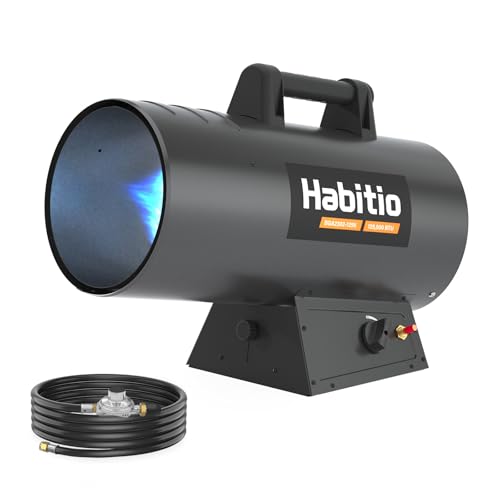
Habitio’s 125,000 BTU unit is designed for large-scale settings like job sites or big garages. It includes a long hose and regulator, and notes a CSA certification. It’s best for users who need substantial warmth over wide areas and prefer a unit that can sustain heat output over extended periods. A potential drawback is higher noise and fuel consumption at maximum output, which should be planned for in schedule and fuel logistics.
Buying Guide: Key Purchase Considerations
What space size will you heat? Choose BTU output based on room size and insulation. For example, 60,000 BTU units cover smaller workshops or garages, while 125,000 BTU models suit larger spaces. Ventilation matters; use outdoors or well-ventilated areas when operating higher BTU units.
Is portability important? If you move between sites, favor lighter weights with integrated carrying options and shorter hoses. If you’re staying put, bulkier units with longer hoses can reduce trips to refuel often.
What safety features are essential? Look for automatic tip-over shutoff, overheat protection, flame-out safety, and CSA or equivalent certification. These features reduce risk on job sites and during extended operation.
Fuel and accessories: Ensure you have a compatible propane supply and the appropriate regulator/hose. Some models include hoses and regulators; others require separate purchase. Consider tank size and run-time estimates for your typical shifts.
Noise and comfort: Quiet burner technology lowers ambient noise, which can matter in open-plan spaces or shared work environments. If noise is a concern, compare decibel levels and operating modes between models.
Frequently Asked Questions
- What size heater do I need for a 1,500 sq ft space?
– A heater around 60,000 BTU is commonly suitable for well-insulated spaces up to about 1,500 sq ft, while larger spaces may require 100,000 BTU or more depending on insulation and climate. - Is propane safe for indoor use?
– Propane heaters should be used in well-ventilated areas or outdoors. Indoor use without adequate ventilation can pose carbon monoxide and fuel-safety risks. - Which heater is best for a noisy worksite?
– Units with Quiet Burner Technology or reduced-noise features are preferable for noisy environments where discretion is important. - Do these heaters require electricity?
– Some models rely on electronic ignition and may require electricity for startup and safety systems; others are battery-free but may have ignition or control components that need power. - What safety certifications should I look for?
– CSA certification or equivalent safety certifications indicate adherence to recognized safety standards for propane heaters. - Can I run these heaters for long periods?
– Yes, but monitor fuel supply, ventilation, and heat output. Select a model with adjustable settings and a regulator designed for long-term operation.