Answering the need for precise, affordable refrigerant leak detection, this guide highlights reliable R134a leak detector kits and how to choose the right one. Ideal buyers include automotive technicians, DIY enthusiasts, and HVAC professionals seeking fast, audible or visual alerts for halogenated refrigerants. The following picks emphasize different detection technologies, sensitivities, and usability. A quick buyer table is provided below to compare core specs at a glance.
| Product | Best For | Key Benefit |
|---|---|---|
| Elitech Freon Leak Detector WJL-6000S | Professional auto AC checks | Broad halogen gas compatibility with adjustable sensitivity |
| TOPTES RT-108 | High-precision spot leaks | Multi-level sensitivity with real-time color display |
| Tellegloww Wjl-6000uv | Easy dye-based testing | UV dye compatibility with quick-use setup |
| Elitech ILD-200 | Infrared detection focus | Infrared sensor for lower interference and faster response |
| Elitech CLD-100 | Compact, versatile intake | Flexible probe, fast triggering on halogenated gases |
Elitech Freon Leak Detector WJL-6000S

This detector targets all halogenated gases, including R22, R134A, R404A, R410A, and R1234YF. It features seven adjustable sensitivity levels, with maximum sensitivity up to 0.21 oz/yr, enabling self-checks on auto AC and other systems. It provides audible and visual gas indicators and dual battery indicators. Best for technicians who need broad refrigerant coverage and tunable sensitivity.
Best for: Professional auto HVAC work and advanced diagnostics where multiple refrigerants are encountered. Caution: Sensitivity tuning required to minimize false alarms in environments with ambient halogenated gases.
TOPTES RT-108 Refrigerant Leak Detector

The RT-108 uses a halogen ionization sensor designed for CFCs, HCFCs, and HFCs with fast response and low environmental interference. It offers high, medium, and low sensitivity modes, plus audible, visual, and vibration alarms, which can be independently enabled. A dual-display option shows real-time Freon levels (color-coded) and a 1-minute trend. This model is ideal for field technicians who need fast, reliable location of leaks with clear alerts.
Best for: Quick pinpointing in busy shop environments; workers who want multi-sensitivity and a color-coded readout. Caution: May require calibration to maintain consistent sensitivity across days of use.
Tellegloww Automotive AC Leak Detector Kit

This kit combines a leak detector with UV dye testing and protective glasses. It uses dye/oil injection to reveal leaks when exposed to UV light, and the included glasses help filter out extraneous light for clearer fluorescence. It is compatible with R22, R134A, R404A, R410A, and other halogenated refrigerants. Best for: DIYers or techs who prefer dye-based confirmation and UV visualization. Limitation: UV dye not included if kit is purchased separately; user must obtain compatible dye.
Best for: Hobbyists or small shops performing dye-based leak checks and UV visualization. Caution: Requires correct dye handling and a UV flashlight setup to confirm leaks.
Elitech HVAC Refrigerant Leak Detector ILD-200
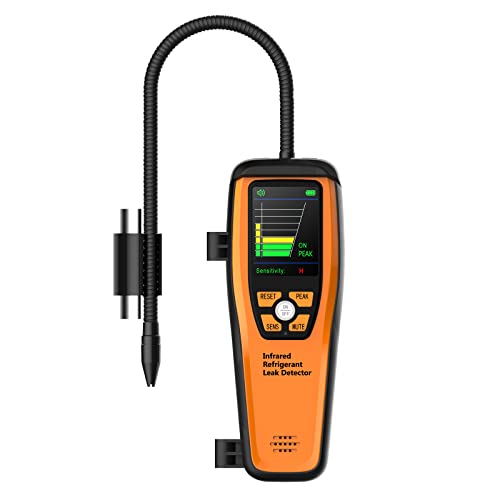
The ILD-200 uses infrared sensing for robust performance against interference and faster response. It detects a wide range of halogenated refrigerants with sensitivity up to 0.14 oz/yr. Infrared technology generally offers better stability in dusty or variable environments than heated diode sensors. Best for: Shops seeking long sensor life and consistent results across multiple refrigerants. Caution: Infrared sensors can be more expensive to replace if damaged.
Best for: Professional use where long-term reliability and broad halogenated gas detection matter. Choose this if infrared stability and faster response are priorities over initial cost.
Elitech CLD-100 Freon Detector

The CLD-100 is an upgraded WJL-6000-class detector featuring a traditional corona sensor with a fast trigger on R11, R22, R134A, R404A, R410A, and all halogenated refrigerants. It includes six adjustable sensitivity settings (up to 0.21 oz/yr) and a flexible probe around 8.26 inches for reaching tight spaces. Best for: Technicians who need a flexible probe and reliable halogenated gas detection with rapid triggering. Caution: Corona sensors can be more prone to environmental drift without regular calibration.
Buying Guide: Key Considerations For Choosing An R134a Leak Detector Kit
What detection technology matters?
Two common technologies are used: corona/ionization sensors and infrared sensors. Corona detectors are typically quicker to respond and more affordable but may drift with ambient conditions. Infrared sensors offer higher anti-interference performance and longer life, often with more consistent results in challenging environments.
How sensitive should it be?
Sensitivity is critical for finding small leaks. Look for models with adjustable sensitivity levels and a clear maximum sensitivity specification. Higher sensitivity helps locate tiny drips but may increase false alarms if not managed properly.
Which refrigerants are supported?
Choose a detector that covers R134a and other common refrigerants like R22, R410A, R404A, and R1234YF. If you work with blends or future refrigerants, verify compatibility.
What alerts and indicators are needed?
Audible alarms, visual LEDs, and optional vibration alerts improve leak detection in noisy environments. A color display or trend graph can help track leak progression over time.
Is probe length and accessibility important?
A flexible probe and long reach help access tight spaces in engines, dashboards, or condensers. Look for probes around 6–8 inches or longer and consider a kit with a detachable probe for versatility.
How important is durability and ease of use?
Durability matters for field work. An ergonomic body, simple calibration, and clear user instructions reduce setup time and operator fatigue. UV dye kits may require additional accessories, such as UV glasses or dye cartridges.
What about maintenance and lifespan?
Infrared sensors generally offer long service life, while corona sensors can require periodic calibration. Check maintenance intervals and warranty terms. A sturdy, replaceable battery or rechargeable option adds convenience for mobile use.
Frequently Asked Questions
- What is the best detector for auto repair shops? Detectors with broad halogenated gas coverage, adjustable sensitivity, and clear alerts—like WJL-6000S or RT-108—are well-suited for professional auto HVAC work.
- Can I use UV dye kits for leak detection? Yes, UV dye kits with UV glasses provide a visible indicator of leaks when exposed to UV light. Ensure you have the correct dye and safety gear.
- Do infrared detectors require calibration? Infrared detectors typically offer stable performance but may require periodic calibration or maintenance per manufacturer guidance to maintain accuracy.
- Is a longer probe better? A longer, flexible probe improves reach in hard-to-access areas, enabling safer and more thorough inspections.
- Should I prioritize speed or accuracy? Both are important. Infrared-based detectors often balance speed with accuracy, while high-sensitivity corona detectors excel at quickly locating leaks in accessible areas.
- Are these detectors suitable for R1234YF? Most listed models detect R1234YF and other halogenated refrigerants; verify each product’s full gas list for compatibility.