Immediate hot water is the core goal for many homes. This guide highlights top recirculating tankless models designed to minimize wait time and maximize efficiency. The listed options are suitable for mid-to-large homes seeking on-demand hot water with built-in recirculation. Best for: families with multiple bathrooms, homes undergoing tank-to-tankless upgrades, or users who value quick hot water and energy savings.
| Product | Flow Range | Fuel Type | Best For |
|---|---|---|---|
| Rinnai RXP199iN | Up to 11.1 GPM | Natural Gas or Propane | Large households needing rapid hot water across multiple fixtures |
| Rheem RTGH-RH11DVLN | 11.0 GPM | Natural Gas | Indoor installation with built-in recirculation for steady supply |
| Rheem RECTGH-SR10iN | 10.1 GPM | Natural Gas | Compact, high-efficiency option with recirculation |
| A. O. Smith ATI-540P-N | Up to 10 GPM | Natural Gas | Homes with 3–4 bathrooms, reliable recirculation |
| MIZUDO Tankless | Up to 10.3 GPM | Natural Gas | Large households with smart WiFi control |
NEW Rinnai RXP199iN Smart Sense Tankless Water Heater

This model, listed as a compact yet powerful system, operates with either propane or natural gas via a Smart Sense gas control system. It supports up to 11.1 GPM and is designed for indoor or outdoor use with Versa Vent. It includes a Quick Flush feature for flushing and aims for high energy efficiency (UEF .98). Best for: households needing reliable hot water across multiple points with flexible installation options.
Limitation: Outdoor installation requires the RX-OVC vent cap. This unit is best for users who want WiFi-capable control via a Controlr module (not included). Choose this if you value a versatile, high-flow, compact tankless option with recirculation.
Rheem Prestige Condensing Tankless Gas Indoor Natural Gas Water Heater With Built-in Recirculation 11.0 GPM
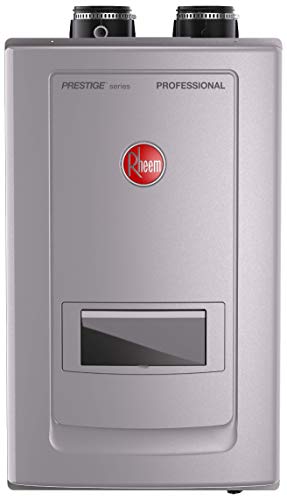
This indoor model offers 11.0 GPM with a built-in recirculation system and a compact footprint. It emphasizes hot water on demand with better energy efficiency and water savings settings. Best for: homes upgrading from a traditional tank and prioritizing space savings and continuous hot water across several fixtures.
Limitation: As with most condensing units, efficiency depends on proper venting and installation. Better for: installations that can accommodate its venting requirements and where a built-in recirculation loop reduces wait times.
Rheem IKONIC RECTGH-SR10iN With Recirculation

The IKONIC SR10iN provides Continuous Hot Water with a built-in recirculation system and Wi-Fi via EcoNet for remote monitoring and control. It’s designed to save water and energy by reducing wait times for hot water. Best for: larger homes that want a strong balance of hot water capacity and smart connectivity.
Limitation: Like other gas tankless units, performance depends on proper piping and venting. Choose this if you want a modern, connected unit with strong recirculation features.
A. O. Smith ATI-540P-N Tankless Gas Water Heater

This model offers up to 10.0 GPM with an integrated recirculation pump and durable, commercial-grade materials. It targets homes with three to four bathrooms and emphasizes instant hot water on demand. Best for: homeowners seeking a dependable, no-nonsense recirculating tankless option with strong material quality and a long-term warranty profile.
Limitation: Recirculation may require a bypass valve not included in the package. Choose this if you want a robust, straightforward install with proven performance.
MIZUDO Natural Gas Tankless With Recirculation

This 199,000 BTU unit delivers up to 10.3 GPM and includes WiFi & APP control for remote management. It’s designed for large families and offers 16+ safety features including freeze protection and anti-dry firing. Best for: users who want smart control and robust safety features in a single-package gas tankless option.
Limitation: Non-condensing design means higher exhaust temperatures; suitable where venting is straightforward and a high flow is desired. Choose this if you want strong remote control capabilities and comprehensive safety features.
Buying Guide: What To Consider When Buying A Recirculating Tankless Water Heater
- Flow rate needs: How many fixtures will run simultaneously? For larger homes, look for 10+ GPM options.
- Fuel availability: Natural gas vs propane. Some models support either, offering flexibility for different homes.
- Recirculation strategy: Built-in pump vs external pump. Built-in simplifies installation but check compatibility with existing piping.
- Ventilation and installation: Indoor vs outdoor use, venting requirements, and clearances. Outdoor units require weather-rated components.
- Vent and venting accessories: Confirm vent cap compatibility and required venting hardware for outdoor placements.
- Energy efficiency: Check UEF or EF ratings; higher values correlate with lower operating costs.
- Smart controls: WiFi or app integration can help monitor usage, maintenance, and temperature remotely.
- Warranty and serviceability: Look for long-term warranties on heat exchangers and components, plus local service options.
- Space and venting constraints: Compact models save space but ensure adequate venting and clearance for service.
- Bypass and piping needs: Some installations require bypass valves or specific loop configurations to enable recirculation.
FAQ
- What is a recirculating tankless water heater?
A recirculating tankless water heater provides hot water on demand with a built-in or external pump that circulates water in a loop, reducing wait times at taps.
- Do I need a dedicated recirculation line?
Not always. Some models include built-in recirculation and require minimal additional piping; others may require an external loop or bypass valve.
- Is a higher GPM better?
Higher GPM means more simultaneous hot water capability. Choose based on your peak simultaneous demand rather than just the maximum GPM.
- Can I install a tankless water heater outdoors?
Some models are rated for indoor or outdoor use, but outdoor installations require weather-rated components and proper venting.
- Do recirculation pumps save water?
Yes, recirculation reduces water waste by delivering hot water faster, though energy use depends on the recirculation strategy and timer settings.
- What maintenance is needed?
Regular flushing, descaling (especially in hard water), and periodic inspection of venting and connections help maintain performance.