Answer: For residential cooling and heating, choose air handler units designed for reliability, energy efficiency, and compatibility with your outdoor equipment. This guide highlights five well-suited options and clarifies who each is best for. Whether you need a compact ceiling-mount handler, a ducted air handler with a heat pump, or a system that pairs with a compatible condenser, these selections help you choose the right unit for your home.
| Product | Best For |
|---|---|
| Goodman ACST18MU1305 | Ceiling-mount air handler for compact spaces and Goodman system builders |
| ACiQ 2.5 Ton Heat Pump System | Year-round comfort with an integrated air handler and modular setup |
| ACiQ 4 Ton Heat Pump System | Mid-size homes needing higher capacity with an efficient air handler |
| Goodman GLZS4BA4810 + AMST48CU1300 | Whole-house comfort with a robust heat pump and multi-position air handler |
| Senville 48000 BTU System | Large spaces needing combined air handler, heat pump, and condenser |
Goodman ACST – 1.5 Ton Air Handler

Best For: Small to medium homes needing a compact ceiling-mount air handler. This unit emphasizes corrosion-resistant galvanized steel construction with an all-aluminum coil for efficient heat transfer and a factory-installed thermostatic expansion valve to ensure stable refrigerant flow. It is suitable for integration with R-32 systems and Goodman outdoor units.
Why selected: The combination of durable materials and an efficient coil design supports reliable year-round operation in limited spaces. The ECM-driven blower motor promotes energy-efficient airflow. Caution: Verify refrigerant compatibility with your outdoor condenser; this air handler works best with a compatible R-32 system.
ACiQ 2.5 Ton Heat Pump System
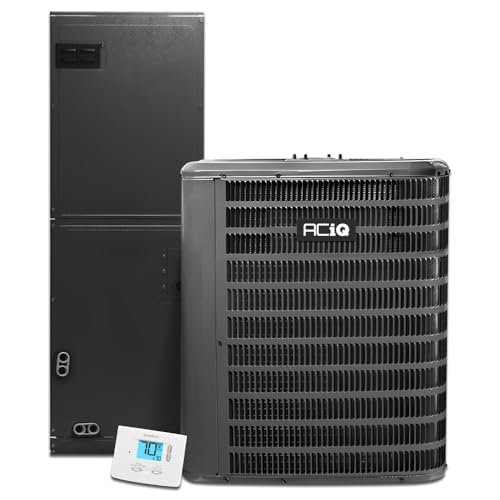
Best For: Homeowners seeking an all-in-one heat pump solution with an integrated air handler and a cost-effective installation. The system includes an ECM blower motor, an all-aluminum evaporator, and a factory-installed TXV kit to support efficiency through the cooling cycle and heating seasons.
Why selected: It typically delivers balanced performance for year-round comfort with a straightforward setup. Caution: This model’s efficiency and capacity are often best matched to spaces within its tonnage range; confirm your room size aligns with 2.5 tons.
ACiQ 4 Ton Heat Pump System
Best For: Mid-to-large homes needing higher heating and cooling capacity with an integrated air handler. This system emphasizes a simple installation, energy-saving design, and a durable air handler with an all-aluminum evaporator and a TXV kit designed to improve overall efficiency.
Why selected: The 4-ton configuration provides more capacity for larger spaces while integrating with a compatible outdoor condenser. Caution: Consider climate and heating load; ensure sufficient outdoor unit compatibility for R-32 refrigerant.
Goodman GLZS4BA4810 + AMST48CU1300

Best For: Homeowners building a full heat-pump system with a multi-position air handler and a dedicated heat kit for colder climates. The GLZS4BA4810 heat pump pairs with the AMST48CU1300 air handler for coordinated heating and cooling performance.
Why selected: The integrated approach supports efficient year-round comfort and durable construction. Caution: In colder climates, a compatible heat kit may be needed to maintain performance in low temperatures.
Senville 48,000 BTU System

Best For: Large residential spaces requiring a combined air handler, condenser, and heat pump solution. The system’s inverter design supports energy-conscious performance with high capacity output and strong airflow delivery.
Why selected: It provides a full, multi-component package suitable for larger homes needing robust climate control. Caution: Ensure electrical service and space accommodate a 48,000 BTU system and outdoor condenser sizing.
Buying Guide: Key Considerations For Residential Air Handler Units
- System type: Decide between a standalone air handler, a heat-pump integrated solution, or a complete system pairing with a compatible outdoor condenser.
- Capacity: Match tonnage to your home’s heating and cooling load. Oversizing or undersizing impacts efficiency and comfort.
- Refrigerant compatibility: Ensure the air handler is compatible with your outdoor unit’s refrigerant (R-32 is common in newer equipment).
- Blower type and efficiency: ECM or ECM-X89-type blowers save energy; higher efficiency improves comfort and lowers operating costs.
- Coils and materials: All-aluminum coils resist corrosion and enhance heat transfer; aluminum fins improve surface area for cooling and heating.
- Installation considerations: Some units are ceiling-mounted, others are cabinet-style or part of a split system. Verify space, ductwork, and electrical requirements.
- Maintenance and serviceability: Access to components, ease of cleaning, and filter options influence long-term performance.
FAQ
- What is a residential air handler unit?
Answer: It is the indoor component in a cooling/heating system that moves conditioned air through ducts, often paired with an outdoor condenser or heat pump. - How do I know which tonnage I need?
Answer: Compare your home’s square footage and climate. A HVAC professional can perform a load calculation to determine the correct tonnage. - Is R-32 refrigerant compatible with all air handlers?
Answer: Not always. Check the unit’s specifications and ensure compatibility with the outdoor condenser or heat pump used in the system. - Are air handlers more efficient when paired with ECM blowers?
Answer: Yes. ECM blowers adjust motor speed to demand, improving energy efficiency and reducing operating costs. - What maintenance is required for air handlers?
Answer: Regular filter changes, coil cleaning, and periodic inspection of refrigerant connections, blower motor, and drainage. - Can I install a new air handler myself?
Answer: Installation typically requires a qualified HVAC technician to ensure proper electrical connections, duct sealing, and refrigerant handling.