When a roof leak appears, you need reliable tools to locate the exact source fast. This guide highlights versatile roof-leak detection gear that helps homeowners, contractors, and maintenance crews pinpoint leaks through walls, ceilings, and roofing systems. The top picks cover underground piping sounds, dye tracing, ceiling-diverters, and ultrasonic detection. Each product is described for who benefits most and why it’s selected, with practical cautions to consider before buying.
VEVOR Pipe Water Leak Detector
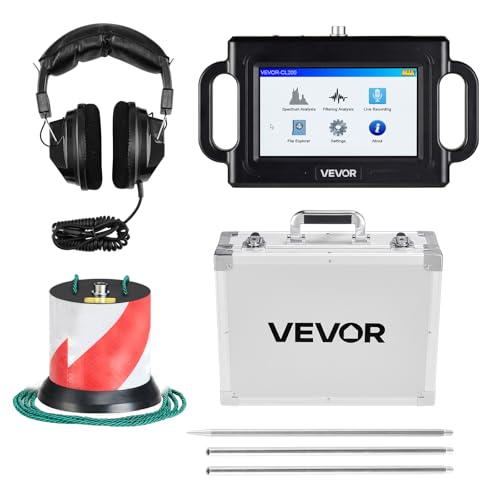
The VEVOR leak detector captures water-signal frequencies from 1 Hz to 5000 Hz and can detect leaks up to 6.6 feet (2 meters) underground. It includes a sensor, three listening rods, noise-canceling headphones, and storage for data. The device supports both metal and non-metal pipes and works through various soil types, making it a flexible option for embedded piping in roofs, basements, or crawl spaces.
Best for: Professional technicians and advanced DIYers who need precise leak localization in buried or shielded pipes. The range and listening hardware support noisy environments where water movement is faint.
Why selected: It uses frequency filtering and multiple listening rods to isolate leak sounds, which helps avoid misidentifying ambient noise as leaks. The ability to adapt to different pipe materials adds versatility for roof penetrations and plumbing connections beneath roofing materials.
Caution: Data interpretation requires some training or familiarity with acoustic leak analysis. Ensure you have appropriate safety protocols when working around buried lines or electrical systems.
kuailaya Water Tracing Dye, Red

This fluorescent dye makes leaks highly visible. The bright red dye diffuses quickly and emits glow under a dedicated light, revealing leaks in complex drainage or concealed sections. It’s a simple, immediate indicator when poured into water or liquid within a system, including roof drainage, condensate lines, and hidden plumbing passes behind walls or ceilings.
Best for: Quick visual confirmation of leak paths in roof drainage, plumbing chases, and concealed ceilings where dye tracing helps map routes of water flow.
Why selected: The dye’s fast diffusion and high visual contrast speed up leak localization without requiring specialized equipment beyond a UV/fluorescent light. It works well when you need a lightweight, low-cost method to corroborate other measurements.
Caution: The dye will highlight all fluid movement, so interpret results carefully if multiple water sources are present. Use in well-ventilated areas and follow label directions for safe use.
InBrella Ceiling Tile Leak Diverter Kit

The InBrella diverter channels leaks away from workspaces using a low-profile ceiling tile with integrated drainage paths. It comes with a 2’ x 4’ tile, a long drainage hose, and adjustable hangers, designed to fit standard drop ceilings. The kit helps keep floors, equipment, and personnel dry while leaks are investigated or repaired above the work area.
Best for: Commercial or home projects with suspended ceilings where ceiling leaks must be redirected without creating clutter or blocking access routes.
Why selected: The combination of a reusable tile diverter and a hose kit offers a practical, non-destructive approach to managing roof or ceiling leaks during inspection and repair work. It reduces slip hazards and water damage in busy spaces.
Caution: The system relies on a functional drainage path and may require periodic maintenance to keep grooves clear and hoses properly secured in busy environments.
Valterra V02136 Detect-A-Leak

The Detect-A-Leak spray detects gas line and fittings leaks through visible bubbles. This means you can quickly identify leaks in gas piping or related fittings by applying the liquid to suspected joints and watching for bubble formation. It’s a portable solution that doesn’t require complex equipment beyond the spray bottle itself.
Best for: Quick checks on gas lines and fittings near roofs, attics, or ceiling penetrations where gas leaks could involve roof-integrated appliances or plumbing vent connections.
Why selected: Simplicity and immediacy make this a strong companion tool for roof-related leak checks when gas line integration or appliance connections are part of the system being inspected.
Caution: The product is a leak tester for gas systems. Follow all safety guidelines and local codes when testing live gas lines; never spray on energized components or in enclosed spaces without ventilation.
Allsun Ultrasonic Leak Detector Kit

The Allsun kit uses a 40 kHz ultrasonic sensor to locate leaks by detecting high-frequency sound from escaping gas or air. It supports passive mode for pressurized systems and active mode when used with a signal transmitter. This makes it suitable for HVAC, plumbing, and industrial equipment where small leaks are hardest to hear.
Best for: HVAC technicians, building maintenance teams, and experienced DIYers who need fast detection of tiny leaks in ceiling ducts, roof penetrations, or mechanical rooms.
Why selected: Ultrasonic detection excels at finding subtle leaks in complex systems, and the dual-mode operation adds flexibility for different testing scenarios without requiring a full diagnostic rig.
Caution: Ultrasonic devices pick up ambient noise. Proper ear protection and careful interpretation of readings are recommended to avoid misidentifying normal sounds as leaks.
Buying Guide: Key Considerations For Roof Leak Detection Equipment
- Leak Type And Location: Decide whether you need acoustic detection for buried pipes, dye tracing for visual mapping, or ceiling-diverter systems to manage water during repair.
- Environment And Accessibility: For rooftop or attic inspections, tools that work through ceilings, insulation, or dry soils are essential. Consider moisture levels and potential electrical hazards.
- Portability And Setup Time: Lightweight, battery-powered devices speed up fieldwork. Some kits require setup time; others provide immediate results.
- Data And Visualization: Frequency-range detectors and dye tracing offer precise evidence. Some tools deliver clear visual confirmation, while others require interpretation of sounds.
- Safety And Compliance: Gas-leak testing must follow safety codes. Ensure equipment is suitable for the system’s refrigerants, pipes, or electrical components involved in roof work.
- Maintenance And Reusability: Reusable ceiling tiles, dye residues, and durable probes reduce long-term costs. Check cleaning and storage requirements.
- Best Use Scenarios:
– For complex roof plumbed systems: ultrasonic or acoustic detectors plus dye tracing may be ideal.
– For concealed ceiling leaks: ceiling tile diverters paired with dye tracing help map flow paths.
– For gas lines near roof penetrations: a dedicated gas leak detector supports quick checks.
Comparison Snapshot
| Product | Best For | Key Benefit | Limitation |
|---|---|---|---|
| VEVOR Pipe Water Leak Detector | Professional plumbing, buried pipes | Broad frequency range; 2m depth | Requires skill to interpret signals |
| kuailaya Water Tracing Dye | Visual leak mapping | Fast diffusion; high contrast | Be mindful of multiple water sources |
| InBrella Ceiling Tile Diverter | Ceiling leaks in offices/shops | Keeps work areas dry; reusable | Depends on drainage path condition |
| Valterra Detect-A-Leak | Gas line checks near roofs | Simple spray method | Limited to leak detection; not a broader diagnostic tool |
| Allsun Ultrasonic Leak Detector | HVAC and equipment leaks | Detects tiny leaks; dual modes | Ambient noise can affect readings |
Frequently Asked Questions
- What equipment is best for roof leaks behind walls?
Answer: A combination of dye tracing (for quick visualization) and acoustic or ultrasonic detectors (for locating subtle sounds behind structures) often works best. - Do I need a professional for roof leak detection?
Answer: For complex roofs or high-risk areas, professional-grade detectors and trained technicians are recommended, especially when working with gas lines or energized systems. - Can dye tracing be used indoors?
Answer: Yes, dye tracing is effective in interior plumbing, drainage paths, and hidden ceilings, provided there is access to the water source being tested. - Are ultrasonic leak detectors suitable for old roofs?
Answer: They are useful for identifying small leaks in HVAC ducts or mechanical systems associated with roofs, but environmental noise should be controlled for accurate results. - What safety steps should I take when testing gas lines near a roof?
Answer: Follow local codes, ventilate the area, and use approved gas-detection practices. Do not test live lines without proper safety procedures.