Finding the right RV water heater thermostat replacement can prevent cold showers and overheating alike. This guide highlights five compatible options for Suburban SW-series heaters and Atwood systems, focusing on reliability, ease of installation, and clear temperature control. Ideal for RV owners who want safer water temperatures, improved efficiency, and straightforward DIY upgrades. The following sections compare each product, show who benefits most, and note practical limitations to consider before buying.
Summary table of selected products
| Product | Brand | Best For | Key Strength |
|---|---|---|---|
| 232306 & 232282 Thermostat Kit | WPL | Suburban SW Series users seeking dual-voltage control | Two temperature ranges for 120V and 12V systems |
| VORIGY RV Thermostat Kit | VORIGY | Atwood/XT series users needing ECO and cutoff | UL certified, safe temp caps |
| Fiada Thermostat Replacement Parts | Fiada | Emergency cutoff needs | Durable construction, simple install |
| Sthovd Thermostat Kit | Sthovd | Wide compatibility with Suburban SW series | Dual-range control, overheating prevention |
| Longsure Dual Thermostat Kit | longsure | Broad compatibility, energy savings | Combined 113–140°F and 122–140°F ranges |
232306 & 232282 Thermostat Water Heater Limit Switch Kit

This dual-thermostat kit is designed to replace Suburban SW-series 12V and 120V T-stats. Best for RV owners with mixed voltage setups who need reliable temperature control and safety cutoffs. The kit covers multiple Suburban models (SW6D through SW16DEM variants) and provides precise ranges to avoid both cold showers and overheating.
- Best for: RVers with Suburban SW-series water heaters needing a durable two-voltage thermostat solution.
- Why selected: Broad compatibility and dual-temperature control help maintain stable hot water across setups.
- Caution: Verify model compatibility with your exact Suburban water heater before installing.
VORIGY RV Water Heater Thermal Cutoff Kit

Best for RV owners using Atwood and XT-series heaters who want ECO and thermal cutoff protection with UL certification. This kit regulates water temperature around 140°F and provides a thermal cutoff display up to 208°F for additional safety. It’s especially suitable when replacing or upgrading an older cutoff system.
- Best for: Atwood/XT-series users needing comprehensive safety and temperature management.
- Why selected: UL certification and clear 140°F regulation help ensure safe showers without temperature surprises.
- Caution: Installation requires attention to wiring and right-cutout placement for optimal performance.
Fiada Water Heater Thermostat Replacement Parts Assembly

Designed as an emergency cutoff solution, this Fiada kit targets Atwood and related RV water heater systems. It includes thermostat and ECO components with simple installation steps. It is best for RVers who want a straightforward upgrade to restore safe, steady hot water quickly.
- Best for: RV owners needing an easy-to-install emergency cutoff and reliable temperature control.
- Why selected: Clear function and durable components support quick restoration of safe hot water.
- Caution: Check model compatibility with your specific Atwood or similar unit before purchasing.
Sthovd 232306 & 232282 Thermostat Kit
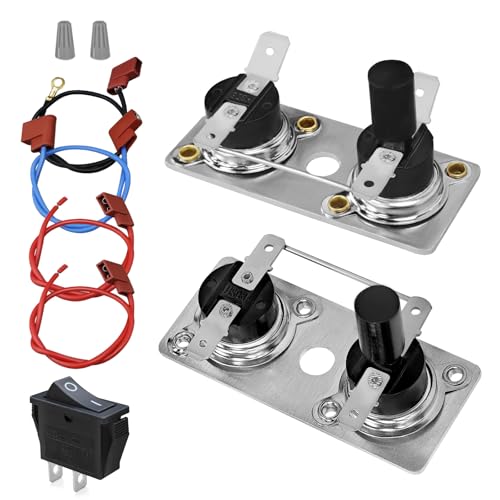
Targeted at Suburban SW-series RV water heaters, this dual-thermostat kit is suitable for users needing both 120VAC and 12VDC control. It emphasizes precise temperature regulation with protections against overheating and dry burning, making it a strong all-around choice for many RV setups.
- Best for: RV owners who want broad Suburban compatibility and dual-range control.
- Why selected: Clear auto-range temperatures help maintain comfortable water temps reliably.
- Caution: Ensure exact model match within SW-series variants to avoid fit issues.
Longsure Dual Thermostat Kit for Suburban SW Series

This kit emphasizes energy savings through dual ranges: 113–140°F for the 120VAC thermostat and 122–140°F for the 12VDC thermostat. It covers a wide array of SW-series models, offering improved protection against overheating and more efficient heating cycles. It’s best for RV users who prioritize energy efficiency and long-term part life.
- Best for: RV travelers seeking energy-conscious operation and broad Suburban compatibility.
- Why selected: The two auto-ranges help tailor heat output to available power sources.
- Caution: Manual reset at 185°F may be required for overheating events; verify installation instructions.
Buying Guide: How to Choose the Right RV Water Heater Thermostat
What model is compatible with my system? Start by confirming your heater brand and SW or Atwood model numbers. Look for kits listing Suburban SW-series compatibility or Atwood 91447/93866 as a match.
Do I need dual-voltage control? If your RV uses both 120V AC and 12V DC power for heating, a dual-thermostat kit offers convenience and consistent temperature control across power modes.
What temperature range is ideal? Typical safe ranges are around 113–140°F (45–60°C). Some kits add ECO or higher cutoffs; ensure the range matches your comfort and safety needs.
Is installation easy? Many kits advertise DIY installation with included instructions. Check for required tools, the need to replace foam covers, and wire reconnection steps.
What safety features matter? Look for thermal cutoffs, automatic shutoffs, and UL certification where possible to reduce overheating risk and electrical hazards.
FAQ
- What is the purpose of a RV water heater thermostat? It regulates water temperature and protects against overheating.
- Can I replace a thermostat without professional help? Many kits are designed for DIY installation, but verify wiring diagrams and model compatibility first.
- What temperature should RV hot water be? A common safe setting is around 120°F, with ranges between 113–140°F depending on the kit.
- Will a dual-voltage thermostat work with all RV water heaters? Not always; confirm voltage ratings (120VAC/12VDC) and model compatibility for your unit.
- Are these kits UL certified? Some models include UL or similar certifications; always check product listings for safety assurances.
- What should I do if my water heater still overheats after replacement? Re-check wiring, ensure correct thermostat placement, and consider professional assessment if the issue persists.