When you need to connect 4″ or 6″ corrugated pipe to SDR 35 or Schedule 40 piping, choosing the right adapter matters for a secure, leak-free transition. This guide highlights practical adapters designed for underground installation, with clarity on which buyer each product suits best. The top choices below emphasize tight seals, durable construction, and compatibility across common pipe systems, helping you select the right part for residential drainage, sprinkler, or utility projects.
Summary at a glance: the following table shows five adapters that bridge corrugated pipe to SDR 35 or Schedule 40. They are suitable for homeowners, plumbers, and field technicians seeking reliable, easy-to-install transition solutions. Each entry notes best-for scenarios, material considerations, and a brief limitation to watch for during selection.
| Product | Best For | Key Benefit |
|---|---|---|
| Polylok 4″ Corrugated Pipe Adapter | Residential drainage projects with 4″ corrugated to 4″ SDR 35 or SCH40 | Secure fit between corrugated and rigid piping |
| Polylok 6″ Corrugated Pipe Adapter | Medium‑size runs needing 6″ corrugated to 6″ SDR 35 or SCH40 | Consistent seal for larger diameter transitions |
| MUIEGUDO 4″ Corrugated Pipe Adapter (1) | 4″ corrugated to 4″ SDR 35 or SCH40 in tight spaces | Ribbed design for tight seal and leak prevention |
| MUIEGUDO 4″ Corrugated Pipe Adapter (2) | Backup/alternative option for 4″ PVC/ABS transitions | Durable construction for underground use |
Polylok 4″ Corrugated Pipe Adapter
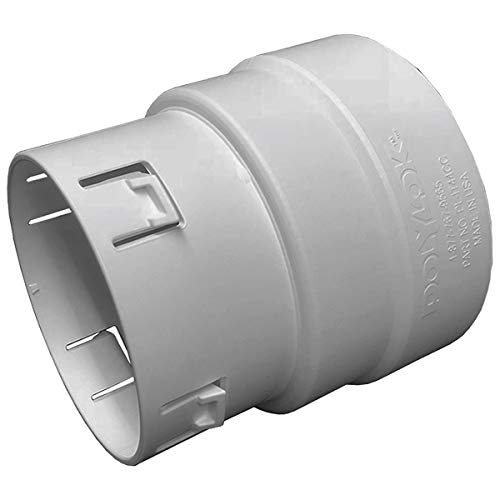
Product: Polylok 4″ Corrugated Pipe Adapter (4″ corrugated to 4″ SDR 35 or 4″ SCH 40). Best for projects that shift from flexible corrugated pipe to rigid 4″ SDR 35 or 4″ SCH 40 lines. The adapter preserves flow and minimizes leaks through a secure coupling. It’s suited for homeowners tackling yard drainage, crawlspace lines, or trench installations where adapter integrity matters. A potential limitation is the necessity of compatible end fittings to ensure a proper seal in some installations.
Polylok 6″ Corrugated Pipe Adapter
Product: Polylok 6″ Corrugated Pipe Adapter (6″ corrugated to 6″ SDR 35 or 6″ SCH 40). Best for larger diameter runs where you need a reliable transition from corrugated to rigid pipe. The ribbed design helps ensure a tight seal, making it a solid choice for long runs or outdoor installs. Limitations may include compatibility concerns with nonstandard 6″ fittings in some irrigation or drainage setups.
MUIEGUDO 4″ Corrugated Pipe Adapter (1)
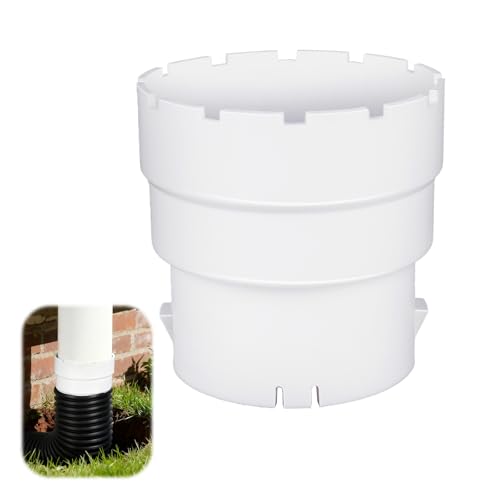
Product: MUIEGUDO 4″ Corrugated Pipe Adapter, 4″ corrugated to 4″ SDR 35 or 4″ SCH 40. Best for compact projects requiring a secure 4″ transition with strong leakage resistance. The ribbed connection promotes a tight seal, and the construction emphasizes durability for underground use. A caution is ensuring exact SDR or SCH compatibility with your local pipe stock to avoid mismatches.
MUIEGUDO 4″ Corrugated Pipe Adapter (2)

Product: MUIEGUDO 4″Corrugated Pipe Adapter, 4″ corrugated to 4″ SDR 35 or 4″ SCH 40. This option provides a robust connection for 4″ systems and emphasizes long-term soil pressure resistance. It is best for installations where underground loads and soil movement must be accounted for. Limitation to note is potential fit variation if the corrugated pipe wall dimensions differ slightly from standard specs.
Buying Guide: How To Choose The Right Schedule 40 To SDR 35 Adapter
What to consider before buying
Identify the corrugated pipe diameter you are transitioning from (4″ or 6″) and the target rigid pipe (SDR 35 or Schedule 40). Look for a ribbed or reinforced design that enhances sealing under soil pressure. Confirm compatibility with your pipe materials (PVC, ABS, or other common plastics) and ensure the adapter supports underground installation.
Material and durability considerations
Choose adapters made from durable plastics that resist chemical exposure and soil moisture. Durable construction reduces the risk of cracking or leaks over time. For long outdoor runs, a larger adapter may reduce stress at the joint. Avoid adapters with thin walls or weak seals that could fail under load.
Size and compatibility tips
Match exact nominal diameters: 4″ to 4″ SDR 35 or 4″ Schedule 40, and similarly for 6″ options. If your project uses nonstandard fittings, verify that the adapter will physically align and seal with existing conduit or piping. Consider future expansion or rerouting when selecting a universal ribbed design.
Installation considerations
Plan for a clean, straight run to reduce bending stresses at the joint. Use appropriate sealants or gaskets if recommended by the manufacturer. For underground installations, ensure the adapter is installed below freeze-thaw lines and protected from direct soil movement whenever possible.
Cost and availability factors
While price varies by size and brand, prioritize a known reliable adapter for critical transitions. Availability can be a factor for larger diameters; consider stocking both a primary and backup option for field work, especially in remote locations.
Frequently Asked Questions
- What is SDR 35, and when should I use it with an adapter? SDR 35 is a rated pipe standard for drainage with a thinner wall than Schedule 40. Use an SDR 35 adapter when connecting corrugated pipe to SDR 35 lines to maintain proper flow and pressure handling.
- Can I connect 4″ corrugated to 6″ SDR 35 with these adapters? No. adapters are designed for matching identical nominal diameters. Use a corresponding 4″ to 4″ adapter for 4″ connections or a 6″ adapter for 6″ connections.
- Are ribbed adapters more leak-resistant? Ribbed designs help create a tighter seal and reduce leakage risk when transitioning between different pipe types, especially in underground installs.
- Do these adapters require special tools for installation? Most adapters are designed for straightforward push-fit or gasketed connections, but follow the manufacturer’s installation instructions for best results.
- Which adapter is best for heavy soil pressure? Larger-diameter adapters with reinforced or ribbed construction tend to perform better under soil load and movement, reducing joint stress.
- Should I choose a 4″ or 6″ adapter for future upgrades? If you anticipate future expansion or longer runs, selecting the larger diameter adapter now can simplify upgrades, but ensure compatibility with current pipe sections.