Looking for an air conditioner that fits sideways windows or casement styles? This guide highlights the best options for slidable or casement window setups, plus reliable portable models with window kits. The top picks are organized to help buyers decide who each product is best for, why it’s a fit for sideways openings, and where to use caution. Ideal buyers include apartment renters needing flexible installation, homeowners with casement windows, and small offices seeking space-saving cooling.
| Product | Type | Best For | Key Benefit |
|---|---|---|---|
| PerfectAire 10,000 BTU Slider Air Conditioner | Window A/C (Casement/Sliding) | Casement or horizontal slider windows | Expands to fit various widths/heights |
| Frigidaire 6,000 BTU Window A/C | Window A/C | Standard window openings | Multi-speed with energy-saving modes |
| Midea 12,000 BTU U Shaped Smart Inverter A/C | Window A/C (U-shaped) | Open-window setups with quiet operation | Smart control and energy efficiency |
| Line Blaster Portable Air Conditioner 8,500 BTU | Portable with Window Kit | Renters or rooms without permanent installation | 3-in-1 cooling, dehumidifier, and fan |
| Garvee 8,000 BTU Portable A/C with Window Kit | Portable with Window Kit | Flexible, portable cooling | Sleep mode and timer for comfort |
PerfectAire 10,000 BTU Slider A/C – Casement/Sliding
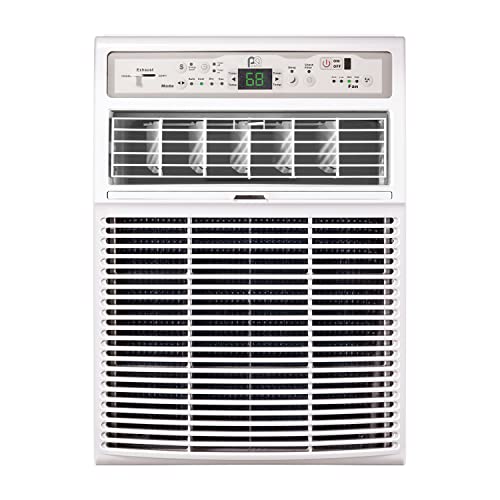
Features: Adjustable temperature range 62°F–86°F (17°C–30°C); cools 400–450 sq. ft.; expandable window mounting kit fits horizontal sliding or casement windows with a 15½”/16¼” min/max width and 21¼”/39½” min/max height; 3 speeds in cool and fan modes.
Best for: Homeowners with casement or horizontal sliding windows who want a dedicated window unit that fits sideways openings. It’s better for larger living spaces within the specified area range. Limitations: Check actual window width/height compatibility to avoid installation issues.
Line Blaster 8,500 BTU Portable A/C with Window Kit

Features: 8500 BTU cooling; 8–15 minute cooling to about 61°F; 3-in-1 functions (Cool, Dry, Fan); quiet operation under 52dB; programmable timer (0.5–24 hours).
Best for: Small apartments or bedrooms where a portable unit with a window kit is preferred. Limitations: Not a fixed window unit; needs window access and space for venting.
BLACK+DECKER 9,000 BTU Portable A/C

Features: 9000 BTU, dehumidifier and fan functions; full remote control; compact unit for rooms up to 400 sq. ft.; Follow Me remote for precise temperature control.
Best for: Renters or spaces needing flexible placement and remote-controlled comfort. Limitations: Portable unit requires venting and can be less efficient than a dedicated window unit in larger rooms.
Garvee 8,000 BTU Portable A/C with Window Kit

Features: 3-in-1 cooling, dehumidifier, and fan; 1–24 hour timer; sleep mode; compatible with windows from 15.47 to 47.24 inches; includes exhaust hose and window kit.
Best for: People who want flexible, mobile cooling with an included window kit for a quick setup. Limitations: May require trimming for small windows or difficult fitting in very narrow spaces.
Midea 12,000 BTU U Shaped Smart Inverter A/C

Features: U-shaped design to fit window openings; ultra-quiet operation (low dBA); over 37% energy savings with inverter technology; Wi-Fi control; compatible with Alexa/Google Assistant; ENERGY STAR certified.
Best for: Opening-wide window setups where quiet operation and smart control are priorities. Limitations: Higher initial complexity and price; confirm window fit due to the U-shape design.
Buying Guide: Sideways Window A/C And Window-Kit Alternatives
- Window type compatibility: Sideways or casement windows require units that can seal and mount securely. Look for expandable mounting kits and adjustable dimensions.
- Installation flexibility: Casement-friendly window units (like slider or casement-specific models) reduce gaps. Portable units with window kits offer flexibility when permanent installation isn’t possible.
- Cooling area: Match BTU to room size. Oversizing wastes energy; undersizing underpowers comfort. Use stated sq. ft. ranges as a baseline.
- Energy efficiency: Inverter or ENERGY STAR-rated models save energy over traditional fixed-speed units. Smart controls add convenience and potential energy savings.
- Noise and sleep: For bedrooms or nurseries, prioritize low-noise operation and features like sleep mode or programmable timers.
- Maintenance: Look for washable filters and easy-clean components. Clean filters improve efficiency and air quality.
- Portables vs. fixed window units: Portable units are ideal for renters or temporary setups; fixed window units can be more energy-efficient for long-term use in a single space.
- Limitations to consider: Always verify window dimensions, exhaust venting requirements, and any installation constraints specific to your window type.
Frequently Asked Questions
- What is the best sideways window air conditioner for casement windows? Look for models with adjustable window kits and casement-friendly mounting, such as slider or casement-capable units that seal well around irregular openings.
- Do portable A/Cs work well for sideways windows? Portable units with window kits are flexible but may be less energy-efficient than dedicated window units in larger spaces.
- Can a U-shaped window A/C fit a standard window? U-shaped designs require a window opening that accommodates the unique shape; measure carefully to ensure a proper fit.
- Are inverter A/Cs more energy-efficient? Yes. Inverter technology plus smart controls typically reduces energy use versus traditional fixed-speed units.
- What should I check before buying for a casement window? Verify window width and height, mounting kit compatibility, seal quality, and whether the window opens inward or outward.
- Is a window kit necessary for a portable A/C? Most portable A/Cs include a window kit, but verify compatibility with your window type and size.