For buyers seeking a compact, efficient way to improve indoor air quality while saving energy, single-room ventilation with heat recovery (ERV/HRV) units are a strong choice. These systems bring in fresh outdoor air, expel stale indoor air, and recover heat to minimize energy loss. They’re best for small-to-medium rooms, bedrooms, or home offices where ducting to the entire house isn’t practical. The following picks represent reliable options with varying features such as Wi‑Fi control, filtration, and noise levels. Use the table below to compare core capabilities at a glance.
| Product | Brand | Notable Benefit |
|---|---|---|
| Pioneer ECOasis 150 Ductless Wall-Mounted | Pioneer | High filtration, CO2/PM2.5 monitoring, 82% heat recovery |
| Wi‑Fi-Enabled Pioneer 50 Single-Room | Pioneer Official Store | Smart control, low power draw, up to 35 CFM |
| VENTS-US TwinFresh Comfo RB1-50-2 | VENTS | Ductless through-the-wall, up to 30 CFM, quiet |
| VENTS-US Micra 100 (FreshBox) HRV | VENTS | Wi‑Fi control, dual MERV filtration |
| Broan-B160H65RS AI 150 CFM ERV | Broan-NuTone | High capacity, VIRTUO technology |
Pioneer ECOasis 150 Ductless Wall-Mounted ERV
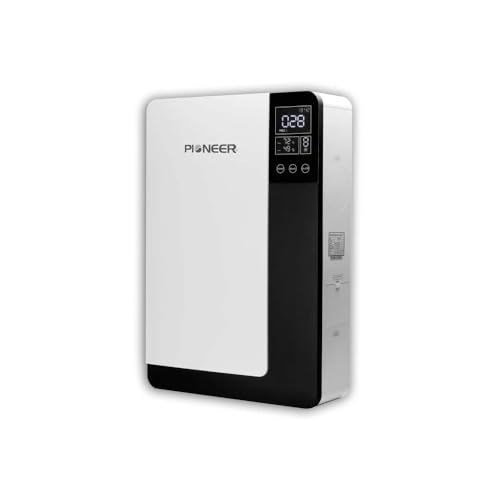
Best for: small-to-medium rooms up to 500 sq ft that require strong filtration and automatic air quality management.
This Pioneer model emphasizes advanced air purification with a 99% purification efficiency, a built-in PM2.5 sensor, and a CO2 monitor. The 8-speed fan automatically adjusts to reduce pollutants and stale air. Its four-stage filtration includes an OA/RA primary filter, PM2.5 filter, and Activated Charcoal HEPA H10 filter, helping address dust, odors, and smoke while delivering outdoor air. The unit uses an 82% efficient heat exchanger and consumes around 35W, balancing comfort with energy savings. Best for environments where air quality monitoring is a priority.
Best for: buyers who want strong filtration and smart air quality adjustments. Limitation: higher energy use than minimal models; requires installation space for ductless operation.
Wi‑Fi-Enabled Pioneer 50 Single-Room ERV
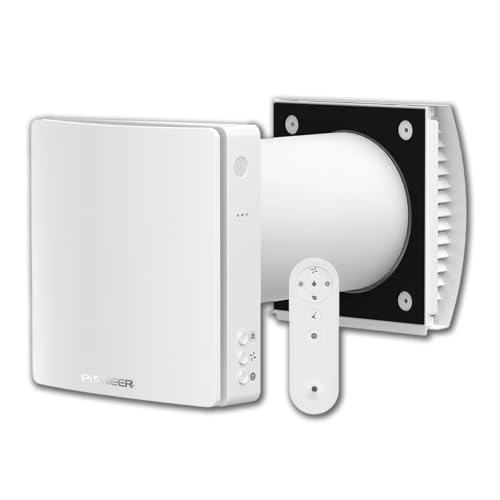
Best for: smaller spaces or apartments needing quiet operation and remote monitoring.
This unit offers ultra-high efficiency with up to 97% heat recovery and an average power draw around 8W. It is wall-mounted with a flexible air-channel setup to accommodate different wall thicknesses. Features include washable prefilters plus a MERV13 (F7) filter, Wi‑Fi smartphone control, rainproof outdoor hood, and a silent operation ceiling of about 32.7 dB(A). It continuously removes room pollutants and brings in fresh air while cooling or warming the intake air to reduce HVAC load. Choose this if you want strong energy performance with app-based control.
VENTS-US TwinFresh Comfo RB1-50-2

Best for: bedrooms, home offices, or small living spaces where ducted systems aren’t possible.
The Comfo RB1-50-2 provides up to 30 CFM of fresh air with up to 88% heat recovery. It is a ductless through-the-wall ERV, designed for walls 6–20 inches thick. It uses a reversible DC motor for quiet operation (as low as 0.2 sones) and low power use (as little as 4.5W). Overheating protection and durable bearings support long-term use. Choose this if you need a compact, wall-through installation with strong energy recovery.
VENTS-US Micra 100 (FreshBox) HRV WiFi Kit
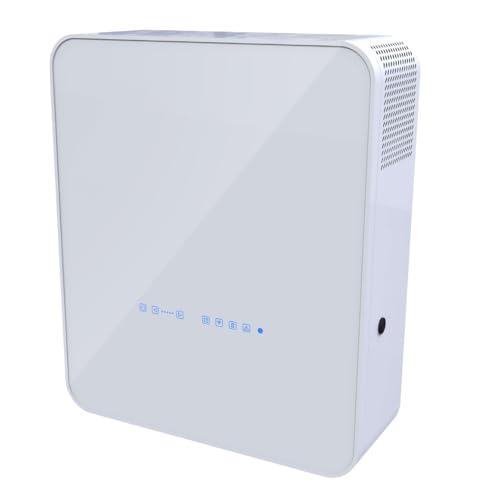
Best for: tech-savvy buyers who want integrated filtration and mobile control in a compact HRV system.
The Micra 100 (FreshBox) HRV includes built-in MERV filtration (MERV8 and MERV14 filters) for air purification and a Wi‑Fi interface for smartphone control. The unit emphasizes energy efficiency with EC motors and a compact footprint. Timers, standby, booster, and scheduling modes can be controlled via smartphone. A potential limitation is the need for reliable Wi‑Fi for full functionality. Choose this if you want robust filtration and remote control in a compact form.
Broan B160H65RS AI 150 CFM ERV
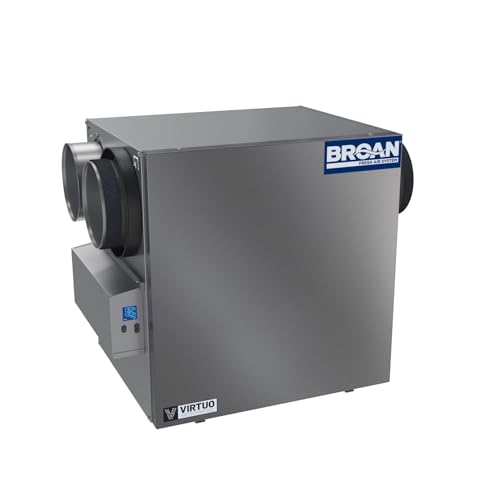
Best for: larger single rooms or home gyms where higher air turnover is desired.
This model offers a high capacity ERV with VIRTUO technology and side ports for flexible installation. It’s designed to provide substantial air exchange and energy recovery in one room. The product positioning emphasizes broad air-quality solutions for residential spaces. A practical caution: higher airflow means potentially more noticeable sound or draft in some configurations. Choose this if you need higher CFM in a single-room setting.
Buying Guide: Key Considerations For Single-Room ERVs
What size room do you need to ventilate? Choose an ERV with a CFM rating suitable for the space. For bedrooms or small offices, 10–30 CFM is often sufficient; for larger rooms, look at 30–60 CFM models.
Do you want smart control? If app-based monitoring and remote control are important, prefer units with Wi‑Fi or smartphone integration and compatibility with your home network.
What filtration levels are necessary? MERV ratings and activated charcoal filters improve odor and pollutant removal. HEPA-grade filtration is a plus for sensitive occupants.
Is noise a concern? Look at the maximum dB(A) rating and choose models marketed as quiet or with adjustable fan speeds to minimize disruption.
How will the unit be installed? Ductless through-the-wall or wall-mounted configurations can simplify installation in rooms without accessible ducts. Check wall thickness compatibility and required clearances.
Energy savings vs. upfront cost. ERVs recover heat to reduce HVAC loads. Consider the long-term energy impact relative to the upfront installation cost and desired comfort level.
Frequently Asked Questions
What is the difference between an ERV and an HRV? An ERV transfers both heat and moisture, while an HRV primarily transfers heat. ERVs are generally better for spaces with humidity control needs.
Can a single-room ERV replace central ventilation? Depending on room size and airflow needs, a single-room ERV can supplement or partially replace central ventilation for specific spaces, but it may not center-ventilate an entire home.
Do I need professional installation? Many single-room ERVs are designed for DIY installation, but wall modification and electrical connections may require a professional.
How often should I replace filters? Filter replacement frequency depends on usage and indoor air quality; follow manufacturer recommendations and monitor indoor air quality sensors.
Will ERVs reduce my energy bills? Yes, by recovering heat from exhausted air, ERVs reduce the energy needed to condition incoming outdoor air, lowering HVAC load over time.