Looking for the right small air conditioning unit to cool a tight space without a lot of fuss? This guide links five compact options that balance cooling power with ease of use. Each product targets small rooms, dorms, or home offices, helping you pick the best fit for your layout and noise preferences. Read on for clear pros, who each unit is best for, and practical limitations to consider.
Buyer-friendly quick summary:
- GE Window Air Conditioner 5,000 BTU — Best for small rooms needing simple, reliable cooling with mechanical controls.
- GarveeLife 5,000 BTU Window AC — Best for quiet sleep-friendly cooling with timer options.
- FLOWBREEZE Windowless Portable Air Conditioner — Best for spaces without a window or venting needs.
- Garvee 8,000 BTU Portable Air Conditioner — Best for larger small rooms that still require portability.
- PUUXUMIC Portable 4-in-1 — Best for multi-function use (cooling, fan, humidifier, lights) in bedrooms or offices.
GE Window Air Conditioner 5,000 BTU — Small Room Cooling

Best for: Bedrooms, home offices, and small living areas up to 150 sq ft. This unit delivers 5,000 BTU with two cooling modes and two fan speeds for personalized comfort. It uses simple mechanical controls, avoiding digital beeps and app setup.
- Strengths: Quiet operation relative to older window units; auto restart after power outages; compact fit for tight windows.
- Limitations: No Wi-Fi or smart features; manual controls require physical adjustment.
GarveeLife 5000 BTU Window AC — Simple Small Cooling

Best for: Small bedrooms or offices that need stable, budget-friendly cooling with user-friendly settings. It offers three fan speeds and a 24-hour timer along with a sleep mode.
- Strengths: Water self-evaporation design reduces maintenance; auto restart after outages for continuous cooling.
- Limitations: Window installation required; may be less feature-rich than premium models.
FLOWBREEZE Windowless Portable Air Conditioner
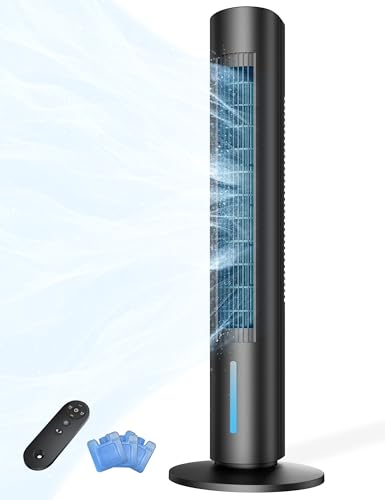
Best for: Spaces without a window or venting option, like some dorm rooms or offices. This 3-in-1 unit functions as a fan, evaporative cooler, and humidifier, with a large water tank for extended use.
- Strengths: No window venting needed; includes 7-hour timer and 140° oscillation for broad coverage.
- Limitations: Evaporative cooling relies on humid air; not suited to very dry or hot climates without moisture supply.
Garvee 8000 BTU Portable Air Conditioner — Room Up To 350 Sq Ft

Best for: Slightly larger small rooms or open-plan areas that still benefit from portability and multi-function use. This unit cools, dehumidifies, and fans, with a remote and a window kit included.
- Strengths: Dual focus on cooling and humidity control; energy-efficient design with programmable timer.
- Limitations: Higher BTU capacity means larger footprint and more exhaust setup than ultra-compact models.
PUUXUMIC Portable 4-in-1 — Compact All-in-One

Best for: Desks, small bedrooms, or offices seeking an integrated solution with cooling, a humidifier, a fan, and ambient lighting. It includes a remote and multiple modes for flexible use.
- Strengths: 3 wind speeds and 2 mist levels; large water tank supports longer operation; quiet enough for sleeping spaces.
- Limitations: Evaporative cooling is less effective in very dry or extremely hot environments without additional cooling support.
Buying Guide: Small Air Conditioning Units
What should you consider when selecting a compact cooling solution?
- Room size and BTU needs: Match BTU capacity to the room size. For spaces up to about 150 sq ft, 5,000 BTU units are often sufficient; larger small rooms may benefit from 6,000–8,000 BTU portable models.
- Cooling type: Window units deliver efficient cooling for small rooms; windowless portables are ideal where window installation is not possible; evaporative or fan-only options can reduce humidity and provide budget-friendly relief in dry climates.
- Portability vs. permanence: Easily movable units offer flexibility in shared spaces but require venting or exhaust setup. Window units stay in place but are less portable.
- Control style: Mechanical controls are simple and reliable but lack smart features. Remote controls and programmable timers add convenience for bedrooms or office use.
- Noise and comfort: Look for dBA ratings or user feedback on noise levels. Sleep-friendly models often provide lower modes for nighttime cooling.
- Maintenance and water use: Windowless evaporative coolers rely on water tanks; consider tank size and ease of cleaning. Auto-restart features help during power outages.
- Energy efficiency: Check energy-saving modes, programmable timers, and refrigerant type (e.g., R32) for better efficiency with less environmental impact.
Frequently Asked Questions
- What size small air conditioner do I need for a 120 sq ft room? — A 5,000 BTU unit is typically suitable for spaces around 100–150 sq ft, but check the manufacturer’s guidance and insulation quality.
- Are window units or portable units quieter? — Quieter performance varies by model; many window units are fixed in place and can be quieter, but modern portable units with quiet modes exist and are more flexible for furniture layouts.
- Do evaporative portable units cool like traditional ACs? — Evaporative clouds are best in humid climates; they add moisture while cooling, and they require a water source to operate.
- Is it okay to install a 5,000 BTU unit in a 150 sq ft space with high ceilings? — Higher ceilings reduce effective cooling; you may need a unit with a bit higher BTU or multiple smaller cooling devices for even distribution.
- What maintenance is needed for windowless portable units? — Regularly clean filters, empty and refill water tanks as needed, and ensure proper venting or exhaust as per the model’s design.
- Can I use these units in rooms with no electrical outlet nearby? — Most units require standard outlets; plan placement to ensure safe power access and avoid extension cords where possible.