If you’re shopping for a small mini split system, your goal is efficient heating and cooling for compact rooms without bulky equipment or high energy bills. This guide highlights five reliable options that balance size, efficiency, and ease of installation. Each product is chosen for space-conscious homes, apartments, or garages where vented or portable units aren’t ideal. Below you’ll find a quick buyer summary, followed by detailed product profiles and a practical buying guide.
| Product | Best For | Approx. Coverage | Key Benefit |
|---|---|---|---|
| Rellytech 9,000 BTU | Small rooms & bedrooms | Up to 550 sq. ft. | Smart ECO function for energy saving |
| ROVSUN 9,000 BTU | Quiet living spaces | Up to 400 sq. ft. | 19 SEER2 for energy efficiency |
| EXNOS 9,000 BTU | Budget-conscious spaces | Up to 450 sq. ft. | Inverter with ECO mode |
| Senville LETO 9,000 BTU | Smart homes | Up to 400-450 sq. ft. | Works with Alexa, 4-in-1 system |
| Albott 12,000 BTU | Medium rooms | Up to 1550 sq. ft. | Strong 18 SEER for larger spaces |
Rellytech 9,000 BTU Mini Split AC/Heating System

The Rellytech 9,000 BTU model provides cooling and heating for spaces up to 550 sq. ft. It covers a temperature range from 61℉ to 88℉ and includes four modes plus an Eco setting to reduce energy use. Best for bedrooms, small living rooms, offices, and light garages where steady climate control is needed without oversizing the unit.
Who it’s best for: buyers seeking a compact, pre-charged system with flexible airflow. Why selected: it balances capacity with energy-efficient operation and a broad comfort range. Caution: actual energy savings depend on room insulation and usage patterns.
ROVSUN 9,000 BTU Wifi Mini Split

This 9,000 BTU system is designed for spaces up to 400 sq. ft. It features inverter-driven performance with a 19 SEER rating and a quiet operation profile. It supports heat pump functionality, dehumidification, and smart airflow control for consistent comfort in small living areas.
Who it’s best for: homeowners prioritizing low noise and energy-efficient operation. Why selected: the high SEER2 rating and smart inverter technology help reduce energy usage in daily cooling/heating cycles. Caution: best suited for smaller rooms; larger open plans may feel underpowered.
EXNOS 9,000 BTU Mini Split

The EXNOS 9,000 BTU mini split provides year-round climate control with 61°F–88°F settings and SEER2 19 efficiency, plus an ECO mode to optimize power use. It’s suitable for rooms up to 450 sq. ft. and includes a remote with a built-in timer for convenience.
Who it’s best for: buyers seeking a strong efficiency profile at a modest size. Why selected: robust inverter performance and energy-savings modes. Caution: ensure proper installation to maximize efficiency and avoid refrigerant undercharging risks implied by pre-charged claims.
Senville LETO 9,000 BTU Mini Split
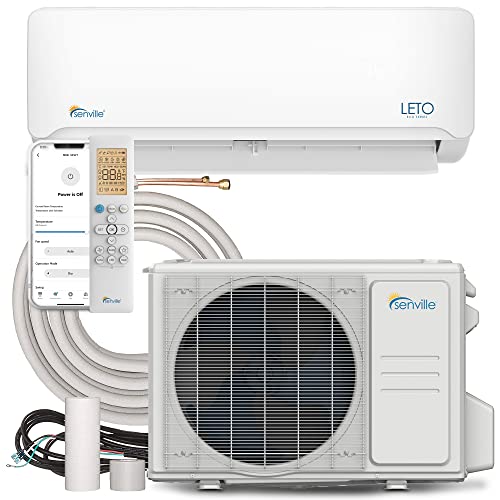
The Senville LETO model offers Alexa-enabled control and a 4-in-1 setup (cooling, heat pump, dehumidifier, fan). It’s a versatile option for small to mid-sized spaces, combining modern aesthetics with practical climate control. It is suitable for bedrooms, living rooms, or small commercial spaces that value smart home compatibility.
Who it’s best for: households using smart assistants and seeking simple voice or app control. Why selected: built-in voice compatibility adds convenience and can integrate with routines. Caution: some users may prefer a higher SEER for long-term energy savings in very drafty homes.
Albott 12,000 BTU Mini Split

The Albott 12,000 BTU model covers up to 1,550 sq. ft. with SEER2 18 efficiency, making it appropriate for medium-sized spaces or multi-room setups. It includes self-cleaning, remote and app control, and is designed to operate in a wide temperature range for all-season comfort.
Who it’s best for: buyers needing more capacity while staying within a ductless format. Why selected: higher capacity without moving to a larger system. Caution: 12,000 BTU may be oversized for tiny rooms; verify room size and insulation before installation.
Buying Guide: Small Mini Split System Essentials
How to choose the right size: Measure the room properly and consider insulation, window exposure, and climate. For compact spaces, aim for 9,000–12,000 BTU models unless the area has extreme heat or cold or high ceilings.
Energy efficiency matters: Look for SEER2 ratings and inverter technology. Higher SEER2 typically means lower operating costs over time, especially with frequent on/off cycles.
Heat pump performance: If you live in a cooler climate, prioritize models rated for low outdoor temperatures to maintain reliable heating without short cycling.
Smart controls: If you want integration with voice assistants or remote monitoring, choose models with APP control or Alexa/Google compatibility.
Installation and maintenance: Pre-charged systems are easier for DIY-leaning buyers, but professional installation ensures optimal refrigerant charge and efficiency. Check for self-cleaning features if you’d like minimal maintenance.
Noise level and comfort: Consider indoor unit sound ratings and airflow options like adjustable louvers, multiple fan speeds, and auto-swing features for even air distribution in small rooms.
Practical Tips for Small Spaces
- Use the ECO or energy-saving modes to reduce electricity use when full power isn’t needed.
- Close doors to the space you’re cooling or heating to maximize efficiency.
- Seal leaks around windows and doors to improve overall comfort and reduce load on the system.
- Position the indoor unit to avoid direct drafts onto seating areas for better comfort.
Frequently Asked Questions
- What size mini split do I need for a bedroom? Answer: A 9,000 BTU model often suffices for most bedrooms up to 350–450 sq. ft., depending on insulation and sun exposure.
- Are mini split systems loud? Answer: Most modern units operate quietly, but noise levels vary by model and fan speed. Look for a low dB rating in product specs.
- Is inverter technology worth it? Answer: Yes, inverters adjust compressor speed to demand, improving energy efficiency and steady climate control.
- Can I install a mini split myself? Answer: Some systems are designed for DIY installation, especially pre-charged models, but professional installation ensures proper refrigerant charging and longevity.
- Do mini splits cool and heat effectively in cold climates? Answer: Many models have heat pump capacity down to several degrees Fahrenheit, but check the minimum operating temperature rating for a given model.
- What maintenance is required? Answer: Periodic filter cleaning, checking remote settings, and scheduling annual service help sustain performance and efficiency.