Answering the needs of compact spaces that require reliable vented propane heat, these top picks deliver safe operation, efficient warmth, and practical features. Best for bedrooms, living rooms, or cabins where vented propane is preferred, these units balance heat output with energy efficiency. The list highlights five models that emphasize safety, ease of use, and consistent performance in small to mid-sized areas.
| Product | Brand | BTU | Best For |
|---|---|---|---|
| Ashley Hearth 11,000 BTU Direct Vent Wall Heater | Ashley | 11,000 | Small rooms requiring quiet operation |
| Rinnai EX08DTP Direct Vent Wall Furnace | Rinnai | 8,000 | Efficient, modern vented heat |
| ProCom 30,000 BTU Ventless Blue Flame Heater | ProCom | 30,000 | Open floor plans needing higher output |
| Mr. Heater 9,000 BTU Portable Buddy | Mr. Heater | 9,000 | Portable warmth for flexible spaces |
| Comfort Glow 11,000 BTU Direct Vent Wall Heater | Comfort Glow | 11,000 | Direct vent wall heat for compact rooms |
Ashley Hearth 11,000 BTU Direct Vent Wall Heater

Best for compact spaces that require steady heat with quiet operation. This direct vent unit uses liquid propane and delivers up to 11,000 BTU, suitable for areas up to about 375 square feet. It includes a safety pilot with an integrated regulator to automatically stop gas flow if the pilot flame goes out, and a ported stainless steel burner for a sealed burn system. Choose this if you want wall-mounted convenience and reliable safety features in a bedroom or small living area. A potential limitation is that the unit is designed for LP gas only, not natural gas.
Rinnai EX08DTP Direct Vent Wall Furnace

Best for energy-conscious homes that want precise temperature control. The EX08DTP uses direct venting and advanced modulating technology to respond smoothly to small temperature changes, delivering consistent heat with efficient gas usage. It includes electronic spark ignition, a 7-stage modulating valve, a programmable thermostat, and self-diagnostic electronics for auto restart on ignition issues. This model is ideal for small to medium rooms where steady comfort matters, with the caveat that sophisticated features may be more than needed for very basic heating scenarios.
ProCom 30,000 BTU Ventless Blue Flame Heater

Best for larger open areas needing substantial heat without electricity. This 30,000 BTU propane heater is designed to heat up to about 1,400 square feet and operates off propane only, with a push-button Piezo ignition and three heat settings (Low, Medium, High). It also includes an Oxygen Depletion Sensor with automatic shut-off for safety. It’s a robust option for spaces where a vented unit is impractical or where higher heat output is required, but it does not require electricity to operate. Be aware that ventless operation may affect indoor air humidity and air quality management in very small rooms.
Mr. Heater 9,000 BTU Portable Buddy
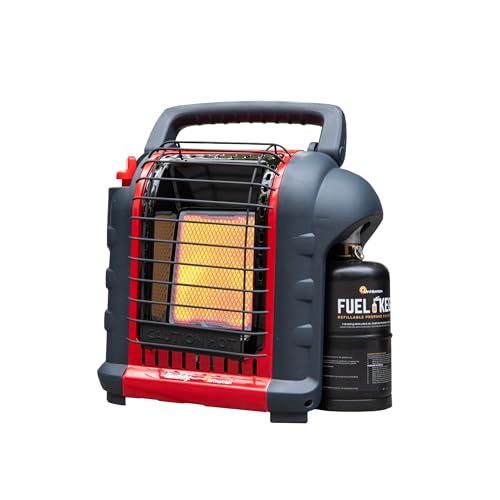
Best for versatile, portable heating in small to mid-sized spaces. The Portable Buddy delivers 4,000 or 9,000 BTU/hr radiant heat and is approved for indoor and outdoor use. It heats up to about 225 square feet and is easily moved to where warmth is needed. Choose this if you need a portable option for garages, workshops, or cabins. The limitation is that portability can lead to less stability in fixed rooms, and you must manage propane supply and ventilation accordingly.
Mr. Heater 20,000 BTU Vent Free Blue Flame Dual Fuel

Best for substantial heat in larger rooms or open floor plans. This dual-fuel unit provides 20,000 BTU/hr and heats up to around 700 square feet. It features a battery-operated electronic spark ignition for easy starts and flexibility across different fuel setups. Choose this if you need high output from a single unit without venting, but be mindful that vent-free operation may require more attention to indoor air quality and moisture management in humid spaces.
Mr. Heater 18,000 BTU Vent Free Radiant Propane Heater

Best for medium to larger rooms needing steady radiant warmth with no venting. The 18,000 BTU model heats up to about 700 square feet and includes electronic ignition for convenient starts. It suits spaces where wall installation is not possible or preferred. A limitation is that vent-free operation may influence indoor air humidity and temperature distribution in tightly sealed rooms.
Buying Guide: Key Considerations For Small Propane Heaters
- Vent Type: Direct vent vs. vent-free. Direct vent models draw combustion air from outside and exhaust indoors, reducing indoor air impact. Vent-free units do not require venting but can affect humidity and air quality in small spaces.
- BTU Output And Space: Match the unit’s BTU to the room size. Higher BTU is not always better if the space is small and poorly insulated.
- Fuel Source: Ensure compatibility with the available propane supply. Some models are LP-only, others are dual-fuel or vented for gas types.
- Safety Features: Look for built-in regulators, automatic shutoff, oxygen depletion sensors, and cool-to-the-touch components for child-safe environments.
- Ignition And Controls: Electronic ignition and modulating valves provide stable temperature control; Piezo ignition offers simple starts for portable units.
- Installation: Wall-mounted units save floor space; portable units offer flexibility but require safe placement and ventilation checks.
- Maintenance: Regular inspection of valves, burners, and ignition systems helps maintain safe operation and efficiency.
Frequently Asked Questions
- What is the difference between direct vent and vent-free propane heaters? Direct vent units exhaust indoors via a sealed system and often bring fresh air from outside, while vent-free heaters release combustion byproducts into the living space. Direct venting generally offers better indoor air quality for smaller rooms.
- How many BTUs do I need for a small room? For a small, well-insulated room (up to about 350 sq ft), 7,000–11,000 BTU is common; larger or drafty spaces require higher output.
- Can these heaters operate indoors safely? Yes, but always follow the manufacturer’s safety guidelines, maintain proper ventilation, and use carbon monoxide detectors in living areas where propane is used.
- Do vent-free heaters require electricity? Some models include electronic ignition and fans that require electricity, while others use piezo ignition and operate without electricity.
- Are portable propane heaters as safe as wall-mounted ones? Portable heaters offer flexibility but require careful placement, stable surfaces, and proper clearance from combustibles. Wall-mounted units can be safer in high-traffic rooms with limited space.
- What maintenance is recommended? Regular cleaning of burners, checking gas connections, and confirming that safety pilots and regulators function correctly help ensure safe operation.