Looking for a compact, portable solution to cool a small room efficiently? This guide covers five top options designed for spaces up to about 350 square feet. Each pick targets different needs—from budget-friendly, ultra-quiet units to versatile, all-in-one devices. The buyer’s intent is quick, reliable cooling with minimal setup, and these picks are chosen to help you compare features, setup requirements, and performance. The following table summarizes key points to aid quick decisions.
| Product | Best For | Key Benefit |
|---|---|---|
| Garvee 8000 BTU Portable AC | Small apartments and dorms | 3-in-1 cooling, dehumidifier, and fan for flexible comfort |
| Arctic Air Pure Chill 2.0 | Quiet, energy-efficient personal cooling | Hydro-Chill technology with low energy use |
| FLOWBREEZE Windowless Portable AC | Windowless setups (bedrooms, offices) | No venting required, 7-hour timer |
| Ieysl Portable AC | Personal desk or nightstand cooling | Two modes with 1500 ml tank for longer run |
| Tiptop Home 4-in-1 Mini AC | Tabletop or bedside cooling with ambient light | 4-in-1 with 1000 ml tank and night light |
Garvee 8000 BTU Portable Air Conditioner

Best for: small apartments, dorm rooms, and bedrooms that need robust cooling in a compact footprint. This unit provides 3-in-1 functionality—cooling, dehumidifying, and a fan—to cover both temperature and moisture control. It targets spaces up to 350 square feet and includes a sleep mode and a 24-hour timer for flexible daily schedules. The unit uses R32 refrigerant, which is generally more energy-efficient than older refrigerants, aiding overall efficiency. A window kit and remote control help with convenient operation from across the room.
Caution: Data indicates up to 45 pints/day dehumidification; consider a dedicated humidity solution if humidity is extremely high. Installation mentions a window kit; ensure your window style is compatible before purchase.
Arctic Air Pure Chill 2.0 Evaporative Cooler

Best for: single rooms or small offices where ultra-quiet operation and low energy use matter. This device uses Hydro-Chill technology to cool and humidify the air with very low power consumption (8–10 watts). Its compact form makes it easy to move between spaces, and dual cooling jets provide adjustable airflow. It’s ideal for users who want a portable, energy-conscious cooler without built-in refrigeration.
Caution: Evaporative coolers work best in dry climates. If humidity is high, cooling performance may be limited compared to traditional AC units.
FLOWBREEZE Windowless Portable Air Conditioner
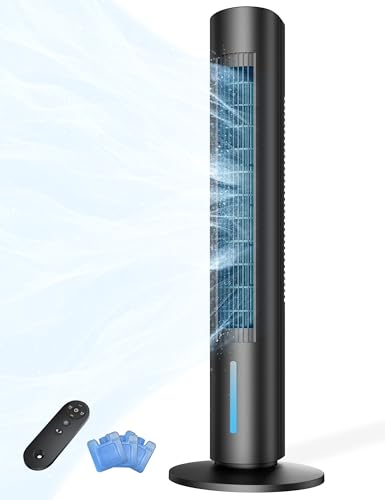
Best for: bedrooms, apartments, and dorm rooms where window venting is not possible. This unit operates without hoses or an exhaust system, relying on evaporative cooling and a large water tank for extended use. It includes a 7-hour timer and 140° oscillation for broad airflow distribution. Quiet operation helps with nighttime use or work-from-home setups.
Caution: Windowless designs can be less effective in very hot or humid environments. Expect incremental cooling rather than rooms needing rapid temperature drops.
Ieysl Portable Air Conditioner

Best for: a compact personal cooling unit on a desk or nightstand. This portable AC offers two modes and a 1500 ml water tank for longer cooling durations. It uses a simple top-panel and remote control to adjust fan speed and mode, making it suitable for small workspaces or a bedside setup where space is a premium.
Caution: The 1500 ml tank requires periodic refills; ensure it fits your usage pattern if you expect continuous all-day operation.
Tiptop Home 4-in-1 Mini AC

Best for: personal spaces like a nightstand or desk where a small footprint and multiple capabilities matter. This 4-in-1 device combines an air cooler, humidifier, fan, and ambient night light. A 1000 ml tank and two or more mist modes enable flexible cooling and humidity control. The unit is suitable for bedrooms and small offices seeking a compact, multifunction solution.
Caution: As a smaller, personal device, cooling power is limited compared with larger 8,000–12,000 BTU units. Expect slower temperature decline in larger rooms.
Buying Guide: Key Considerations for Choosing a Portable Small Room AC
- Room size and BTU: Match BTU to the space. Units listed here are designed for up to about 350 sq ft; larger spaces need higher BTU or multiple units.
- Ventilation needs: Windowed vs. windowless models affect installation. If you cannot use a window, consider no-vent or evaporative options with caution on humidity.
- Energy use: Look for energy-efficient refrigerants (like R32) and low-wattage operation in evaporative or hydro-chill designs.
- Modes and features: Consider whether you want cooling, dehumidifying, humidifying, or a combination. Sleep mode and programmable timers add convenience for nighttime use.
- Water tank capacity: Larger tanks extend run time between refills but increase device size. Balance with space and usage.
- Noise level: Quiet operation is essential for bedrooms or workspaces. Check decibel ratings or user reports if available.
- Portability and setup: Wheels, lightweight design, and simple window kits reduce installation effort and relocation friction.
- Maintenance: Ease of cleaning, water tank access, and filter replacement are practical long-term considerations.
Frequently Asked Questions
- What size room can a portable air conditioner handle?
Most portable units marketed for small rooms handle up to about 350 square feet, but performance varies with ceiling height, insulation, and outdoor heat load. - Do windowless portable ACs actually work?
They can provide cooling via evaporative methods or hydro-chill technology, but they may be less effective in high humidity and may require consistent airflow from open spaces. - How important is BTU when choosing a portable AC?
BTU indicates cooling capacity. Higher BTU is better for larger spaces, but for small rooms, a unit with excess BTU can waste energy and cool unevenly. - Are evaporative coolers suitable for humid climates?
Evaporative coolers add humidity, which is beneficial in dry climates but can feel less effective in humid environments. - Is professional installation needed for these units?
Most portable units require minimal setup—just venting through a window or selecting a windowless mode, plus hose or tube attachment if required by the model. - Can portable ACs replace central air?
For small rooms and specific zones, portable units can supplement central AC, but they typically do not replace whole-home cooling in larger spaces.