Find the right stainless steel expansion tank for your hot water system, whether you’re outfitting a home, RV, or small business. This guide compares five durable options with corrosion-resistant stainless steel builds, designed to protect fixtures and prevent leaks from thermal expansion. Each choice targets specific needs: compact spaces, outdoor use, larger residential setups, or portable installations. Use this summary to pick the best fit for your application, then explore detailed sections to understand what makes each tank stand out and where it has limits.
| Product | |||
|---|---|---|---|
| EFIELD Stainless Steel Expansion Tank (2 L) | 2 L | 1/2″ MNPT | Small, space-constrained systems |
| Zilmet ZS8 Inline Stainless Steel Expansion Tank | 2.1 Gallon | Standard | Corrosive outdoor or seaside locations |
| Watts Potable Water Expansion Tank (4.5 Gallon) | 4.5 Gallon | 3/4″ Male | Residential and commercial potable water systems |
| Eastman Mini Thermal Expansion Tank (2 Gallon) | 2 Gallon | 1/2″ Threaded | Tankless or compact installations |
| oiununo Potable Thermal Expansion Tank (2.1 Gallon) | 2.1 Gallon | 3/4″ MNPT | Compact, portable, or off-grid systems |
EFIELD Stainless Steel Expansion Tank (2 L)

Best for small, space-limited systems, the EFIELD 2 L expansion tank combines a compact footprint with a corrosion-resistant stainless steel body. The 1/2″ MNPT connection simplifies installation in tight spaces and standard plumbing runs. This model is ideal for compact domestic setups, RVs, or apartment boiler systems that require reliable thermal expansion protection without adding bulk. A potential limitation is the small capacity, which may necessitate more frequent replacement or supplementation in larger systems.
Zilmet ZS8 Inline Stainless Steel Expansion Tank
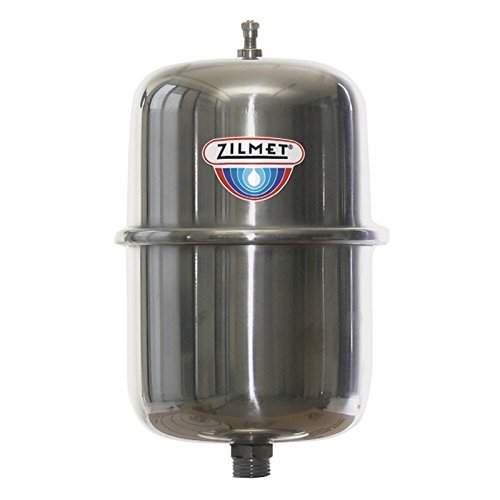
Best for outdoor or corrosive environments, the ZS8 uses a 304 stainless steel shell and a fixed butyl membrane, with a design that handles harsh locations such as seaside areas. It is NSF-61 certified and features a food-grade diaphragm, making it suitable for potable water installations where exposure to salt or moisture is a concern. This tank is a strong choice when corrosion resistance and sanitation are priorities. A limitation is that its larger physical profile may require more space than ultra-compact models.
2.1 Gallon Thermal Expansion Tank (3/4″ MNPT) by HPS

Best for professional installations and long-term reliability, this 2.1 gallon tank uses a heavy-duty cold-rolled steel body with a stainless steel ¾” MIP connection and a 100% butyl rubber diaphragm. It emphasizes easy installation and compatibility with wall brackets. This option is well-suited for contractors or DIYers upgrading multiple outlets in a home or small commercial setting. A potential drawback is the optional bracket kit, which may be needed for secure wall mounting in some installations.
Watts Potable Water Expansion Tank, 4.5 Gallon
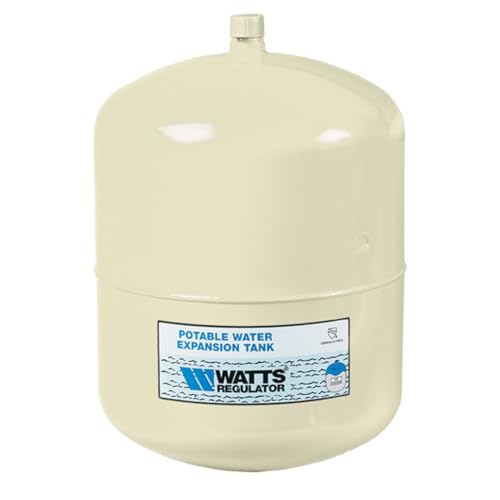
Best for larger residential or commercial potable water systems, the Watts 4.5 gallon tank provides ample expansion capacity to maintain safe pressures. Constructed with carbon steel and epoxy finish, it emphasizes durability and a robust external shell. The stainless steel inlet and 3/4-inch male connection enable straightforward integration into standard piping. Choose this for systems where a higher volume expansion buffer is needed. A limitation is its larger size, which may not fit compact installations.
Buying Guide
What should you consider when selecting a stainless steel expansion tank?
- Capacity vs. system size: Small 2 L tanks fit compact systems; larger homes may require 2–4.5 gallon models.
- Connection size: 1/2″ MNPT is common for compact setups; 3/4″ MNPT suits many residential systems.
- Material and diaphragm: Stainless steel shells with butyl or EPDM diaphragms resist corrosion and support potable water use.
- Environment: Outdoor and seaside installations benefit from higher corrosion resistance (304 stainless steel).
- Installation considerations: Mounting brackets, orientation flexibility, and space requirements affect ease of setup.
- Intended use: Tankless and compact systems may need smaller tanks; full-home installations may require larger capacity.
Practical considerations
- Leak resistance: Look for double O-ring seals and robust air chambers to minimize pressure loss.
- Maintenance: Some models emphasize easy access for diaphragm checks or replacement.
- Code compliance: NSF or lead-free certifications can be important for potable water applications.
Installation tips
- Plan placement to minimize stress on pipes and allow for expansion and contraction movements.
- Use appropriate mounting hardware and verify that the tank orientation aligns with the manufacturer’s guidelines.
- Confirm operating pressures stay within the diaphragm and tank rating to ensure longevity.
Which one should you choose? Quick recommendations
- Best for small spaces: EFIELD 2 L
- Best for outdoor or corrosive areas: Zilmet ZS8
- Best for larger potable water systems: Watts 4.5 Gallon
- Best for professional-grade durability: HPS 2.1 Gallon
- Best for compact or off-grid setups: oiununo 2.1 Gallon
FAQ
- What is an expansion tank and why is it stainless steel?
An expansion tank absorbs pressure fluctuations caused by heating water, protecting piping and fixtures. Stainless steel offers corrosion resistance and longevity in varied climates and water qualities. - How do I know which capacity to choose?
Choose capacity based on your system’s hot-water volume, pump activity, and expected pressure changes; larger homes and commercial systems typically require bigger tanks. - Can these tanks be used with tankless water heaters?
Yes, several models are designed for tankless or compact installations, focusing on reducing pressure spikes and leaks. - Are all tanks suitable for potable water?
Most listed options use corrosion-resistant materials and compatible diaphragms; check certifications (like NSF-61) for potable-water suitability. - Do I need professional installation?
A straightforward installation is possible for many models, but some setups may benefit from professional help to ensure proper mounting and connections. - What maintenance is required?
Periodic inspection for leaks, membrane integrity, and air charge levels helps maintain performance and safety.