If you need a reliable 1/3 HP sump pump to drain basements, pools, or hot tubs, these options are suitable for typical residential use. This guide highlights 5 models that balance power, durability, and ease of installation. Best for detailed basement water management, outdoor drainage, and portable setups, these pumps vary in design and features. The following table offers quick comparisons to help you choose quickly.
| Product | Power | Flow (GPH) | Best For |
|---|---|---|---|
| Wayne CDU790-1/3 HP Submersible | 1/3 HP | 4,600 | Heavy basement floods; durable, top suction |
| Zoeller M53 Mighty-mate | 1/3 HP | Automatic operation | Auto basements with debris; compact |
| Aquastrong Sump Pump 1 HP | 1 HP | 4,500 | High-flow needs; portable and high capacity |
| Acquaer 1/3 HP Automatic | 1/3 HP | 2,160 | Automatic on/off with smart sensor |
| Cleartide 1/3 HP Submersible | 1/3 HP | 2,790 | Smart auto/manual modes; versatile use |
Wayne CDU790-1/3 HP Submersible Sump Pump

The Wayne CDU790 combines a cast-iron volute with a corrosion-resistant epoxy coating and stainless steel fasteners. It delivers up to 4,600 GPH with a top suction design to reduce air locks and clogs from debris. This model is best for indoor basements facing heavy water influx during rain or snowmelt. It’s designed for quick installation, often in about 15 minutes, without needing a weep hole. A clear advantage is robust construction for long-term durability in tough sump pit conditions. Caution: best for indoor use; exposure to outdoor elements may require additional protection.
- Best for heavy basement flooding and long-lasting performance.
- Top suction helps prevent air lock and debris from clogging the intake.
Zoeller M53 Mighty-mate Submersible Sump Pump
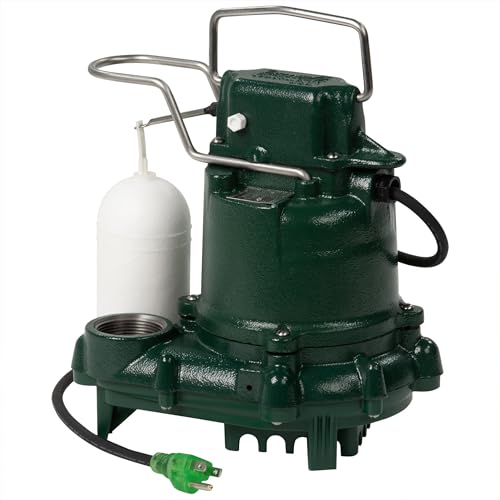
The Zoeller M53 is an automatic sump pump with a float-activated switch and a non-clogging vortex impeller. Built with a durable cast-iron switch case, motor, and pump housing, it emphasizes reliability and a compact footprint for tight sump pits. This model is best for continuous auto operation in basements where water levels rise predictably, especially when debris is a concern. Limitation: automatic operation depends on the float switch functioning properly; regular inspection is advised to prevent failures.
- Better for automated basements with occasional debris concerns.
- Non-clogging design helps reduce maintenance needs.
Aquastrong Sump Pump 1 HP

Although rated as a 1 HP unit, the Aquastrong model offers substantial flow up to 4,500 GPH and lifts water up to 30 feet. It’s designed for portable use with a bottom suction design that filters debris and handles solids down to 1/5 inch. This pump is well-suited for draining hot tubs, pools, and window wells, especially when you need quick removal of large volumes. Caution: higher power requires careful handling and proper electrical safety measures for outdoor use.
- Best for high-flow, portable drainage tasks.
- Bottom suction helps prevent debris from clogging the impeller.
Acquaer 1/3 HP Automatic Submersible

The Acquaer automatic submersible pump features a built-in sensor that turns on when water is detected and off when water recedes. It moves up to 2,160 GPH and has a bottom suction design with debris filtration to protect the motor. It is suitable for basements, pools covers, and hot tubs, offering automatic convenience with a copper-wound motor for durability. Limitation: lower maximum flow compared to higher-capacity models, which may be insufficient for extreme flooding scenarios.
- Best for automatic operation with debris filtration.
- Compact and energy-efficient for typical residential use.
Cleartide 1/3 HP Submersible Utility Pump

The Cleartide model blends auto and manual modes, enabling smart auto operation with a water sensor from 1-1/5″ down to 1/5″. It can move up to 2,790 GPH and lift water up to 30 feet. The housing uses rugged thermoplastic with a side inlet and metal filter to resist debris. This pump is ideal for flooded basements, pools, ponds, and garden drainage when flexibility matters. Caution: ensure the sensor range is appropriate for your water depth and environment.
- Best for flexible auto/manual operation.
- Good balance of flow rate and portability for diverse tasks.
Buying Guide: Key Considerations for 1/3 HP Submersible Sump Pumps
What should you look for when selecting a 1/3 HP sump pump? Start with intended use. For heavy basement flooding, prioritize models with high GPH and robust corrosion resistance. If you need automatic operation, choose pumps with reliable float switches or sensors. Consider the suction design: top suction reduces air locks, bottom suction filters debris to protect the impeller. Portability matters for outdoor tasks; a handle and a long power cord can simplify use. Material matters: cast iron housings offer durability, while thermoplastic housings reduce weight and corrosion exposure. Ensure the discharge size matches your plumbing fittings, typically 1″ or 1-1/4″ NPT adapters.
What is the best pump for auto basements with debris?
Zoeller M53 and Cleartide offer robust automatic or smart auto modes with debri-resilient designs. If you anticipate frequent debris, these options reduce maintenance needs.
Should you choose a higher-flow 1 HP model?
For rapid water removal from hot tubs, pools, or large flood events, a 1 HP unit like Aquastrong provides higher flow. However, it consumes more power and may be unnecessarily large for small basements.
Are plastic or metal pumps better?
Metal housings, especially cast iron, are generally more durable in demanding environments and long-term use. Thermoplastic pumps are lighter, resist corrosion, and are often more affordable, making them suitable for portability.
What maintenance helps extend life?
Regularly inspect the intake for debris, test automatic switches, and ensure electrical connections stay dry. Avoid running the pump dry; use proper drainage and power sources with GFCI protection where required.
FAQ
- What does 1/3 HP mean for sump pumps? It indicates the motor size and roughly the maximum flow capability in typical conditions, often around 2,000–4,600 GPH depending on head height and design.
- Is automatic operation essential? For basements with fluctuating water, automatic float switches help keep water at bay without manual intervention.
- Can these pumps handle debris? Many models include bottom or side intakes with filters designed to handle small debris; check the solid handling specification for each model.
- What is “top suction” used for? Top suction reduces air locks and clogs by drawing water from the top of the sump pit, improving efficiency in dewatering.
- What discharge size should I expect? Most 1/3 HP pumps use 1″ or 1-1/4″ NPT discharges with adapters available for common hoses and fittings.
- Do I need a backup pump? If your area experiences frequent major floods, a backup pump provides redundancy during power outages or heavy rainfall.