Answering the search intent for tankless heater owners: the right descaler keeps heat exchangers clean, restores hot water flow, and protects efficiency. This guide highlights five reliable options, suitable for homeowners, landlords, and service pros who want safer, more effective descaling without harsh chemicals. Each product page below explains who it’s best for, why it stands out, and any limitations to consider. A quick summary table provides at-a-glance comparisons to help you choose quickly.
| Product | Best For | Notes |
|---|---|---|
| QwikDescaler (1 gallon) | Frequent descalers, large systems | Visual indicator to know when to add more |
| J.C. Whitlam Flow32 (32 oz) | Eco‑conscious, NSF‑60 cleaned potable water | Biodegradable, zero VOC |
| Chromex NSF Tankless Descaler (1 gallon) | All-around performance, NSF certified | Versatile with various plumbing materials |
| Prystene Tankless Descaler (32 oz) | Citric/lactic acid safe, easy one-step flush | Food-grade acids, USA-made |
| RectorSeal Calci‑Free 68708 | Easy application, quick results | Tankless cleaner targeted for quick flow restoration |
QwikDescaler Plus Concentrated Descaler Solution
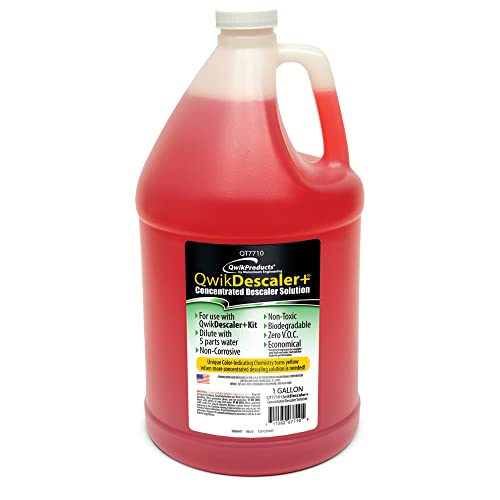
Best for frequent descalers who want a clear flow-restoration solvent for tankless heat exchangers. The formula rapidly flushes mineral deposits such as scale, lime, and tarnish, improving efficiency as passages clear. The solution is described as safe to handle with zero VOCs, making it suitable for homes prioritizing low-emission cleaning. A visible red-to-yellow color cue indicates when more descaler is needed, offering straightforward maintenance cues.
Who it’s best for: homeowners who perform regular flushes and want a high-clarity indicator system to guide refills. Why selected: strong broad mineral dissolution with safety profile. Caution: monitor for the change in color to avoid under-flushing if usage is not aligned with recommended cycle times.
J.C. Whitlam Flow32 Descaler
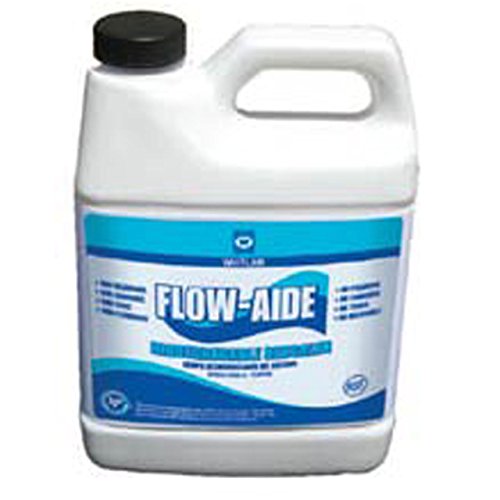
Best for households seeking a non-toxic, biodegradable option with NSF/ANSI 60 certification for potable water systems. This descaler quickly dissolves water scale, lime, rust, and other deposits to restore appliance efficiency. It is non-corrosive and designed to be safe to handle, making it suitable for DIY flushes without harsh fumes.
Who it’s best for: users prioritizing green chemistry and potable-water safety. Why selected: certification and a broad compatibility footprint. Caution: verify that the product’s recommended contact time matches your heater model and flush kit.
Chromex NSF Tankless Descaler (1 gallon)

Best for users needing NSF-certified descaling with broad material compatibility. This liquid solution dissolves inorganic mineral deposits to restore unrestricted flow and heating efficiency. It’s described as biodegradable and more effective than vinegar, with compatibility across PVC, rubber, ABS, metal surfaces, excluding certain metals like magnesium and aluminum.
Who it’s best for: households requiring NSF certification and a durable performance across common tankless plumbing materials. Why selected: NSF/ANSI/CAN 60 certification and strong deposit dissolution. Caution: not all metals are compatible; check your heater’s material compatibility before use.
Prystene Tankless Descaler Liquid 32 Oz

Best for quick, safe one-bottle flushing with food-grade acids. This descaler uses citric and lactic acids to dissolve limescale, calcium, and mineral buildup, restoring hot water pressure and heating efficiency. It’s marketed as safe for copper, stainless steel, and internal plumbing components and easy to use with standard flush kits.
Who it’s best for: buyers seeking a simple, one-step procedure with food-grade acids. Why selected: clear safety profile and straightforward operation. Caution: ensure the flush time aligns with your heater’s flush kit and model requirements to maximize results.
RectorSeal Calci-Free Tankless Cleaner
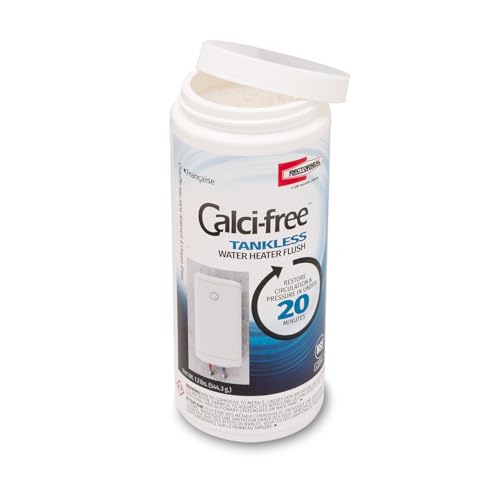
Best for quick, easy application in both residential and commercial tankless systems. Calci‑Free is designed to be fast-acting and to restore water flow, pressure, and circulation in roughly twenty minutes. It emphasizes easy use without strong odors and compatibility across common tankless installations.
Who it’s best for: buyers needing a fast, user-friendly cleaner. Why selected: straightforward application and quick restoration timeline. Caution: verify compatibility with your specific heater model and check for any sensitivities to slurry or concentrate in enclosed spaces.
Buying Guide: How To Choose The Right Descaler
- What is the scale type in your system? Inorganic mineral deposits respond well to citric and hydrochloric-style descales, while organic buildups may require different formulations.
- Do you need NSF/ANSI certification? For drinking-water contact areas, NSF certification provides an additional safety standard.
- What is your system’s material compatibility? Some solutions are not recommended for certain metals (for example magnesium or aluminum) or rubber components.
- What is your preferred application method? Some products come as concentrates with visual cues; others are ready-to-use liquids for straightforward flushing.
- How often do you flush? Large homes or commercial setups may benefit from higher-volume options or 1-gallon containers to reduce replacement frequency.
- Safety and eco-friendliness: Consider zero VOCs, non-toxic formulas, and biodegradability to minimize hazard exposure and environmental impact.
FAQ
- What is the best descaler for tankless water heaters? The best choice depends on your needs: certification, ease of use, and material compatibility. For certified safety and broad compatibility, Chromex NSF-certified options are strong.
- Can I use vinegar to descale a tankless heater? Vinegar is generally less effective for mineral deposits and can be corrosive to some components. Use purpose-built descalers when possible.
- Do descalers require a professional installation? Many descalers are DIY-friendly when paired with a suitable flush kit and clear instructions. Follow the product’s guidance for contact time and flushing steps.
- Are descalers safe for potable water systems? Some products are NSF certified for drinking water treatment chemicals, providing added safety for systems connected to potable lines.
- How do I know how much descaler to use? Many products indicate a visual indicator or a ratio based on system size. Always follow the manufacturer’s instructions for the specific model you own.
- What are signs that my tankless heater needs descaling? Slower hot-water delivery, fluctuating temperatures, and reduced flow are common indicators that mineral buildup is present.