Answer: For protecting floor drains from sewer gas, choose a trap primer distribution unit that matches your drain count and pressure range. This guide highlights five options, from compact 1–4 port units to larger models for multiple floor drains. The top picks are suitable for commercial and residential projects, with the best fits explained for specific needs such as simplicity, reliability, and ease of installation. The buyer’s notes below help you compare compatibility, maintenance, and installation requirements.
| Product | Brand | Best For | Notes |
|---|---|---|---|
| MIFAB MI-DU-625 151842 | MIFAB | Small to medium drain setups (1–4 ports) | 5/8″ connections; elegant finish |
| Soux Chief 695-01 | Soux Chief | Floor drain networks needing rapid replenishment | Large ports; pressure-activated release |
| PPP P1-500 P-1 | PPP | United States–built option for basic priming | Compact packaging; lightweight data points |
| PROFLO PFTPR500 | PROFLO | Up to 6 floor drains | Requires 10 psig to activate; 20–80 psig range |
Source information is based on the listed features and typical installation needs. The selections favor clear installation requirements, compatibility with standard 5/8″ or similar connections, and practical considerations for different building sizes and drain counts.
MIFAB MI-DU-625 Trap Seal Primer Distribution Unit

The MIFAB MI-DU-625 supports 1 to 4 ports with 5/8 inch connections. It features an elegant design and finish, suitable for visible installations. Best for smaller commercial or residential drain networks that require a compact primer distribution solution.
Who it’s best for: small to medium complexes needing a discreet, aesthetically pleasing unit with straightforward setup. Why selected: consistent port options and a clean installation profile. Caution: verify compatibility with existing supply lines before ordering, as the data emphasizes finish and port count rather than detailed operating pressures.
Soux Chief 695-01 Valve Brass Plated Trap Primer
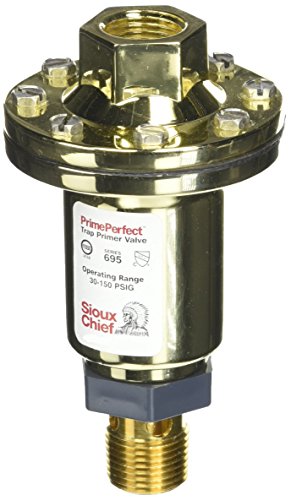
The Soux Chief 695-01 creates a replenishing water supply for floor trap seals, helping prevent sewer gas escape. It features large port openings to reduce sediment clogs and a factory-set water release triggered by pressure changes within 30–250 psig. Best for systems where sediment management and reliable priming are priorities.
Who it’s best for: facilities with higher risk of clogging or where robust water replenishment is essential. Why selected: strong emphasis on clog resistance and automatic priming through pressure variation. Caution: ensure the system’s pressure range aligns with this unit’s activation window to avoid under- or over-priming.
PPP P1-500 P-1 Primer Automatic Trap Primer Valve
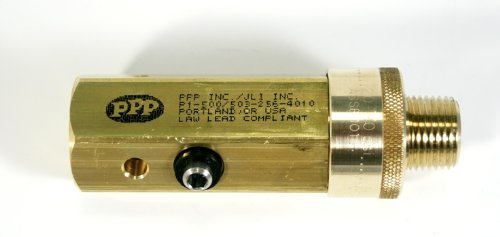
The PPP P1-500 P-1 is a United States–origin primer valve with compact packaging. It provides automatic priming functionality and is designed for straightforward installation in basic trap primer systems. Best for projects prioritizing domestic sourcing and compact form factor.
Who it’s best for: installations that favor a simple, compact, U.S.-made option. Why selected: reliance on automatic priming with minimal footprint. Caution: check compatibility with the distribution unit plan, as integration details are limited in the listed features.
PROFLO PFTPR500 1/2″ Trap Primer Valve

The PROFLO PFTPR500 primes up to 6 floor drains via a distribution unit, using a 10 psig pressure drop to activate the priming valve. It operates within a 20 to 80 psig range, making it suitable for moderate to higher-pressure systems. Best for medium to larger drain networks needing higher primer capacity.
Who it’s best for: projects with multiple floor drains and a higher activation threshold. Why selected: higher drain count handling and explicit activation pressure. Caution: ensure your system’s supply pressure can reliably meet the 20–80 psig operating range for consistent priming.
Buying Guide
What is a trap primer distribution unit?
A trap primer distribution unit distributes small amounts of water to floor traps to prevent sewer gas from entering occupied spaces. These units are chosen by port count, connection size, and activation pressure requirements. They are commonly used in commercial kitchens, restrooms, and mechanical rooms.
Key considerations for selecting a unit
- Port count: Match the number of floor drains to be primed (e.g., 1–4 ports or more).
- Connection size: Ensure compatibility with your piping, typically 1/2″ to 5/8″ connections.
- Activation pressure: Choose a unit whose activation range fits your system’s pressure dynamics (psig range matters).
- Pressure source and reliability: Domestic or international sourcing may influence lead times and serviceability.
- Maintenance and clogs: Look for units with robust port openings to resist sediment buildup.
How to compare options quickly
- Best for small systems: units with 1–4 ports and compact dimensions.
- Better for higher drain counts: models advertising up to 6 drains or larger.
- Choose this if you need American-made components or a known domestic supply chain.
- Avoid this if your system’s pressure range falls outside the activation window provided by the unit.
Installation and compatibility notes
- Verify port size and connection type before purchase.
- Plan for proper mounting to prevent vibration and leaks.
- Coordinate with building maintenance to ensure water supply and trap systems are prepped.
FAQ
- What does a trap primer do? It maintains water in floor traps to block sewer gases.
- How many drains can a typical distribution unit prime? It varies; options commonly support 1–4 drains, with some models handling more.
- What activation pressure should I expect? Many units activate within a 10–psig to 20–80-psig window, depending on model.
- Do I need professional installation? A licensed plumber is recommended for proper integration with existing plumbing and codes.
- Can I retrofit an existing system easily? This depends on port availability, connection type, and space for the distribution unit.
- Are these units available in the United States? Several models are listed with U.S.–origin references or domestic packaging data.