If you’re searching for a reliable wall-mounted bathroom vent, you want a unit that fits your wall thickness, delivers steady airflow, and operates quietly. This guide highlights five through-the-wall exhaust fans designed for bathrooms, kitchens, garages, and more. It explains who each product is best for, why it’s a strong pick, and any notable limitations. Whether you need retrofittable installation, retrac table ducts, or rust-resistant components, you’ll find practical, comparable options here. The top picks cover small to medium spaces and other common installation scenarios.
Buyer snapshot table: Best for… Key strength… Potential limitation
| Product | Best For | Why It Stands Out |
|---|---|---|
| Quini 512M | Small to mid-size bathrooms | 6-inch duct, retractable option, solid warranty |
| XABJU 512M | Flexible wall installations | Retractable duct, durable copper motor, rust-resistant duct |
| Broan-NuTone 512M | Simple, no-duct installs | Built-in exterior vent cap, easy twist-lock assembly |
| EJVFN 512M | Quiet, versatile venting | 80 CFM, 4.0 Sones, retractable duct included |
| VTNPQ 512M | Attics, garages, and large spaces | Wide reach with 16-inch retractable duct, high airflow |
Quini 512M Through Wall Exhaust Fan

The Quini 512M is designed for bathrooms where wall mounting is preferred and space is at a premium. It features a 6-inch adjustable duct and a retractable option, making it suitable for varying wall thicknesses. A one-year warranty provides basic protection for installation and use. This unit is best for small to mid-size bathrooms or compact kitchens where a through-the-wall vent is advantageous. Caution: confirm wall thickness and opening size before purchase to ensure a perfect fit.
Best for: budget-conscious remodelers who need a straightforward wall-vent solution and a configurable duct for different wall depths. Why selected: reliable through-wall design with adjustable ducting and a modest warranty.
Limitation: not ideal for very large spaces or areas requiring higher airflow beyond 80 CFM, and installation must verify compatibility with your wall thickness.
XABJU 512M Through-Wall Exhaust Fan
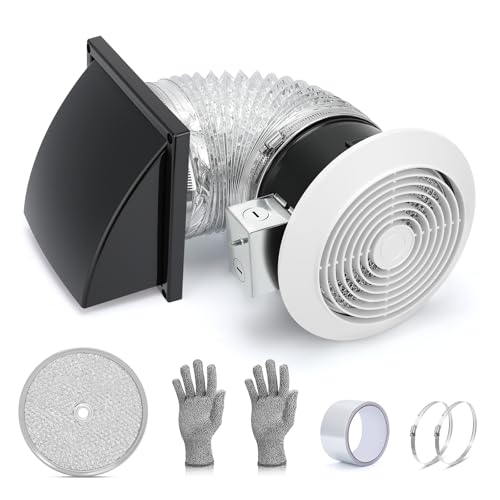
The XABJU 512M emphasizes flexible installation with a retractable aluminum duct and a durable copper motor. Its rust-resistant electrophoretic duct coating helps in humid or greasy environments, making it well-suited for kitchens, laundry rooms, or bathrooms prone to moisture. It requires a 6-3/8″ or 6-1/8″ diameter opening depending on duct usage. Caution: verify wall thickness (6 to 20 inches) and wiring requirements before starting.
Best for: installations where long-term duct durability and resistance to humidity matter. Why selected: robust duct and motor construction with a retractable duct option for varied wall thicknesses.
Limitation: more installation steps and fitment checks required; larger opening if using the retractable duct.
Broan-NuTone 512M Through-the-Wall Ventilation Fan
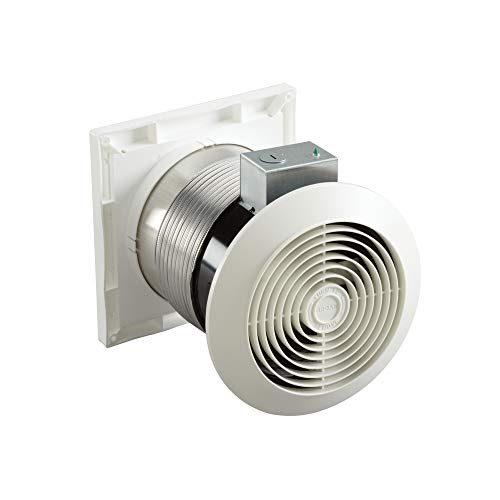
The Broan-NuTone 512M offers a versatile solution with an integrated exterior vent cap, reducing the need for ducting in some installations. It’s designed for spot ventilation in garages or utility spaces as well as bathrooms, delivering up to 70 CFM. This model is best for users who want a straightforward wall-install without extensive ductwork. Caution: check if your space requires ducting or a direct-wall vent setup to avoid under-ventilation.
Best for: spaces where a built-in exterior vent simplifies setup and reduces ducting requirements. Why selected: quick, twist-lock installation and exterior vent cap integration.
Limitation: limited airflow compared with higher-CFM units, not ideal for large bathrooms or humid rooms with heavy moisture loads.
EJVFN 512M Bathroom Exhaust Fan
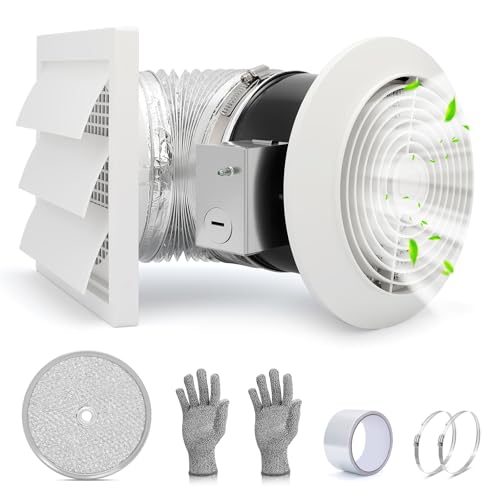
The EJVFN 512M is a quiet-option exhaust fan with 80 CFM and 4.0 Sones, suitable for baths, kitchens, and attics. It includes a 15-inch retractable duct, making it adaptable to wall thicknesses while maintaining airflow efficiency. The grille is an upgraded ABS with a built-in aluminum grease filter, which helps keep indoor air cleaner. Caution: not recommended for use directly over tubs or showers where direct water exposure could affect performance.
Best for: users prioritizing low noise and a flexible ducting solution for mid-sized rooms. Why selected: strong airflow with quiet operation and a modern filter/grille combo.
Limitation: not suitable for wet zones above bathtubs or showers; ensure appropriate placement away from direct water spray.
VTNPQ 512M 6 Inch Through-the-Wall Exhaust Fan

The VTNPQ 512M delivers 80 CFM with an 16-inch retractable duct designed for walls from 5-1/4 to 20 inches thick. It partitions spaces such as attics, garages, bathrooms, and kitchens with a single, efficient unit. The retractable duct and aluminum construction support versatile installation. Caution: ensure the opening diameter matches the chosen duct option to avoid air leakage or suboptimal ventilation.
Best for: larger or irregular spaces where a longer duct helps reach exterior venting. Why selected: high compatibility with thick walls and a long retractable duct for flexible installs.
Limitation: larger footprint and potentially more complex installation; verify that the chosen opening diameter aligns with the duct option used.
Buying Guide: Key Considerations for Wall Mounted Vent Fans
How to choose the right airflow (CFM) for your space
CFM measures how much air the unit can move per minute. For bathrooms, 50–100 CFM suits most small to mid-sized spaces. Kitchens or garages may benefit from higher values. Consider ceiling height, room volume, and moisture load when selecting CFM. A higher CFM typically reduces humidity faster but may generate more noise if not designed for quiet operation.
Ducting options and wall compatibility
Many models use a retractable aluminum duct to accommodate different wall thicknesses. Confirm the minimum and maximum wall thickness the unit supports. If you choose a non-retractable option, ensure you can create the proper opening and space for the duct. Some models include built-in exterior caps to simplify installation and reduce duct length.
Noise level and comfort
Noise is expressed in Sones or dB. A lower Sone rating indicates quieter operation. If the bathroom is near living or sleeping spaces, prioritize models rated around 4.0 Sones or lower. Note that higher airflow can sometimes trade off with quiet performance in budget units.
Durability and suitability for damp environments
Look for copper-wound motors and rust-resistant duct coatings for humid or greasy areas. Aluminum filters help trap grease and particles while keeping airflow clear. For kitchens or laundry rooms, prioritize durable, moisture-resistant components and easy-to-clean grille designs.
Installation considerations and warranties
Wall-mounted units require careful measurement of wall thickness, opening diameters, and electrical wiring. Some units come with a one-year warranty, while others may offer longer protection. Budget for potential professional installation if you are not comfortable with wiring or mounting the unit in a load-bearing wall.
Maintenance and replacement parts
Check if the grille and filter are easy to access and clean. A reusable aluminum filter simplifies maintenance. Availability of replacement parts, such as motors or ducts, can affect long-term costs and performance.
FAQ
- What is the typical airflow needed for a standard bathroom? For most bathrooms, 50–80 CFM is sufficient, but larger or taller spaces may benefit from 80–100 CFM.
- Do I need ducting for wall-mounted vents? Some units include exterior vent caps and require less ducting, while others rely on retractable ducts to reach the exterior. Check your installation plan.
- Are retractable ducts better for thicker walls? Yes, retractable ducts offer flexibility for varying wall thickness and simplify mounting in diverse spaces.
- Is a higher-priced unit always better? Not always. Compare CFM, noise, durability, and installation ease to match your space. A mid-priced unit with good noise performance and a reliable duct system can be a better fit than a cheaper option with higher maintenance needs.
- Can I install a wall vent by myself? If you are comfortable with cutting openings, wiring, and mounting, you can attempt DIY installation. If unsure, hire a licensed professional to ensure safety and proper venting.
- What should I do if the vent is noisy after installation? Check for loose panels, verify duct connections, and ensure the motor is properly secured. Consider a unit with lower Sones for quieter operation if noise is a priority.