When a cooling system leak appears, the fastest and simplest option is a proven water pump leak sealant. This article highlights top sealants that work with various engines and are suited for car and light truck owners who want a quick, no-flush fix. We focus on products that seal leaks in radiators, water pumps, head gaskets, and heater cores. The table below summarizes the five recommended products and their key strengths for quick comparison.
| Product | Best For | Typical Use | Notes |
|---|---|---|---|
| K-Seal ST5501 | Most vehicles, up to 12 cylinders | All antifreeze, no flushing | Fast, plug-and-go solution |
| K-Seal ST5516 (Heavy-Duty) | Large engines, industrial use | Heavy-duty leaks, large engines | Industrial-grade formulation |
| Bar’s Leaks Cooling System Stop Leak 16.9 oz | General radiator leaks | Radiator, hose, heater core leaks | Liquid aluminum variant |
| Prestone AS145 Stop Leak | Radiators, heater cores, hoses | Small to moderate leaks | Corrosion inhibitors included |
| Bar’s Leaks 1109 Liquid Copper | Intake and radiator leaks | Antifreeze-compatible, one-step | Copper-based sealant |
K-Seal ST5501 Multi-Purpose One Step Coolant Leak Repair
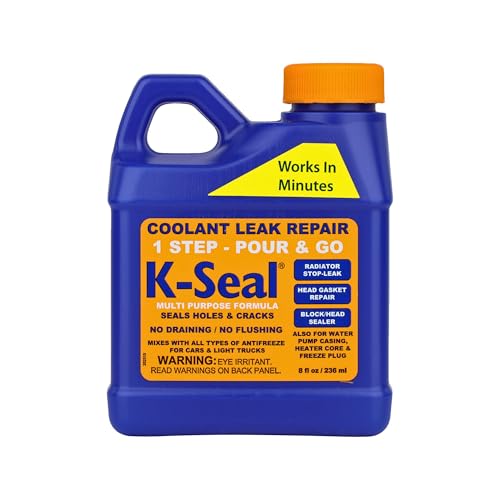
The K-Seal ST5501 provides a fast, one-step coolant leak repair designed to seal leaks in radiators, head gaskets, freeze plugs, blocks, heater matrices, and water pumps. It is advertised as compatible with all antifreeze and requires no flushing. Best for everyday passenger cars and light trucks with up to 12 cylinders. The formula seeks out holes and cracks to seal them without degrading cooling efficiency. A practical choice for owners who want a simple, quick fix and broad compatibility. Caution: results depend on leak size and location; not a guaranteed fix for all severe leaks.
K-Seal ST5516 Heavy-Duty Multi-Purpose One Step Coolant Leak Repair

The ST5516 is a heavy-duty variant designed for large engines and industrial use. It seals leaks in radiators, head gaskets, freeze plugs, blocks, heater matrices, and water pumps. It remains compatible with all antifreeze coolants and is intended for commercial or agricultural vehicles. Best for owners with heavy-duty machines or large engines where a standard sealant may fall short. Limitation: heavy-duty applications may require more product to address larger leaks, and results can vary with leak complexity.
Bar’s Leaks Cooling System Radiator Stop Leak 16.9 oz
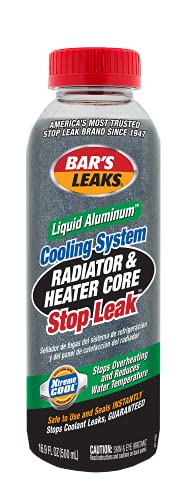
Bar’s Leaks Liquid Aluminum Stop Leak is a versatile option that seals radiator leaks and also addresses freeze plug leaks, gasket leaks, and heater core leaks. It’s marketed to lower water temperature and to seal multiple leak types. Best for general radiator issues and for users seeking a single product that covers several leak paths. Caution: aluminum-based formulas may interact differently with some coolant systems; follow directions closely to avoid adverse effects.
Prestone AS145 Stop Leak Repair for Radiators

Prestone AS145 Stop Leak is a patented formula designed to stop leaks in radiators, water pumps, and heater cores while boosting corrosion inhibitors to protect the system. It’s suited for small to moderate leaks and emphasizes sealing capability thanks to a blend of natural and synthetic components. Best for routine maintenance leaks or older cooling systems needing additional protection. Limitation: may be less effective on larger, high-velocity leaks; results can vary with leak severity.
Liqui Moly Radiator Stop Leak

Liqui Moly Radiator Stop-Leak seals leaks instantly across cooling and heating systems. It’s formulated for broad compatibility with all cooling water and heating systems, with or without water filters. Best for users seeking a universal sealant that can address leaks in a variety of materials. Caution: performance can vary depending on system design and the presence of pre-existing corrosion or blockages.
Buying Guide
What type of leak sealant do I need?
Choose a product based on leak location, engine size, and whether you need a quick fix or a more heavy-duty solution. General-purpose sealants work for many everyday cars. Heavy-duty or aluminum-specific formulas suit larger engines or aluminum components.
Is flush-free convienence important?
Most options in this list advertise no flushing required. This is convenient for drivers who want a fast fix without disrupting cooling system operation. If the leak is severe or located in critical seals, professional service may still be necessary.
What coolant compatibility should I check?
Verify that the sealant is compatible with your antifreeze type and the vehicle’s coolant system. Most products state universal or antifreeze-compatible, but always confirm to prevent chemical interactions.
What’s the best option for heavy-duty vehicles?
Look for products marketed as heavy-duty or designed for large engines. These formulations address higher pressures and larger leakage paths common in trucks, commercial equipment, or industrial machinery.
How should I apply and monitor after treatment?
Follow the product directions exactly. After application, monitor for any recurring leaks and check coolant levels regularly. If leaks persist after a reasonable period, seek professional diagnostics to rule out structural issues.
What are common limitations to expect?
Sealants are not guaranteed to fix all leak types, especially large cracks, active porosity, or mechanical failures. Some formulations may interact with particular materials or coolant compositions, and performance varies by engine design and leak location.
FAQ
- Will these sealants fix a major radiator crack? Most sealants are designed for small to moderate leaks. A major crack may require replacement or professional repair.
- Can I use sealant with any antifreeze? Many products claim antifreeze compatibility, but verify your specific coolant type to avoid adverse reactions.
- How long do these sealants take to set? Set times vary; some start sealing within minutes, while full curing can take longer depending on the product.
- Will sealants void my vehicle warranty? This can vary by manufacturer and policy. Check your warranty terms before use.
- Should I still drive my car after applying a sealant? In many cases, short, cautious driving is recommended to circulate the product, with subsequent monitoring for leaks.
- Do sealants fix water pump leaks? Some products claim to seal water pump leaks; effectiveness depends on leak size and location.
In summary, selecting the right water pump leak sealant depends on engine size, leak location, and how quickly you want a fix. The five products highlighted here cover a spectrum from everyday passenger vehicles to heavy-duty applications. Always follow the product directions and consider professional inspection if leaks persist or recur.