Garages and workshops require robust, reliable heat solutions that can stand up to the chill and keep you comfortable without compromising safety. This guide reviews five leading blower heaters designed for garage use, spanning propane, kerosene, and electric options. Each product prioritizes safe operation, effective heat distribution, and practical features for long hours of work. Read on to compare key specs and find the right fit for your space.
| Product | Brand | Power / BTU | Heating Area | |
|---|---|---|---|---|
| Dyna Glo Delux KFA135DGD | Dyna-Glo | 95,000 or 135,000 BTU | Up to 3,200 sq.ft. | Kerosene Forced Air Heater |
| Flame King 60,000 BTU | Flame King | 60,000 BTU | Up to 1,500 sq.ft. | Propane Forced Air Heater |
| TEMPWARE Electric Garage Heater | TEMPWARE | 6,250 – 7,500 W (25,590 BTU) | Large spaces up to 1,250 sq.ft. | Ceiling-mounted Electric Heater |
| NewAir NGH160GA00 | NewAir | 0) 1600W | Up to 160 sq.ft. | Electric Portable Heater |
| Dura Heat EUH1465 | Dura Heat | 1500W | Small spaces, garages, workshops | Electric Forced Air Heater |
Dyna Glo Delux KFA135DGD: Versatile Kerosene Forced Air
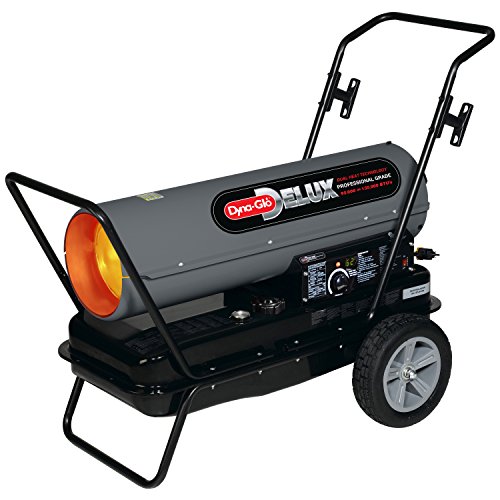
The Dyna Glo Delux KFA135DGD offers dual heat settings with 95,000 or 135,000 BTU options, designed to heat large spaces quickly. Its kerosene-fired forced-air mechanism pushes warm air across expansive garages, up to 3,200 square feet, making it suitable for semi-covered or open-plan workshops. Safety features typically include durable housings and stable mounting options for garage floors or sets. The dual BTU mode gives flexibility for varying workload and ambient temperatures, while the unit’s robust design supports frequent use in colder months.
Flame King 60,000 BTU Portable Propane Heater

The Flame King 60,000 BTU propane forced-air heater is designed for job sites, garages, and outdoor spaces. Its heating capacity supports up to 1,500 square feet, making it ideal for single-car garages or medium-sized workshops. Built-in safety features help prevent overheating and accidental tipping, and the unit’s portable design supports easy relocation around a workspace. This heater provides steady warmth even in windier or more exposed garage environments, with straightforward operation and gas-control options for immediate heat when needed.
TEMPWARE 7500-Watt Digital Ceiling Heater
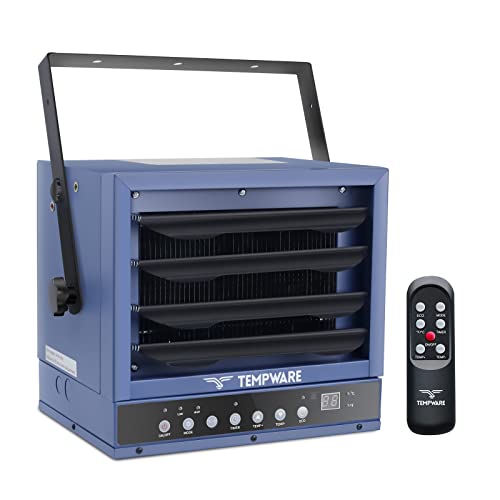
TEMPWARE’s 7500-watt ceiling-mounted heater delivers up to 25,590 BTU and is designed for large garages or workshops up to about 1,250 square feet. It includes a built-in thermostat, ECO mode, and a timer, helping optimize energy usage without compromising warmth. The unit’s hardwired setup and high wattage make it suitable for frequent, long-duration heating needs, with adjustable mounting and safe shutoff features that protect against overheating during extended sessions.
NewAir NGH160GA00 Electric Garage Heater

The NewAir NGH160GA00 is a compact 1600W electric garage heater designed for smaller spaces, offering safety-forward features such as a cool-to-the-touch exterior, an internal thermostat, and an automatic shut-off. Its compact form, adjustable temperature controls, and quick heat via a ceramic heating element and a 200 CFM fan make it a practical choice for workbenches, tool areas, or single-car garages where space is at a premium. Mobility and ease of use are emphasized by a tilting head and carrying handle.
Dura Heat EUH1465 Electric Forced Air Heater
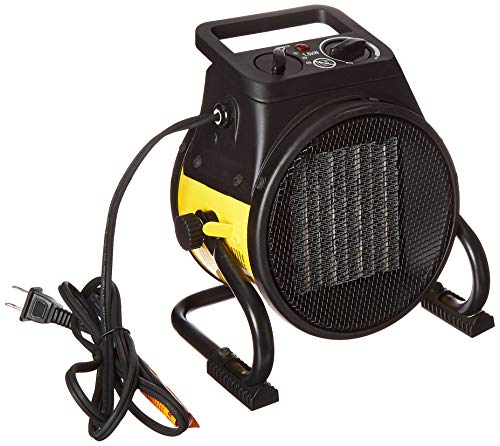
The Dura Heat EUH1465 blends compact electric heating with a rugged steel construction suitable for garages and workshops. It delivers 1500W of PTC ceramic heating with a durable build that supports heavy use. The unit offers heat and fan-only options, giving flexibility to act as a space heater or a circulating air device. It’s well-suited for smaller to mid-size garage spaces where quick warm-up and reliable operation are priorities.
Buying Guide: Key Considerations For Garage Heat
Choosing the right garage heater involves balancing space, fuel type, and safety. Here are core factors to consider and how they apply to the options above.
- Heat output and space: For large garages, kerosene or propane units deliver higher BTUs to cover more square footage, as seen with Dyna-Glo and Flame King. Electric models generally suit smaller to mid-size garages but can be paired with insulating upgrades for efficiency.
- Fuel type and availability: Propane and kerosene heaters require fuel storage and ventilation. Electric units demand plug accessibility and circuit capacity. Consider your garage’s ventilation, budget for fuel, and maintenance needs when choosing.
- Safety features: Look for automatic shut-off, tip-over protection, cool-to-the-touch exteriors, and built-in thermostats. The NewAir unit emphasizes safety with cool surfaces and auto shutoff, while many electric models include thermostats and overheat protection.
- Installation and mobility: Ceiling-mounted electric heaters like TEMPWARE save floor space, while portable units (NewAir and Flame King) offer flexible positioning. Factor in ceiling height and possible mounting options in your shop.
- Operating cost and efficiency: Electric heaters provide predictable costs but may consume more electricity in bulky spaces. Fuel-based units deliver high heat output quickly but require ongoing fuel purchases and ventilation considerations.
- Durability and warranty: Look for steel housings and robust construction for garage environments, plus access to spare parts and service networks. The Dura Heat and Dyna-Glo lines emphasize sturdy builds for frequent use.
- Noise and comfort: Some forced-air heaters produce more operational noise. If you prioritize quiet operation for longer sessions, electric models with softer fans may be preferable.
When evaluating options, align heat output with garage size, and prioritize safety features and installation practicality. A multi-zone approach—using a ceiling heater for bulk warmth and a portable unit for spot-heating near workstations—can maximize comfort and efficiency.