For homes with single-stage heating, a digital thermostat can improve comfort, energy efficiency, and ease of use. This guide reviews five reliable heat-only, non-programmable or basic digital models designed to control a single heating zone. Each option emphasizes straightforward operation, clear displays, and compatibility with common single-stage systems. Use this overview to compare features, installation notes, and suitability for gas, electric, or oil furnaces.
| Product | Brand | Key Features |
|---|---|---|
| Emerson Thermostats 1E78-140 | Emerson | Backlit digital display; non-programmable; single-stage heat compatible |
| Honeywell TH1100DV1000 Pro-Digital | Honeywell | 2-wire heat-only; 40–90°F range; backlit; ambient temp display |
| Upgraded Digital Non-Programmable Thermostat | Garystat | 1H/1C, heat/cool; large blue LCD; humidity monitor |
| Suuwer Non-Programmable Thermostat | Suuwer | 1H/1C; blue backlight; clear compatibility notes |
| Lux Pro PSD010BF Digital Thermostat | LUX | Digital accuracy; fan switch; battery powered |
Emerson 1E78-140 Non-Programmable Thermostat

The Emerson 1E78-140 is a straightforward, non-programmable digital thermostat designed for single-stage heating systems. Its easy-to-read display with backlight supports quick temperature checks in any lighting. Ideal for homes that prefer a simple control interface without scheduling complexity. Suitable for typical gas, electric, or oil furnaces that require a basic, reliable thermostat without advanced programming features.
Honeywell TH1100DV1000 Pro-Digital 2-Wire Heat Only

The Honeywell TH1100DV1000 offers a practical 2-wire, heat-only solution with a broad temperature span of 40 to 90°F. A backlit display improves readability in dim rooms, and the thermostat continuously shows the current ambient temperature for quick reference. It is a solid pick for standard residential heating setups that require reliable, non-programmable operation.
Upgraded Digital Non-Programmable Thermostat (Garystat)
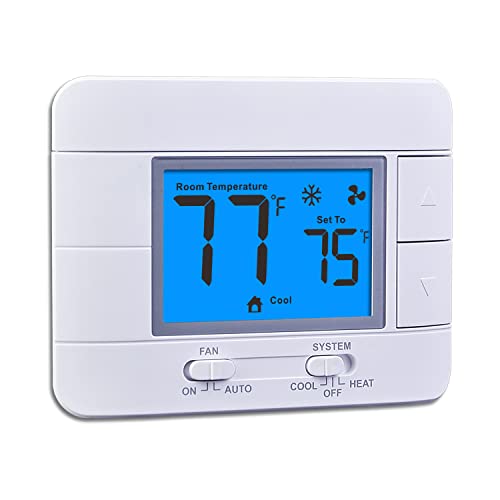
The Garystat model provides a single-stage heating and cooling option in a non-programmable format, with a large blue LCD display and a humidity monitor. It supports electric or gas/oil configurations, and its straightforward setup suits homes seeking a durable, uncomplicated control device. Note the compatibility notes to ensure it matches your existing wiring and system type.
Suuwer Non-Programmable Thermostat (Blue Backlight)

The Suuwer model targets conventional single-stage heating with 1 heat and 1 cool capacity. It features a blue backlight for easy nighttime visibility and includes guidance about compatible wiring configurations. Users should verify base compatibility (2–5 wires typical) before installation to avoid incompatibilities with the system.
Lux Pro PSD010BF Digital Non-Programmable Thermostat

The Lux Pro PSD010BF emphasizes digital accuracy and straightforward operation for heat-only systems. It includes a built-in fan switch and operates on battery power, offering portability and easy installation. This model suits spaces where a simple, low-maintenance thermostat is preferred, with dependable performance for single-stage heating control.
Buying Guide: Key Considerations For Heat-Only Digital Thermostats
- System compatibility: Confirm your heating type (gas, electric, oil) and whether the thermostat supports single-stage heat-only setups. Some models specify compatibility with 1H/1C or 1H/1C with cooling; ensure your wiring matches the base requirements (2–5 wires are common).
- Programmability: For heat-only needs, non-programmable models deliver simplicity and reliability. If future comfort features matter, consider a model with basic scheduling or learning capabilities, but verify that it remains compatible with your system.
- Display and readability: A backlit or large LCD improves visibility in dim rooms. Color contrast and font size can influence how quickly you adjust settings during nightly checks.
- Power source: Some thermostats run on batteries, while others rely on line voltage or a common wire. Battery-powered options simplify installation but require battery maintenance, while line-powered units may offer more features but need compatible wiring.
- Installation notes: Read wiring diagrams carefully and ensure you or a professional can handle the connections. Miswiring can lead to improper operation or equipment damage. Look for models with clear instructions and compatible base plates.
- Future upgrades: If you anticipate adding cooling, smart connectivity, or programmable features later, ensure the current model offers a path to upgrade or is compatible with common upgrade platforms.
- Physical dimensions: Some thermostats have extended depth or larger faceplates. Measure space around the thermostat location to avoid fit issues with wall contours or trim.
- Warranty and support: Check warranty terms and available customer support. A longer warranty can provide peace of mind for enduring performance in residential heating.