For spaces that need flexible, portable cooling without traditional window units, ductless or windowless air conditioners offer convenient options. This guide highlights five top picks that blend evaporative and compressor-based cooling with smart features, designed for bedrooms, living rooms, and home offices. Each product section covers key capabilities and what to consider when choosing the right unit for your space.
Summary Of Chosen Products
| Product | Brand | Key Feature |
|---|---|---|
| COOLECH Windowless Air Conditioner w/ 4 Modes | COOLECH | 4 modes, waterless alert, 3 speeds, 12H timer |
| COOLECH 4-IN-1 Windowless Air Conditioner | COOLECH | 4 modes, 4 speeds, waterless alert, 12H timer |
| Dreo Portable Air Conditioner AC515S | Dreo | 12,000 BTU, dehumidifier, app/remote control |
| Midea 8,000 BTU Smart Inverter Window Unit (Heat) | Midea | Inverter, heating, energy saver |
| Midea 10,000 BTU U Shaped Window Inverter | Midea | Ultra quiet, ENERGY STAR, smart control |
COOLECH Windowless Air Conditioner With 3 Modes
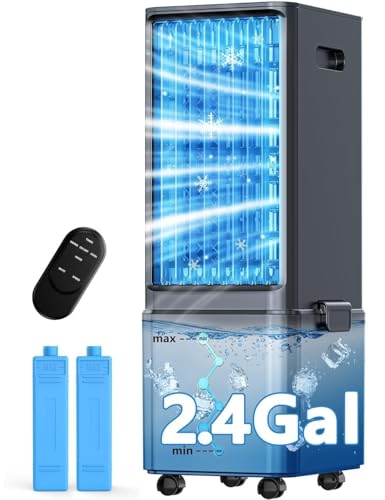
The COOLECH unit functions as a 3-in-1 evaporative cooler, operating as a fan, humidifier, and cooler. Its design aims to add moisture to dry indoor air, which can improve comfort in arid climates. A waterless alert system helps prevent operation issues by signaling when a refill is needed. With three speeds and 4 modes, users can tailor airflow to personal preferences, including a powerful cooling option and a sleep-friendly setting. Suitable for dry regions where humidity management enhances comfort.
COOLECH 4-In-1 Windowless Air Conditioner

This COOLECH model expands on cooling versatility with four modes and four speeds, enabling a broader set of cooling strategies. The unit doubles as a fan and humidifier while also delivering portable, dry-air relief for hot climates. A smart water alert system guards against operating without sufficient water, and a 12-hour timer adds scheduling convenience. This product targets users who want precise humidity and temperature control in a compact footprint.
Dreo Portable Air Conditioner AC515S

The Dreo AC515S provides 12,000 BTU of cooling power with dehumidification, making it suitable for midsize rooms. It combines cooling, dehumidifying, and fan modes in a single unit, with a focus on reduced noise through a dedicated isolation system around the compressor. A 24-hour timer and remote/app controls enable flexible operation, while quiet performance makes it well-suited for bedrooms or home offices where quiet cooling matters.
Midea 8,000 BTU Smart Inverter Window Unit With Heat

This Midea window unit adds heating capabilities along with cooling, delivering year-round comfort for rooms up to about 350 square feet. The inverter technology supports energy efficiency with significant savings potential and quieter operation. Controls include a remote, LED display, and compatibility with smart assistants. Energy Star certification highlights efficiency, while multiple modes (Heat, Auto, Cool, Dry, Fan) offer flexible climate management across seasons.
Midea 8,000 BTU Smart Inverter Window Unit With Heat

Another Midea option pairs an 8,000 BTU inverter cooling system with a heat function, designed to keep spaces comfortable across seasons. It emphasizes energy efficiency, with an ECO mode and variable-speed operation to tune performance and consumption. The unit supports smart control via a mobile app and voice assistants, plus a 24-hour timer and multiple control methods for seamless use in living rooms or bedrooms.
Buying Guide: How To Choose A Ductless Or Windowless Cooling Solution
- Cooling power and room size: Match BTU ratings to the square footage you need to cool. Larger rooms benefit from higher BTU units, but efficiency matters just as much as raw power.
- Operation mode options: Look for units offering multiple modes (cooling, fan, dehumidify, sleep) to adapt to seasonal needs and humidity levels.
- Humidity management: Evaporative (water-based) coolers add moisture, which can improve comfort in dry climates but may not be ideal in already humid areas. Consider dehumidification features for flexible use.
- Noise and comfort: Inverter-based or specially engineered quiet designs reduce sound output, important for bedrooms and study spaces.
- Energy efficiency: ENERGY STAR ratings and inverter technology typically reduce electricity use. Compare energy-saver features and programmable timers to tailor usage.
- Smart control and connectivity: App compatibility and voice assistant support allow remote operation and scheduling, enhancing convenience in busy households.
- Installation and window fit: Window-mounted designs require proper sizing for the window and sill. Windowless or portable models offer greater placement flexibility but may depend on room airflow patterns.
- Maintenance and alerts: Water or no-water alert systems help prevent damage and ensure continuous operation. Filter access and easy cleaning add durability.
- Climate suitability: Dry regions benefit from evaporative portable coolers, while humid or mixed climates may prefer traditional compressor-based window units with dehumidification.
Choosing between ductless and window-based cooling involves balancing portability, humidity control, noise, and energy use. The selections above cover a range of configurations—evaporative windowless units for dry climates, and inverter-based window units with heat for year-round comfort and efficiency. Consider the space, climate, and preferred control methods when evaluating these options.