Choosing the right exhaust fan for a roof or attic helps regulate temperatures, reduce moisture, and extend roof life. This guide reviews top-rated roof-mounted and attic fans, highlighting airflow, durability, and installation considerations. Whether you need high-capacity ventilation for a large attic or a compact unit for a shed, these options cover a range of homes and climates while aiming for energy efficiency and low noise. The following selections are tied to current popular models and widely available through major retailers.
| Product | Airflow (CFM) | Power | Best For |
|---|---|---|---|
| Master Flow ERV6BL 1500 CFM Roof Mount | 1500 | Up to 2800 sq ft coverage | Large attics, thermostat control |
| Master Flow PT6 1000 CFM Roof Mount | 1000 | Up to 1600 sq ft | Balanced ventilation, energy efficiency |
| FICBXRA Roof Extractor 171 CFM | 171 | General ventilation | Smaller spaces, warehouses, greenhouses |
| iLiving 12″ Wall Mounted Shutter Exhaust Fan | 960 | Thermostat control, variable speed | Shuttered venting, adjustable control |
| HG Power 10″ Shutter Exhaust Fan | 647 | Low-noise operation | Basements, sheds, and vents with mesh screen |
When selecting a roof exhaust fan, consider attic size, desired airflow, noise level, and installation requirements. The models below are organized to help you compare capacities and features side by side, with objective notes on design and use cases to help you decide which option fits your home best.
Master Flow ERV6BL 1500 CFM Roof Mount

The ERV6BL is designed for larger attic spaces, offering up to 1,500 CFM to efficiently move air through vented roofs. Its galvanized steel construction provides durability in exposed roof settings. A built-in HT1 thermostat/humidistat helps regulate cooling by activating the fan when humidity or temperature thresholds are reached, promoting comfort while potentially reducing cooling loads during hot days.
Key features include a robust airflow capacity suited for spaces up to 2,800 square feet and a weather-resistant housing. The unit is intended for rooftop mounting and provides a balance between quiet operation and strong ventilation, helping to keep attics from overheating and reducing moisture buildup that can affect insulation and roofing components.
Master Flow PT6 1000 CFM Roof Mount

The PT6 model delivers about 1,000 CFM with energy-conscious design. It emphasizes reduced electricity use—claimed to use up to 55% less energy than some competitors under testing conditions—while helping extend roof and shingles life through effective attic venting. The galvanized steel construction adds durability in harsh outdoor environments, making it suitable for variable climates and long-term installation.
Its installation is straightforward for roof or gable mounting, providing reliable exhaust for mid-sized attics. The combination of efficient operation and solid build makes it a common choice for homeowners seeking a practical balance of performance and cost.
FICBXRA Roof Extractor 171 CFM
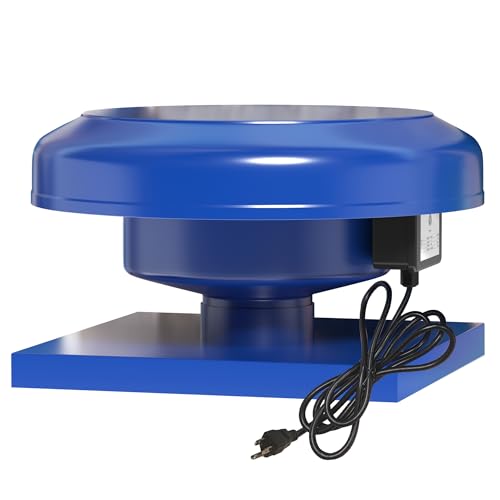
This roof-mounted fan is designed to deliver solid airflow with 171 CFM at up to 2,500 RPM, suitable for smaller attic spaces or supplementary ventilation. The metal shell is built to resist corrosion, and the product emphasizes low-noise operation through a compact, single-phase external rotor motor. A durable bird screen helps prevent obstructions while maintaining efficient exhaust flow, making it a practical choice for utility spaces like warehouses, attics, or greenhouses.
Applications range from general exhaust to targeted cooling in compact roof vents. Its balance of performance and compact size makes it a versatile option within a diverse ventilation setup.
Direct Drive Axial Cover Roof Exhaust Fan

This 19-inch base axial exhaust fan uses a direct-drive motor and a spun aluminum hood with a weather-resistant skirt. The design emphasizes a built-in bird screen and durable hub construction, supporting continuous operation in challenging roofline environments. It is suitable for larger roof penetration points and areas requiring dependable, straightforward exhaust without complex components.
Direct drive and robust construction simplify maintenance while providing a solid exhaust option for larger or multi-purpose roof venting needs.
Air Vent 53827 Roof Mounted Power Attic Ventilator

The Air Vent 53827 is a compact brown roof-mounted ventilator designed for attic exhaust. It emphasizes simple installation and reliable operation for moderate attic sizes. While specific CFM figures aren’t highlighted in the product listing, it serves as a practical option for standard venting needs where modest airflow and straightforward mounting are priorities. This model can pair well with a larger system to balance airflow across the attic space.
iLiving 12″ Wall Mounted Shutter Exhaust Fan

The iLiving unit features a 960 CFM airflow with automatic shutters and a thermostat-controlled, variable-speed controller. Built for heavier-use environments such as warehouses or workshops, it combines a galvanized steel frame with aluminum shutters and blades, offering durability and corrosion resistance. The integrated thermal control helps modulate performance based on ambient conditions, and UL certification adds a level of assurance regarding safety and reliability.
HG Power Upgraded 10 Inch Shutter Exhaust Fan

The HG Power 10-inch model emphasizes a thicker construction and upgraded motor for longer life. It delivers up to 647 CFM at 1400 RPM with low power consumption, making it suitable for sheds, basements, or smaller attic vents. A detachable steel mesh screen provides optional protection against debris while allowing easy cleaning and maintenance. The shutter design helps reduce backdrafts and wind-driven losses.
Buying Guide: Key Purchase Considerations And Comparisons
Airflow needs: Calculate attic or space volume in cubic feet and target an airflow rate that can exchange air every 2 to 3 minutes in hot months. Larger attics may require higher CFM units, while smaller spaces can run efficiently on mid-range models.
Energy efficiency: Compare energy use (watts) and avoid oversized fans that waste electricity. Look for models with thermostats or humidistats to run only as needed, reducing peak energy consumption.
Durability and weather resistance: Roof-mounted fans face sun, rain, and temperature swings. Galvanized steel housings and corrosion-resistant components extend service life in harsh climates. Consider hood design and bird protection features.
Noise and comfort: Noise levels matter, especially in living spaces adjacent to attics or exterior walls. Seek units with quiet operation ratings, sealed housings, and efficient motors.
Installation compatibility: Check mounting styles (gable vs. roof), duct accommodations, and electrical requirements. Some units include built-in thermostats or humidistats, which reduce the need for additional components.
Controls and features: Thermostats, humidistats, and variable-speed controls can improve energy efficiency and comfort. Consider whether you want smart or manual control options based on your routine and climate.
Maintenance: Look for easy-access housings, removable screens, and corrosion-resistant materials. Easy cleaning and straightforward replacement parts can extend product life.
Warranty and support: Favor brands offering solid warranty coverage and accessible customer support. This helps with installation questions and potential part replacements over time.
In summary, selecting the right roof exhaust fan hinges on attic size, climate, and how you balance energy savings with dependable ventilation. The models listed here emphasize robust airflow, durable construction, and practical features like thermostatic control and weather-resistant housings. For larger attics, start with ERV6BL or PT6, and consider supplementary units like the FICBXRA or HG Power options for coverage in mixed-use spaces. Always verify compatibility with your roof structure and local building codes before installation.