The craft of dispensing beer from kegs relies on maintaining precise temperatures and steady flow. A glycol chiller designed for beer lines helps keep draft beer fresh, reduces foaming, and ensures consistent Pour temperature from tap to glass. This guide reviews top options that pair well with glycol circulation for beer lines, highlighting features, compatibility, and practical considerations for home brewers, bar setups, and small breweries.
| Product | Brand | Key Use | Notes |
|---|---|---|---|
| W3850-CV Super Efficient 3/8 x 50′ Copper Wort Chiller | NY Brew Supply | Chiller line with copper wort coil | Ideal for medium setups; includes tubing and fittings |
| Stainless Steel Wort Chiller/Pre-Chiller | NY Brew Supply | Pre-chiller or standard wort chiller | Versatile with vinyl tubing and fittings |
| CHILLPILL Instant Drink Chiller | CHILLPILL | Rapid chilling for cans and bottles | Portable; no glycol required |
| Kollea Beer Chiller Sticks | Kollea | Beer cooling sticks for bottles | Reusable stainless steel; quick pre-chill |
| Cooper Cooler | Cooper Cooler | Rapid beverage and wine chiller | Automatic touchpad; quick chill |
W3850-CV Copper Wort Chiller Features And Benefits
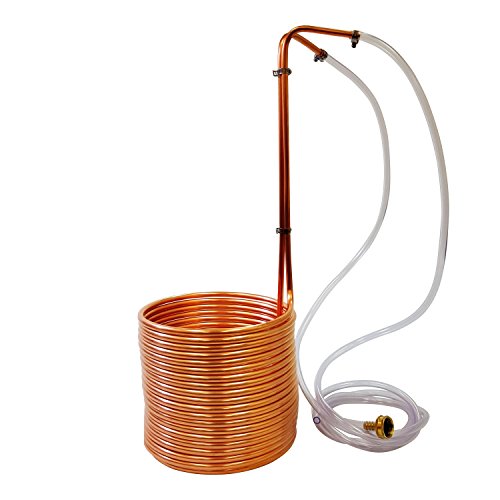
The W3850-CV is a compact wort chiller designed with copper tubing for efficient heat exchange. It includes vinyl and brass components, providing a robust setup suitable for homebrew kegs and small draft lines. The 50-foot length offers flexibility for routing through kegerators or cold rooms, helping maintain beer temperatures during transfer and serving. The combination of copper, vinyl, and brass materials supports durability and straightforward cleaning, which is important for line hygiene and consistency in beer quality.
Stainless Steel Wort Chiller And Pre-Chiller

This NY Brew Supply unit functions as both a pre-chiller and a standard wort chiller. It supports vinyl tubing for supply and exit lines and includes both male and female garden hose fittings. The dual-role capability makes it adaptable for glycol-based systems or direct chilling setups, enabling better temperature control at entry points to the keg lines. Stainless construction aids longevity, and compatibility with common garden hose fittings simplifies installation in domestic or commercial settings.
CHILLPILL Rapid Drink Chiller

The CHILLPILL unit offers rapid chilling for cans and bottles, providing an instant cooling solution when glycol lines are not practical. While it is portable and easy to use, it is best viewed as a supplemental device for quick-service contexts or on-the-go setups. It does not rely on glycol circulation, yet it can complement a glycol-based system by reducing the load on line cooling during peak service. This can help maintain beverage temperatures across diverse service environments such as parties or outdoor events.
Kollea Beer Chiller Sticks For Bottles

Kollea beer chiller sticks are stainless steel and reusable, designed to freeze in advance and insert into bottles. These sticks provide quick, targeted cooling without opening or running lines through glycol systems. Their reusable nature supports sustainability while offering a practical option for maintaining ideal beer temperatures in bottle service or small gatherings. The included gift-ready packaging makes them a convenient present for beer enthusiasts and casual drinkers alike.
Cooper Cooler Rapid Beverage And Wine Chiller

Cooper Cooler delivers rapid chilling for a range of beverages, including beer and wine. It uses an integrated cooling system with preset times and an auto-off feature, enabling convenient operation in busy environments where quick turnover is essential. This unit is particularly useful as a companion to glycol systems, providing additional cold storage and immediate chilling capabilities for glassware or bottled beverages when direct line cooling is not feasible.
Buying Guide: Key Considerations For Selecting A Glycol Chiller For Beer Lines
- System compatibility: Determine whether your setup uses glycol as a circulating coolant or relies on direct chilling. Some chillers work well as pre-chillers or standalone units, while others integrate with glycol loops.
- Flow rate and line length: Longer runs or higher volumes require chillers with adequate heat exchange capacity and tubing options. Copper coils generally offer efficient cooling, but plumbing flexibility matters for layout constraints.
- Materials and hygiene: Copper, stainless steel, and brass components resist corrosion and support sanitization. Stainless options tend to offer longer life in damp or humid environments.
- Maintenance needs: Consider ease of cleaning, accessibility of fittings, and availability of replacement parts. Regular sanitization is essential to beer quality and keg line hygiene.
- Versatility: Some units double as pre-chillers or offer portable cooling alternatives. Evaluate whether you need a fixed installation, a mobile solution, or a combination of both.
- Footprint and power considerations: Check the physical size and electrical requirements. Smaller home setups benefit from compact designs, while bars may require more powerful configurations.
- Cost of ownership: Beyond initial price, consider energy consumption, maintenance intervals, and component replacement cycles to assess total cost of ownership.
- Future scalability: If you plan to expand beer lines or increase keg count, select a system with scalable options or modular components to accommodate growth.
- Temperature stability: Look for precise temperature control and the ability to maintain consistent beer temperatures across varying ambient conditions and usage patterns.