Finding a reliable leak detector for your air conditioning system is essential for quick diagnostics and efficient repairs. The following selections emphasize infrared and UV-dye solutions that work across R-22, R-410A, R-134A, and other halogenated refrigerants. Each option offers different sensitivities, power sources, and detection methods to fit professional shops and DIY enthusiasts alike. Use this guide to compare performance, ease of use, and maintenance needs before purchasing.
| Product | Brand | Detection Method | Best For |
|---|---|---|---|
| Elitech ILD-200 | Elitech | Infrared halogen refrigerants | High-sensitivity, long sensor life |
| SENSYX SFD201 | SENSYX | Rechargeable gas detector | Cordless operation, compact use |
| TOPTES RT-389 | TOPTES | Semiconductor sensor, 3 modes | Versatile with gooseneck reach |
| VIVOHOME AC Leak Detector | VIVOHOME | Halogen refrigerants, multi-mode | Rechargeable, fast response |
| COSOOS AC Leak Detector Tool | COSOOS | UV dye detection | Compact, UV dye compatibility |
Elitech ILD-200 Infrared Leak Detector
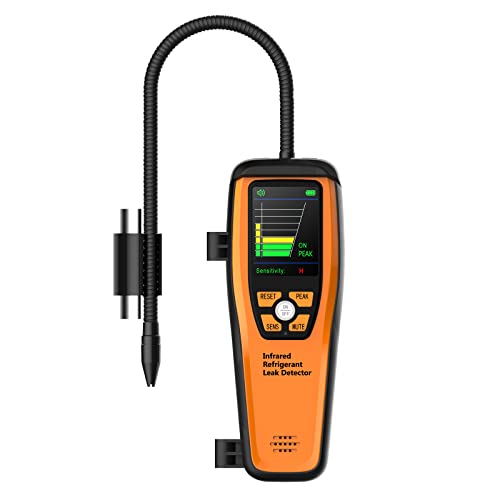
The Elitech ILD-200 focuses on infrared sensing to detect halogenated refrigerants with strong anti-interference performance. It offers adjustable sensitivity with High/Medium/Low levels and a maximum sensitivity of 0.14 ounces per year. Its infrared approach provides rapid response times and a longer service life compared with heated diode options, making it suitable for automotive and home AC systems alike. It detects a broad range of halogenated gases, including R11, R22, R404A, R410A, R600a, R1234yf, and many blends, enabling versatile troubleshooting across different refrigerants.
SENSYX SFD201 Rechargeable HVAC Leak Detector

The SENSYX SFD201 is a rechargeable HVAC leak detector designed for cordless convenience. It uses a high-sensitivity sensor with a Japan-made heat dioxide semiconductor, delivering reliable leak detection across common refrigerants. The device supports adjustable sensitivity with High/Low settings, helping technicians adapt to smaller leak paths in dense engine bays or tight HVAC compartments. A USB-C charging option supports long service life between charges, making this a practical tool for mobile technicians and workshop use.
TOPTES RT-389 Rechargeable Refrigerant Leak Detector

The TOPTES RT-389 combines a rechargeable design with a Japanese semiconductor sensor and three sensitivity modes (High, Medium, Low). It claims a maximum sensitivity around 3 g/yr (0.1 oz/yr), with a 14.5-inch flexible gooseneck for reaching tight spaces in automotive and residential systems. Four notification modes include audible, visual, vibration, and a quick mute feature. A TFT color display presents real-time readings and trends, switching between a real-time concentration chart and a trend curve for easier leak pinpointing over time.
VIVOHOME HVAC Leak Detector

The VIVOHOME leak detector provides three sensitivity modes with maximum sensitivity up to 0.03 oz/yr. It features a quick warm-up of about 30 seconds and a rapid 3-second response, enabling fast pinpointing of leaks in R134a, R410a, R1234yf, and other common refrigerants. The device uses audible alarms and a color-coded LCD to indicate leak intensity (red for high, yellow for medium, green for none). A rechargeable battery supports cordless operation, ideal for field service and busy shop floors.
COSOOS UV Dye Leak Detector Tool

The COSOOS AC Leak Detector Kit centers on UV dye detection. It includes a flashlight with 21 high-intensity LEDs and UV dye compatible with most R-134a, R-12, and R-22 systems. The kit emphasizes portability and quick pinpointing of leaks by visualizing UV-reactive dye under ultraviolet light. An included UV protective glasses enhance visibility in varied lighting, making this option well-suited for in-vehicle diagnostics and on-site repairs where dye tracing is preferred or required.
Buying Guide: Key Considerations For Choosing An AC Leak Detector
When selecting an AC leak detector, consider the following factors to balance cost, accuracy, and practicality:
- Detection method: Infrared sensors excel at rapid, broad-spectrum detection of halogenated refrigerants, while UV dye systems require dye injection and UV light to visualize leaks. Some devices combine both approaches, offering versatile diagnostics across different scenarios.
- Sensitivity and range: Look for configurable sensitivity with clear indicators. A higher maximum sensitivity helps detect smaller leaks but may increase false positives in dusty environments; a lower setting reduces noise but might miss tiny leaks.
- Power and portability: Rechargeable, cordless models improve mobility in vehicles and field service. Check battery life, charging options (USB-C is common), and overall weight.
- Sensor life and maintenance: Infrared sensors typically offer long life, but dust, oil, and contaminants can affect performance. Some models have replaceable sensors or easy calibration procedures.
- Indication methods: Visual LEDs, audible alarms, vibration, and TFT displays affect usability in noisy shop settings or dim spaces. Choose a device with a clear, intuitive interface and adjustable alert types.
- System compatibility: Ensure the detector supports common refrigerants used in your region or customer base, including R22, R410A, R134A, R1234yf, and blends like AZ-50 or HP62 when relevant.
- Durability and form factor: Pro-grade tools often feature rugged construction, impact-resistant housings, and compact dimensions for tight engine compartments.
- Accessories: UV dye kits should include compatible dyes and protective eyewear if UV detection is a primary method. Look for carrying cases or pockets for on-the-go use.
How To Use An AC Leak Detector Effectively
For infrared detectors, begin with a thorough system purge, then sweep along all joints, adapters, and connections. Increase sensitivity gradually in suspected zones and confirm readings by rechecking after recharging or cleaning filters. For UV dye kits, inject dye as instructed, operate for the recommended dwell time, and inspect with the UV light in a dark area to visualize leaks clearly. Always follow manufacturer instructions to avoid dye contamination and ensure warranty compliance.
Care And Maintenance Tips
Keep sensors clean and free from oil or dust. Store detectors in a protective case and avoid exposure to extreme temperatures. Regularly calibrate or check calibration if the device supports it, and replace consumables like UV glasses when scratched to maintain visibility.
Frequently Asked Questions
- Can I use an infrared leak detector for dye-based leaks? Yes, infrared detectors are versatile for halogenated refrigerants, but dye-based leaks may require dye-specific tools or UV inspection for best results.
- Are cordless models suitable for professional use? Yes, cordless designs improve portability in vehicles and on-site jobs, but ensure the battery life matches your workday length.
- Do all detectors detect R-1234yf? Many do, but confirm compatibility with your common refrigerants before purchasing.