Finding a compact, low-profile air conditioner for your RV can be the difference between a comfortable trip and restless nights. This guide reviews five top-rated low-profile rooftop AC units, highlighting cooling power, heating options, off-grid capabilities, and durability. Whether you’re camping off-grid or hooked to shore power, these selections cover different RV sizes and power needs. Below is a quick summary of the featured products to help you compare at a glance.
| Product | BTU (Cooling) | Key Benefit | Voltage/Power Notes |
|---|---|---|---|
| RV Air Conditioner, 12V 10000 BTU Rooftop AC (w/ heater) – OutEquip | 10,000 BTU | Integrated 4,500 BTU heater for mild temps | 12V, battery powered Ready |
| OutEquipPro 12V 10000 BTU Rooftop AC (no heater) | 10,000 BTU | Extended off-grid runtime with larger battery banks | 12V, battery powered |
| TOSOT 16000 BTU GO Cool RV AC (heat pump) | 16,000 BTU cooling; 12,500 BTU heating | WiFi control; wide temp range | 115V AC |
| 12V RV Air Conditioner, 15000 BTU (Whtoufou) | 15,000 BTU | High capacity; strong cooling and heating | 12V, battery powered |
| RecPro 13.5K BTU Low Profile Non-Ducted AC (heat pump) | 13,500 BTU | Low amp draw, quiet operation | 110–120V |
RV Air Conditioner With Heater — OutEquip (12V 10000 BTU)

The OutEquip 12V Rooftop AC provides a practical balance of cooling power and onboard heating. Its 10,000 BTU cooling capacity is designed to chill modest-to-mid-sized RVs quickly, with an additional 4,500 BTU PTC heater offering supplementary warmth during shoulder seasons. The unit is built for durability in harsh weather, featuring UV-stabilized ABS housing, an EPDM gasket, and a zinc-coated condenser to resist corrosion and weather exposure. This model is suitable for RVs, trucks, vans, and campers seeking a low-profile solution that can operate off a battery while parked.
OutEquipPro 12V 10000 BTU Rooftop AC (no heater)
The OutEquipPro variant emphasizes off-grid capability with extended battery runtime. While maintaining a 10,000 BTU cooling capacity similar to the heater-equipped model, this option focuses on battery-powered operation for vehicles parked off-grid, supported by ample battery capacity (examples include 12V 480Ah or 12V 600Ah pools). Durable construction includes UV-stabilized ABS, EPDM foam gasket, and a zinc-coated condenser for long-term reliability in rugged environments. It’s well-suited for sustained off-grid trips where power management matters.
TOSOT 16000 BTU GO Cool RV AC With Heat Pump

The TOSOT GoCool unit combines substantial cooling capacity with robust heating, making it a strong all-season choice for larger RVs up to about 600 square feet. Its 16,000 BTU cooling and 12,500 BTU heating cover bigger floor plans and drafty climates. Smart WiFi control via the Gree+ app adds remote monitoring and adjustments, while broad operating ranges accommodate outdoor temperatures from 23°F to 115°F. Installation is flexible, and the unit is especially appealing to travelers who want modern tech features and strong performance in a single package.
12V RV Air Conditioner 15,000 BTU With Heaing
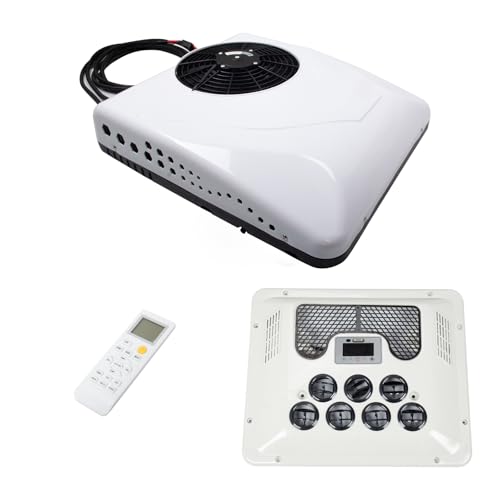
The 12V 15,000 BTU unit from Whtoufou emphasizes high cooling capacity along with heating capabilities for off-grid and on-grid setups. Its design focuses on resilience and energy efficiency, using a high-performance compressor and smart control to balance performance with battery life. The unit’s low-profile roof footprint helps preserve aerodynamics on travel trailers and smaller motorhomes, while a robust exterior guards against road exposure. This option suits RV owners who demand strong cooling power without sacrificing off-grid flexibility.
RecPro 13.5K BTU Low Profile RV AC (Heat Pump)

The RecPro 13.5K BTU unit emphasizes a low-amp draw and quiet operation, making it well-suited for off-grid setups where battery capacity or solar is a concern. Its low-profile, aerodynamic housing reduces drag and fits on a wide range of roof shapes. The unit includes heating via a heat pump, enabling comfortable climate control across seasons. It also emphasizes rugged durability with UV-resistant plastic and a focus on long-term travel resilience, targeting travelers who prioritize efficiency and quiet comfort in smaller-to-mid-sized RVs.
Buying Guide: Key Considerations For Choosing The Right Low Profile RV AC
- RV Size and Insulation: Larger RVs require higher BTU cooling. Consider your floor plan, insulation quality, and whether a heat pump is essential for winter use.
- Power Source And Off-Grid Capability: If you plan to park off-grid, evaluate 12V battery compatibility, runtime estimates, and whether the unit includes or relies on a heater/heat pump for seasonal comfort.
- Energy Efficiency and Amp Draw: Look for units with low amp draw and inverter-compatible designs. Energy-efficient models preserve battery life during dry camping.
- Noise Levels: Quiet operation is a priority for comfortable living spaces. Check decibel ratings and fan speeds to balance performance with restfulness.
- Durability And Weather Resistance: UV-stabilized housings, gasket materials, and corrosion-resistant condensers extend life in harsh road environments.
- Installation And Roof Fit: Ensure the unit’s footprint matches your roof cutout and mounting rails. Some models require professional installation, especially if you’re integrating with existing wiring or a heat pump system.
- Smart Features And Control: WiFi or mobile app control can simplify climate management, especially when you’re away from the RV or monitoring conditions remotely.
- Warranty And Support: A strong warranty and accessible customer support help mitigate maintenance concerns during long trips.
- Budget And Long-Term Value: Consider total cost of ownership, including installation, energy use, and potential off-grid expansion (batteries, solar).