Garage spaces can get drafty, especially in cold months. LP gas heaters offer portable, energy‑efficient warmth without relying on electricity, making them ideal for spaces with limited power or vented options. This article highlights five top-performing LP gas heaters designed to warm garages, workshops, and job sites. Each product is assessed by BTU output, recommended area, safety features, and ease of use to help you compare options quickly.
| Product | BTU / Heat Output | Coverage | Type | Vent / Safety |
|---|---|---|---|---|
| Mr. Heater F260550 Big Maxx MHU50NG | 50,000 BTU | Up to 1,250 sq. ft. | Natural Gas Unit Heater | Powered exhaust; vertical or horizontal venting |
| Gasland MHA18BN Portable Radiant Heater | 18,000 BTU | Up to 450 sq. ft. | Propane Radiant Heater | Tip-over & Low Oxygen Shut-off |
| Mr. Heater F260560 Big Maxx MHU80NG | 80,000 BTU | Up to 2,000 sq. ft. | Natural Gas Unit Heater | Vertical or horizontal venting; standard spec |
| ThermoMate PHF18B | 18,000 BTU | Up to 450 sq. ft. | Propane Cabinet Heater | ODS & Tip-over protection; portable |
| InoKraft MaXheat MH68 | 30,000–68,000 BTU | Up to 1,600 sq. ft. | Propane Forced-Air Heater | Overheat auto‑shutoff; CSA certified |
Mr. Heater Big Maxx MHU50NG Natural Gas Unit Heater
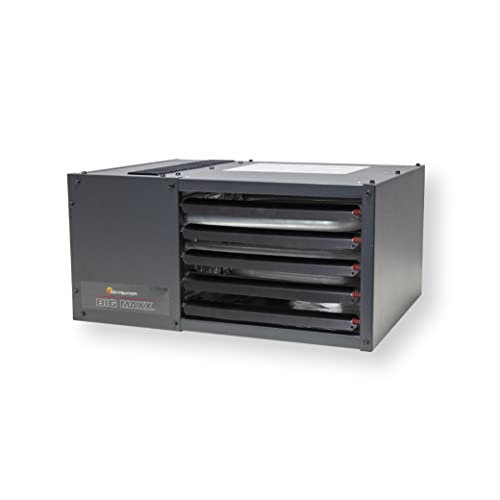
With 50,000 BTU per hour, this natural gas unit heater is designed to heat spaces up to 1,250 square feet. It features powered exhaust that supports vertical or horizontal venting, which can improve air quality and venting flexibility in larger garages. An external thermostat and A/C terminal access simplifies installation and service, while convenient outside access helps with routine maintenance. This model prioritizes robust warming capacity for mid-sized garage spaces and workshops that require consistent heat delivery.
Gasland MHA18BN Propane Radiant Heater (18,000 BTU)

This portable propane radiant heater delivers up to 18,000 BTU and is suitable for garages, workshops, and construction sites up to about 450 square feet. It includes safety features like tip-over and low oxygen shut-off to enhance operation in ventilated spaces. The unit runs without electricity, which can be advantageous during power outages. Its compact design and movable wheels make it easy to relocate within a garage or to a different worksites as needed.
Mr. Heater Big Maxx MHU80NG Natural Gas Unit Heater
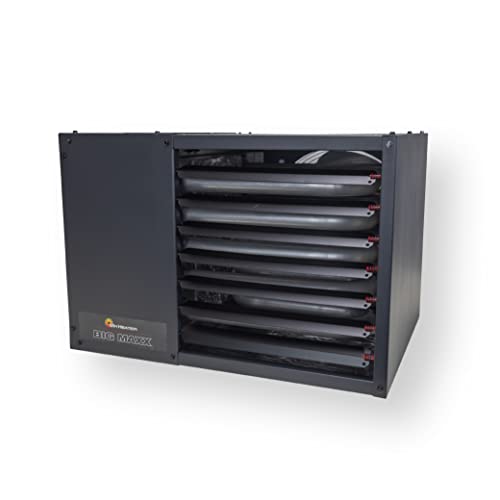
This high-capacity 80,000 BTU natural gas unit heater is designed for larger spaces, covering up to about 2,000 square feet. It includes venting options (vertical or horizontal) and comes with an external thermostat setup. The model is built for steady, even heat distribution in bigger garages and workshops, making it a good choice when you need reliable warmth across a wide area.
ThermoMate PHF18B Propane Heater (18,000 BTU)

ThermoMate PHF18B offers 18,000 BTU of radiant heat and is designed to heat up to 450 square feet. It includes an oxygen depletion sensor (ODS) and tip‑over protection for safer operation in garages or outdoor work areas. The heater is portable with wheels, and it ships with a gas regulator and hose, simplifying setup for immediate use in a ventilated area. Three heating modes provide flexible control for varying conditions.
InoKraft MaXheat MH68 Propane Heater (68,000 BTU)

The InoKraft MaXheat MH68 is a versatile forced-air propane heater with a BTU range of 30,000–68,000. It can heat spaces up to 1,600 square feet and is suited for larger garages, workshops, or job sites that demand rapid temperature increases. The unit includes a 10-foot hose and regulator and features auto‑shutoff protections for overheat and gas safety. Its robust design supports continuous work in colder environments, with adjustable heat output to match the space.
Buying Guide
When selecting an LP gas heater for a garage, consider the following factors to ensure safe, effective use and long-term value:
- Heat output and space coverage: Match BTU rating to the size of the garage. Larger spaces benefit from higher BTU units (60,000–80,000 BTU) while smaller workshops may only need 18,000–30,000 BTU, especially if the space has good insulation.
- Ventilation and venting type: Some units vent vertically or horizontally and require proper exhaust routing. Ensure your installation complies with local codes and provides adequate fresh air for combustion safety.
- Fuel type and accessibility: Propane vs natural gas—propane models are usually portable and do not require a gas line, but propane supply is an ongoing cost. Natural gas units require a ready gas line but can be more economical long-term if connected.
- Safety features: Look for tip-over safety, oxygen depletion sensors (ODS), auto-shutoff, and CSA or ETL certifications. These features reduce risk in occupied or partially ventilated spaces.
- Portability vs permanent installation: Portable radiant heaters are easy to move but may heat unevenly. Forced-air units heat quickly across larger spaces but require a steady venting plan and secure installation.
- Electricity independence: In outages, propane or natural gas heaters with no dependence on electricity can maintain heat. Consider units with minimal or no electrical requirements for critical tasks.
- Installation and maintenance: Some units come with hoses, regulators, and brackets, reducing setup time. Assess access to serviceable components, thermostat compatibility, and ease of cleaning.
- Noise and odor considerations: Radiant and infrared heaters are typically quieter and produce less ambient noise compared to some forced-air models. Ventilation and fuel combustion byproducts should be monitored in enclosed spaces.
Across the options, consider your garage layout, insulation level, and whether you prioritize ultra-high heat output or flexible mobility. The curated selection above provides a range of BTUs, venting configurations, and safety features to fit common garage setups while staying within practical maintenance and usage profiles.