When choosing a mosquito insecticide for fogging, it’s essential to consider compatibility with your fogging system, residual effect, and target pests. Below is a curated set of products commonly used with thermal and ULV foggers, designed to help reduce mosquitoes and other common indoor-outdoor pests. The table provides quick references to each product’s primary use and compatibility.
| Product | Brand | Key Use | Amazon Link |
|---|---|---|---|
| Black Flag 190255 32Oz Insect Fogger Fuel | Black Flag | Fogger fuel for compatible thermal foggers | Link |
| FOUNTAINHEAD GROUP 190457 Insecticide Mosquito, 1GL | Black Flag | Insecticide for black flag and Burgess foggers | Link |
| Bifenthrin I/T 7.9 F for Insects | Quali-Pro | Long-lasting residual control, odor-free | Link |
| Sector Mosquito Misting System Refill 1 Gallon | Sector | Versatile application methods for large-area control | Link |
| Bonide Mosquito Beater Flying Insect Fog | Bonide | Fog concentrate for lawns and gardens (thermal fogger | Link |
Below are five relevant products commonly used with fogging equipment, presented with objective details to help shoppers compare options for mosquito control.
Black Flag Fogger Fuel For Thermal Foggers

Designed as a compatible fogger fuel for several popular thermal foggers, this product is intended to optimize fogging performance. Its formulation is oriented toward efficient vaporization and steady output, helping technicians maintain consistent coverage during indoor or outdoor spraying sessions. While primarily a fuel, it supports using standard fogging equipment when paired with approved insecticides. Users should always follow equipment manufacturer guidelines to ensure safety and effectiveness.
FOUNTAINHEAD Group Insecticide For Foggers

This insecticide is formulated for use with Black Flag and Burgess foggers, enabling effective mosquito and nuisance insect control when applied via thermal fogging. The product is intended for rooms or spaces where fogging is appropriate, with a focus on rapid dispersion and noticeable knockdown of flying pests. Users should confirm fogging compatibility with their specific device and observe label directions for dilution and safety considerations.
Bifenthrin I/T 7.9 F Insecticide

Quali-Pro’s Bifenthrin I/T 7.9 F offers residual control for a broad range of pests when used in fogging or surface treatments. It is described as dependable with a long-lasting effect, and formulated to minimize odor and visible residue. The product emphasizes compatibility with non-irritating, low-to-no-odor formulations, and states the absence of plant-damaging solvents, reducing concerns for treated landscaping or ornamental areas when used correctly.
Sector Mosquito Misting System Refill

Sector’s refill offers versatility across several application methods, including compressed air sprayers, ULV cold foggers, and automatic misting systems. Its label lists a broad target range that includes mosquitoes and numerous other flying and crawling pests. The product’s suitability for both commercial and residential settings is emphasized, with multiple use environments such as restaurants, warehouses, and backyards highlighted as potential applications.
Bonide Mosquito Beater Flying Insect Fog
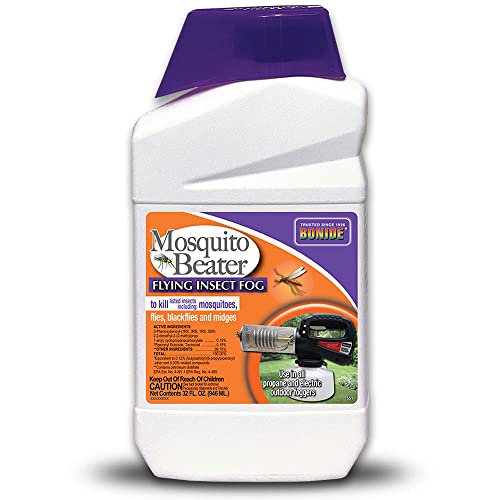
Bonide Mosquito Beater Flying Insect Fog is a concentrate intended for use with a thermal fogger. It is designed to create a fog that penetrates dense foliage to kill insects where they live and hide. The product emphasizes odor minimization and effectiveness in combining with fogging equipment to maximize coverage in outdoor living spaces, yards, and garden areas where mosquitoes are active.
Buying Guide: Key Considerations For Mosquito Fogging
Choosing the right fogging insecticide involves assessing the target environment, fogger compatibility, and safety requirements. Consider the following perspectives to inform a balanced purchase decision.
- Fogger compatibility: Confirm that the product is labeled for use with your specific fogging device, whether thermal foggers, ULV sprayers, or misting systems. Some items are dedicated fogger fuels, while others are ready-to-use concentrates.
- Active ingredients and residual activity: Different formulations provide varying knockdown speeds and residual control. Pyrethrin-based products offer rapid action but may require reapplication, while synthetic agents like bifenthrin provide longer residual control.
- Application method: Decide between indoor, outdoor, or agricultural contexts. Some products emphasize yard and garden use, while others are suitable for commercial kitchens or warehouses when paired with appropriate fogging equipment.
- Odor and residue: For sensitive spaces, odorless or low-odor formulations are preferable. Residue-free or non-staining options help protect plants and surfaces.
- Safety and environmental impact: Review label directions for PPE requirements, spray intervals, and restricted areas (near pets, food prep zones, or water sources). Consider non-target effects on beneficial insects when applying in outdoor spaces.
- Storage and handling: Some products are concentrates, others are ready-to-use fuels or pre-mixed solutions. Plan for proper storage, labeling, and disposal per local regulations.
- Cost and coverage: Compare the product’s yield per gallon or per bottle, and assess how many treatment cycles you expect to complete in a season. While price isn’t shown here, unit yields influence total cost of ownership.
- Label claims and certifications: Look for products compliant with local pesticide regulations and labeled for the pests you intend to control. Labels provide critical guidance on which pests are listed and how to apply safely.