Choosing the right paint sealer for metal protects against rust, weathering, and corrosion while preserving color and finish. This guide highlights five reliable options that work well on metal surfaces and provide durable protection. Each product below offers a distinct combination of adhesion, dry time, and finish, helping you select the best fit for indoor or outdoor projects.
| Product | Brand | Finish | Best For | Key Benefit |
|---|---|---|---|---|
| Painter’s Touch 2X Ultra Cover Spray Paint, Semi-Gloss Clear | Rust-Oleum | Semi-Gloss Clear | Metal, wood, plastic applications | Long-lasting protection; quick dry |
| Universal All Surface Clear Topcoat Spray | Rust-Oleum | Dead Flat Clear | Any surface including metal | Excellent adhesion; rust prevention |
| Stops Rust Spray Paint, Matte Clear | Rust-Oleum | Matte Clear | Metal and exterior surfaces | Rust prevention; durable coating |
| Painter’s Touch 2X Ultra Cover Spray Paint, Gloss Clear | Rust-Oleum | Gloss Clear | Metal and interior/exterior surfaces | Chip resistance; fast drying |
| Stops Rust Spray Paint, Gloss Crystal Clear | Rust-Oleum | Gloss Clear | Outdoor metal protection | Rust prevention; weather resistant |
When sealing metal, consider surface preparation, compatibility with primers, and the level of gloss you want. The products below are selected for versatility, ease of use, and proven performance on metal surfaces, helping you extend the life of metal fixtures, furniture, and structures.
Rust-Oleum Painter’s Touch 2X Ultra Cover — Semi-Gloss Clear

This oil-based spray is designed for interior and exterior use on multiple substrates, including metal. The formula resists chips and provides long-lasting protection, making it suitable for metal garden hardware, railings, and tools. It dries to the touch in about 20 minutes and covers roughly 12 square feet per can. The semi-gloss finish offers a balanced sheen that enhances metal surfaces without a high-gloss look. Prep by cleaning the metal thoroughly and scuffing the surface for better adhesion, then apply multiple light coats for even coverage.
Rust-Oleum Universal All Surface Clear Topcoat — Dead Flat

Designed to adhere to most surfaces, including metal, this topcoat helps protect against rust, fading, and chipping. The oil-based formula offers strong adhesion and durability, with a dry-to-touch time around 30 minutes. Coverage reaches up to 15 square feet per can, making it a solid choice for sealing larger metal surfaces like gates, mailbox posts, or exterior fixtures. Ideal for over a primer or directly on metal that has been prepped and cleaned for optimal results.
Rust-Oleum Stops Rust Spray — Matte Clear
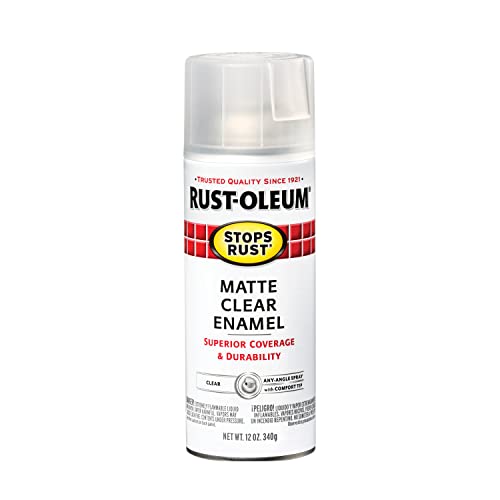
This coating is engineered for weather and corrosion resistance on exterior and interior surfaces like wood, metal, concrete, and masonry. The oil-based formula provides a durable protective layer and excellent rust prevention. Dries to the touch in 2–4 hours and covers up to 15 square feet per can. It’s a good option for metal tools, outdoor furniture, and structural components that require a clear, protective shell without adding significant color or gloss.
Rust-Oleum Painter’s Touch — Gloss Clear

Similar to the semi-gloss version, this gloss clear coat provides a bright, shiny finish on metal surfaces while delivering durable protection. It dries to the touch quickly and can be re-coated to build up a solid protective layer. Its versatility suits metal furniture, accents, and hardware that benefit from a high-sheen finish that still shelters against chips and moisture.
Rust-Oleum Stops Rust — Gloss Crystal Clear

This gloss clear option provides weather and corrosion resistance for metal surfaces, including exterior applications. It’s formulated to prevent rust and protect against the elements, with a typical dry-to-touch range of 2–4 hours and coverage up to 15 square feet per can. It’s especially suitable for outdoor metal fixtures and components exposed to moisture and varying temperatures, offering a transparent shield without altering the underlying color too much.
Buying Guide: Key Purchase Considerations
- Surface compatibility: Ensure the sealer works on metal and aligns with any primers or existing coatings you’ve used. All listed options handle metal and many other substrates.
- Finish and appearance: Choose flat, satin, or gloss finishes based on desired aesthetics and maintenance needs. Glossy finishes tend to show scratches less but highlight imperfections; flats mask them more effectively.
- Durability and rust prevention: For outdoor metal, prioritize products marketed for rust prevention and weather resistance. Oil-based formulas with proven adhesion tend to perform well on metal.
- Dry time and recoat windows: Quick-dry products enable faster project completion, but ensure you have sufficient time to apply multiple coats if needed.
- Application method: Sprays are convenient for intricate projects; brush-on options or clear topcoats provide alternatives for larger surfaces or specific textures.
- Ventilation and safety: Use in a well-ventilated area and follow can instructions for safety, particularly with oil-based products.
- Maintenance and cleaning: Consider how the finished surface will be cleaned and whether the coating requires special care to avoid scratching or dulling.
- Environmental impact: If odor or volatile organic compounds (VOCs) are concerns, check product labels for low-VOC options and choose accordingly.
Metal projects vary—from hardware upgrades and garden fixtures to outdoor furniture and structural parts. The products above offer a spectrum of finishes and adhesion profiles to help you choose a sealer that aligns with your project goals, whether you prioritize appearance, rust resistance, or ease of use.
Additional Considerations
When selecting a sealer for metal, assess the project’s location and exposure. Outdoor metal surfaces benefit from products with strong rust protection and UV resistance, while indoor metal pieces may prioritize aesthetic finishes and ease of cleaning. If painting over bare metal, consider a suitable primer designed for metal to maximize adhesion and longevity. For restoration projects, test a small area first to verify color and finish compatibility with existing coatings. Proper surface preparation, including cleaning, degreasing, and light sanding, will improve overall results regardless of the chosen sealer.