Finding a portable air conditioner that performs well in a basement can be challenging due to humidity, cooler ambient temperatures, and tight spaces. The following selections prioritize basement-friendly cooling power, low noise, and practical drainage-free or self-evaporating features. Each unit is suitable for spaces where you need reliable cooling without constant setup. Explore five top choices below and use our Buying Guide to compare key considerations.
| Product | BTU | Key Benefit | Brand |
|---|---|---|---|
| Dreo AC515S 12,000 BTU | 12,000 | Drainage-free cooling with 3-in-1 modes | Dreo |
| Dreo AC516S 14,000 BTU | 14,000 | Quiet, long-range cooling with 4-in-1 features | Dreo |
| ZAFRO 10,000 BTU Portable AC | 10,000 | Three modes; compact and portable | ZAFRO |
| Humhold 14,000 BTU Portable AC | 14,000 | Large-area cooling; dehumidifier option | HUMHOLD |
| GarveeTech 10,000 BTU Portable AC | 10,000 | No-drain option; strong dehumidification | GarveeTech |
Dreo 12k BTU — AC515S

The Dreo AC515S portable air conditioner delivers 12,000 BTU ASHRAE cooling power and includes a drainage-free design for easier basement setup. It offers a 3-in-1 mode with cooling, dehumidification, and fan operation, helping you tailor comfort without swapping units. Noise reduction features isolate the compressor, achieving about 46 dB, which is suitable for bedrooms or home offices. Temperature can be controlled with app, voice, remote, or built-in controls, with a 24-hour timer to fit basement usage patterns.
Dreo 14k BTU — AC516S
The AC516S raises cooling capacity to 14,000 BTU with a long-range 16 ft reach, making it versatile for larger basement layouts. It uses an advanced noise-isolation system to keep output near 46 dB, reducing disruption in sleeping or working areas. Self-evaporating drainage minimizes fuss in humid basements, and a smart control suite (app/voice/remote) provides flexible operation. The unit supports a 24-hour timer and multiple cooling settings to fit seasonal basement conditions.
ZAFRO 10k BTU Portable AC

This 10,000 BTU unit cools spaces up to 450 sq. ft. and offers three operating modes (cooling, dehumidifying, and fan) with a timer for energy-efficient basement use. It ships with a remote and LED display for easy adjustments from across the room. The model emphasizes portability with casters and has a focus on quiet operation, making it suitable for basements that double as living or working spaces.
Humhold 14,000 BTU Portable AC

The Humhold unit provides substantial cooling for larger basements, with a 14,000 BTU rating (ASHRAE) and 10,000 BTU (SACC) performance. It covers up to 700 sq. ft., appropriate for open basement layouts or larger rooms. A 3-in-1 function set supports cooling, dehumidification, and fan operations, while an auto-swing feature helps distribute conditioned air evenly. A front LED display and remote control add convenience for remote operation from sofas or beds.
GarveeTech 10k BTU Portable AC
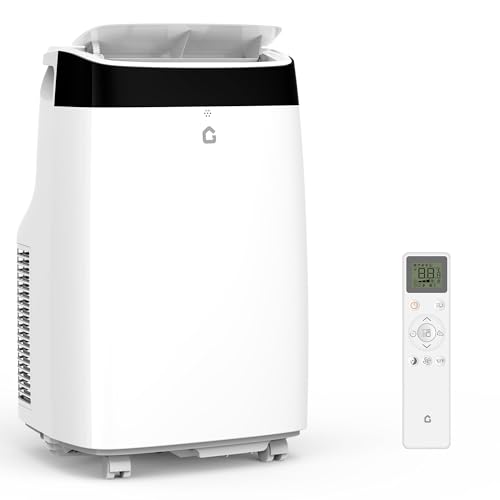
The GarveeTech 10,000 BTU model is designed for spaces up to 450 sq. ft. and includes a no-drain option, plus robust dehumidification for basement dampness. It features a quiet operation profile (<50 dB in Sleep Mode) and a 24-hour timer for automatic on/off scheduling. The unit includes a window kit for easy installation and a compact footprint suitable for basements with limited space.
Buying Guide: Key Considerations For Basement Use
- BTU and space fit: Basements often require higher BTU per square foot due to humidity and cooler ambient temps. Match unit capacity to your room size and layout; for open basements, consider 12,000–14,000 BTU units, while smaller dens can work with 8,000–10,000 BTU.
- Drainage vs. drainage-free: Many basements lack convenient drainage access. Look for drainage-free or self-evaporating systems to reduce maintenance. If a drain hose is needed, ensure you have a workable path to a floor drain or utility sink.
- Noise level: Basements can be shared spaces or bedrooms. Prioritize models with noise isolation or quiet operation (below 50–46 dB) to minimize disruption during sleep or work.
- Modes and versatility: 3-in-1 (cooling, dehumidifying, fan) or 4-in-1 configurations offer greater adaptability for humidity control common in basements. A programmable timer helps manage energy use.
- Installation footprint and mobility: Choose units with wheels and a compact profile for tight basement spaces. Ensure the exhaust and venting setup fits your basement layout with window or vent configurations.
- Self-evaporation and humidity handling: Self-evaporating systems are especially helpful in damp basements, reducing residual water and drainage needs. Consider models that work efficiently at higher humidity levels.
- Smart controls: Apps, remotes, and voice control provide convenience when the space is hard to reach, such as behind furniture or in a corner of the basement.
- Energy considerations: Look for energy-efficient compressors and auto-sleep modes to minimize electricity consumption in basements that require cooling for extended periods.
When selecting a portable AC for a basement, evaluate the room size, moisture level, and the ease of setup. The five options above balance cooling power with practical features like drainage-free operation, quiet performance, and flexible control options. Use the Buying Guide to align a specific unit with your basement’s unique needs and occupancy patterns.