For cabin living, a reliable propane heater can provide steady warmth during chilly mornings and frosty nights. This guide highlights five top propane heaters suited for cabins, focusing on portability, safety features, and space coverage. Each option includes rugged construction, ease of use, and heat output tailored to small-to-medium rooms. Below is a quick snapshot of the selected models to help you compare at a glance.
| Product | Approximate BTU | Key Benefit | Typical Space Coverage |
|---|---|---|---|
| Mr. Heater 9,000 BTU Portable Buddy Radiant Heater | 4,000–9,000 | Versatile indoor/outdoor use | Up to ~225 sq ft |
| Mr. Heater MH18CH Radiant Cabinet LP Heater | Up to 18,000 | Compact radiant cabinet with no electricity needed | Moderate spaces |
| ProCom ML100TBAHR Ventless Blue Flame Heater | 10,000 | Thermostat control for automated temperature | Up to 300 sq ft |
| ProCom ML200TBA-B Ventless Blue Flame Heater | 20,000 | High BTU with wall mount option | Up to 950 sq ft |
| Gasland MHA18BN Propane Radiant Heater | 18,000 | Portable with safety shut-off features | Small to medium spaces |
The right propane heater for your cabin depends on room size, ventilation, and power access. The models below offer a range of heat outputs, safety features, and mounting options to help you select a dependable heat source that fits your cabin life.
Mr. Heater 9,000 BTU Portable Buddy Radiant Heater

This versatile radiant heater delivers 4,000 or 9,000 BTU per hour and is designed for indoor and outdoor use. It provides heat to roughly 225 square feet, making it suitable for small cabins or rooms with good insulation. The unit is built for portability and can operate without electricity, depending on fuel source, which is advantageous during power outages. Safety features commonly associated with this model include automatic shut-off when tipped or oxygen levels drop, depending on configuration. Its compact profile makes it easy to store when not in use.
Mr. Heater MH18CH Radiant Cabinet LP Heater
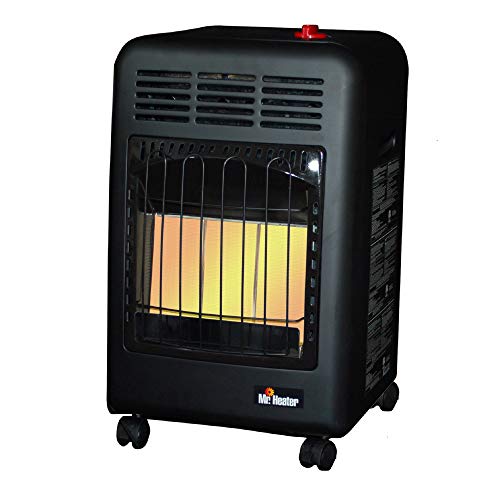
The MH18CH is a compact radiant cabinet heater that operates on liquid propane. It includes a hi-med-low regulator and an automatic low-oxygen shutoff system, with no electricity required for operation. This makes it a dependable option for cabins that may experience power interruptions or where electrical outlets are scarce. The cabinet design helps contain heat and can fit snugly in utility rooms or larger cabins, delivering steady warmth without relying on electrical power.
ProCom ML100TBAHR Ventless Blue Flame Heater

This 10,000 BTU blue flame heater operates ventlessly and includes a thermostat control to automate cycling for a comfortable room temperature. It heats up to about 300 square feet and comes with wall-mount options, providing flexible installation in cabins with limited floor space. The unit’s ventless design reduces the need for ducting or complex installation, but it requires adequate ventilation and CO safety awareness when used in enclosed rooms.
ProCom ML200TBA-B Ventless Blue Flame Heater

The ML200TBA-B delivers up to 20,000 BTU and heats spaces up to about 950 square feet. It includes thermostat control and offers two mounting options: wall mount or base feet for flexible placement. The heater is designed to operate on propane with no electricity required, making it a strong choice for cabins that need robust warmth without relying on electrical power. Its larger BTU output suits bigger cabins or open-layout living areas while maintaining energy efficiency with modern blue flame technology.
Gasland MHA18BN Propane Radiant Heater

The Gasland MHA18BN offers 18,000 BTU of radiant heat with portable convenience. It features safety shut-off mechanisms for tip-overs and low oxygen environments, aligning with cabin safety needs. The unit is designed to be moved between rooms easily and does not require electricity, which helps reduce energy consumption and provides warmth during power outages. Its portable design is ideal for smaller cabins or temporary heating zones within a larger space.
Buying Guide: Key Purchase Considerations For Cabin Use
Cabin heating requires balancing heat output, safety, ventilation, and portability. Consider these factors to choose the right propane heater for your space:
- Room Size And Heat Output: Match BTU ratings to the cabin area. Larger spaces benefit from higher BTU models, while smaller, well-insulated rooms may be comfortable with 10,000 BTU or less.
- Ventilation And Combustion: Ventless designs are convenient but require adequate ventilation and CO safety awareness. If a room lacks proper ventilation, choose a model with better oxygen-depletion sensing and automatic shut-off features.
- Electrical Dependence: Some heaters operate without electricity, which is advantageous during outages. If your cabin has a reliable electrical hookup, you can opt for thermostatic control with automatic cycling for consistent comfort.
- Safety Features: Look for tip-overs, oxygen depletion sensors, low-oxygen shut-off, and automatic shut-off mechanisms. These features reduce the risk of hazardous conditions in enclosed spaces.
- Portability And Installation: For seasonal cabins or flexible heating zones, portable models with wheels or compact cabinets offer convenience. Wall-mountable units help save floor space in smaller rooms.
- Maintenance And Durability: Corrosion-resistant housings and accessible filters or ignition systems simplify maintenance in rugged cabin environments.
- Regulatory Considerations: Ensure models comply with local codes and the intended use area (indoor vs. outdoor). Some models specify restrictions for certain regions or climates.
When selecting a propane heater for a cabin, prioritize models with robust safety features, an appropriate BTU range for your space, and installation flexibility that aligns with your layout and ventilation. The five options above provide a spectrum of heat outputs, safety features, and installation styles to fit various cabin configurations.