The following guide highlights top propane instant hot water heaters for RV use, focusing on power, flow, safety, and portability. Each option is evaluated for reliable performance, ease of installation, and safety features essential for on-the-go hot water. Below is a quick snapshot of five strong picks to consider for RV readiness.
| Product | Brand | BTU / GPM | Key Feature |
|---|---|---|---|
| 8L Tankless Water Heater Propane with Digital Display | Baotree | 40,824 BTU / 2.11 GPM | Low-flow startup protection and portable design |
| Ranein 65,000 BTU RV Tankless Water Heater | Ranein | 65,000 BTU / up to 3.9 GPM | High-altitude readiness, multi-function remote |
| OEVANT RV Tankless Water Heater 55,000 BTU | OEVANT | 55,000 BTU / unknown GPM | CSA-certified, microcomputer control |
| DARTMOOR RV Tankless Water Heater 65,000 BTU | DARTMOOR | 65,000 BTU / 2.4 GPM | High-altitude performance, comprehensive safety |
| GASLAND Outdoors BE158R | GASLAND | 41,000 BTU / 1.58 GPM | CSA-certified, off-the-grid ready |
Baotree 8L Propane Water Heater

Baotree’s 8L tankless unit delivers up to 40,824 BTU per hour and a maximum output of 2.11 GPM, with hot water reaching about 113°F and a starting point as low as 17°F. It includes six safety protections: overheating, dry combustion, antifreeze, low-flow, flame fault, and high water pressure protection. The device is lightweight and portable, ideal for camping and RV use, with a user-friendly one-button shower head to minimize water waste. The system requires a minimum working pressure of 3.6 PSI and a maximum of 116 PSI to ignite and operate efficiently.
Ranein 65,000 BTU RV Tankless Water Heater

Ranein’s high-capacity unit offers up to 65,000 BTU with a maximum output potential around 3.9 GPM, enabling continuous hot water for multiple showers. It supports high-altitude operation and includes a multi-function remote to monitor gas usage, voltage, GPM, and anti-freeze activity. Replacement compatibility with standard RV doors makes replacement feasible in many setups. The design emphasizes reliable heating, reducing wait times for warm water when on the road.
OEVANT RV 55,000 BTU Tankless Heater

OEVANT’s 55,000 BTU system uses propane for on-demand heating and includes a microcomputer control panel for straightforward temperature adjustments within a typical RV range. The unit emphasizes stability and efficiency, with a quick heat-up to provide hot water in under a minute for simultaneous showers, depending on supply and flow. It is CSA-certified and designed to work with common RV water systems, offering reliable protection against overheating and electrical issues via its intelligent controls.
DARTMOOR RV Tankless Water Heater
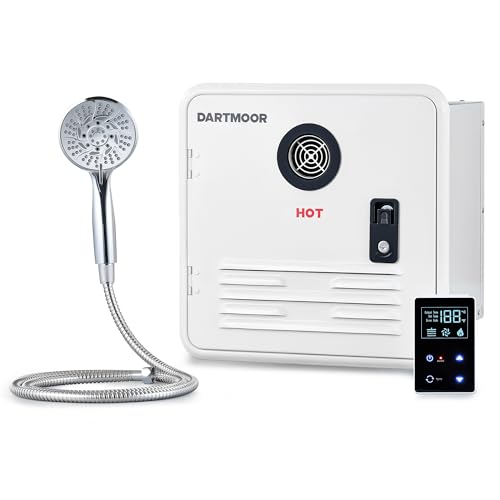
DARTMOOR provides 65,000 BTU with a steady 2.4 GPM flow, ensuring continuous hot water across RV trips and camping. The technology includes staged combustion for stable temperatures up to 124°F and reliable operation at high altitudes (up to 9,840 ft). Safety features cover dry heating, flameout, overheating, overpressure, and anti-freeze protection, plus self-diagnosis for quick troubleshooting in remote locations.
GASLAND BE158R Propane Water Heater

GASLAND’s BE158R offers 41,000 BTU with a 1.58 GPM flow, featuring CSA certification and an electronic ignition for off-the-grid operation. It is designed for flexible RV and outdoor use, with safety protections including anti-freeze, dry shutdown, and flame failure devices. The unit is suitable for compact spaces where space and weight savings matter, while delivering dependable hot water for showers and dishes on the move.
Buying Guide: Key Purchase Considerations
When selecting a propane instant hot water heater for an RV, consider the following factors to balance performance, safety, and portability.
- BTU rating and flow rate: Higher BTU usually means hotter water faster, but ensure your RV’s propane supply and piping can support the draw without pressure drops. Consider GPM needs for showers, sinks, and multiple users.
- Temperature range and stability: Look for units with precise temperature control and protection against overheating, especially in high-altitude or cold-weather environments.
- Safety features: Essential protections include overheating protection, low-flow protection, dry ignition protection, flame failure devices, and anti-freeze capabilities. CSA or equivalent certifications add reliability.
- Ventilation and installation: Some units are designed for indoor mounting with proper venting; others are compact and portable for outdoor use. Check clearance, exhaust, and door compatibility if replacing an existing heater.
- Power and ignition: Propane-powered heaters often rely on stable gas supply and may include electronic ignition. Verify compatibility with your tank size and refill schedule.
- Compatibility with RV doors and cabinets: Replacement models may require specific door sizes or mounting kits. Consider door openings, cutouts, and optional door kits when upgrading.
- Portability and weight: For frequent travelers, lighter units with simple installation save time and effort, though this may trade off some steady-flow capabilities.
- Maintenance and service: Check for availability of replacement parts, seals, and technicians familiar with RV propane systems in your typical travel regions.
Overall, the best option depends on your travel style, water usage, and how remote your adventures are. For frequent showers and higher flow needs, a higher BTU unit with a robust warranty and reliable safety systems is ideal. If you prioritize ultra-portability, a lighter model with adequate safety protections may be preferable.