Attic heat and poor ventilation can drive up cooling costs and reduce home comfort. Roof-mounted attic fans offer a compact, energy-efficient way to exhaust hot air and bring in cooler air from outside. The following products are among the most relevant options for American homes seeking reliability, energy savings, and easy installation. Read on to compare features, airflow, and compatibility to find the best fit for your attic size and climate.
Summary of chosen products:
- iLiving Hybrid Ready Smart Thermostat Solar Roof Attic Exhaust Fan, 14″, 40-Watt, 1150 CFM
- Master Flow GAF 1500 CFM Powered Roof Mount Attic Fan with Thermostat Controller
- Quietcool AFR PRO-1.3 Roof Mount Attic Fan, 1266 CFM
- OmniPV Solar Attic Fan, 40 W, 1600 CFM
- DC HOUSE Solar Attic Fan, 32W, 1600 CFM
Each product section below highlights key features, practical uses, and how it fits typical attic configurations. This guide emphasizes objective considerations such as airflow ratings, installation durability, weather resistance, and energy efficiency to help homeowners compare options without price bias.
iLiving Hybrid Roof Attic Exhaust Fan

The iLiving unit combines solar and smart thermostat control to regulate attic ventilation efficiently. With a 14-inch frame and a 40-watt motor, it delivers up to 1150 CFM, which is suitable for medium to larger attic spaces. The adjustable solar panel (0°/15°/30°/45°) helps optimize sun exposure, while an IP68 water-proof brushless motor supports durability in outdoor conditions. A built-in smart thermostat range (50°F-122°F) with enable/disable features allows precise climate management without manual intervention. A long-term warranty adds confidence in performance across seasons.
In practical terms, this model suits homes with sunny climates and moderate attic sizes up to roughly 2900 square feet of cooling capacity. The integration of solar power reduces reliance on the house electrical system and can be a persuasive option for off-grid or energy-conscious households. Installation considerations include roof access, weather sealing around the mounting area, and ensuring a compatible digital control setup if you want seamless automation with existing home systems.
Master Flow GAF 1500 CFM Attic Fan With Thermostat

This gable-mount roof vent delivers high airflow with a rating up to 1500 CFM, designed to cool attic spaces up to 2800 square feet. The built-in thermostat controller enables cooling when temperatures rise, while the galvanized steel construction provides durability against weather exposure. A built-in screen helps deter debris entry, contributing to longer-term operation with reduced maintenance needs.
Ideal for larger homes or loft spaces where attic heat buildup is significant, this model emphasizes steady performance and straightforward installation. The HT1 thermostat/humidistat option supports adaptive cooling in response to humidity levels, which can be beneficial in humid climates. When assessing this option, consider attic insulation quality, roof structure compatibility, and whether a gable-mount configuration aligns with your roof design for optimal airflow distribution.
Master Flow GAF 1000 CFM Roof Mount Attic Vent Fan

This model offers an economical approach with a 1000 CFM capacity suitable for smaller to mid-sized attics. It emphasizes energy efficiency, claiming up to 55% less electricity use than comparable vents under 120V testing scenarios. The galvanized steel construction contributes to long service life, while the unit’s compact footprint eases installation in restricted roof spaces. It’s designed to reduce heat buildup and protect roof and shingle lifespan by promoting consistent attic airflow over time.
Consider pairing this with an appropriate thermostat or humidistat to regulate run times in response to indoor temperature changes. For homeowners with tight budget constraints or limited attic space, this option provides a dependable balance of airflow and energy use. Check alignment with existing roofing materials and confirm vent placement to maximize cross-ventilation across the attic plane.
Quietcool AFR PRO-1.3 Roof Mount Attic Fan

The AFR PRO-1.3 from Quietcool focuses on dual-stage control with a substantial 1266 CFM airflow rating. The unit is designed for easy plug-and-play installation with a two-speed option, giving flexibility to adjust ventilation based on attic heat load. A sturdy one-piece stamped steel hood and perforated housing provide structural integrity and protective coverage. UV-resistant paint helps maintain appearance and durability in sun-exposed environments.
For homeowners seeking a robust roof-mounted option with straightforward temperature management, this model offers reliable performance without complex configurations. Consider climate conditions—where hotter, sunnier days dominate—and evaluate roof orientation and attic insulation to optimize the effect of attic venting. This option blends dependable airflow with practical build quality, reducing the risk of failure in challenging weather.
Solar Attic Fan 32W 1600CFM by DC HOUSE
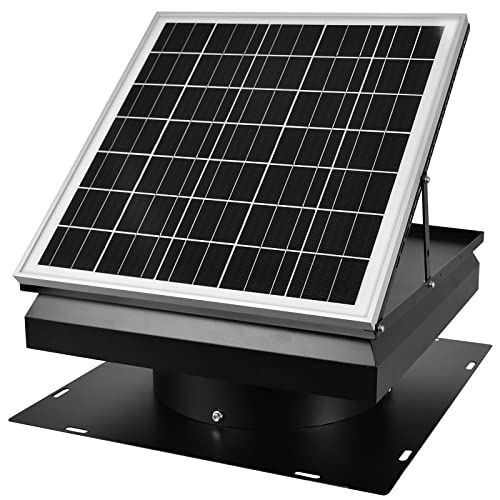
This solar-powered model emphasizes off-grid operation with a 32W solar panel delivering up to 1600 CFM. It is designed to automatically activate with sunlight and operate during daylight hours, delivering a proactive cooling approach without dependence on the home electrical system. The design prioritizes weatherproofing and storm resilience, making it suitable for rural or sun-intensive locations where roof exposure is optimal for solar collection.
Key considerations include local sun patterns, attic insulation levels, and potential integration with existing passive ventilation strategies. The DC HOUSE option is well-suited for homeowners who want energy independence during hot months or who have limited electrical infrastructure in the attic area. While solar energy provides strong benefits, it’s essential to confirm compatibility with roof type and to plan for maintenance around debris and panel cleaning for sustained performance.
Buying Guide: Key Purchase Considerations And Comparisons
- Airflow capacity (CFM): Match attic size to recommended CFM. Oversized fans can exhaust too quickly, while undersized ones may fail to reduce heat effectively.
- Power source: Solar-powered units reduce electricity use but rely on sun exposure. Electric models offer consistent performance but increase energy use. Consider hybrid options if available.
- Installation and mounting: Check roof type (gable vs. hip), mounting hardware, and weatherproofing. Ensure proper flashing and seals to prevent leaks.
- Thermostat and controls: Built-in thermostats improve efficiency by running only when needed. Humidistats can be beneficial in humid climates to avoid excessive moisture removal.
- Weather resistance: Look for IP ratings, galvanization, UV protection, and durable housings to withstand wind-driven rain and temperature swings.
- Noise and vibration: Some models include vibration-reducing features and quieter operation, which matters in living spaces near the attic.
- Maintenance: Screens, debris shields, and accessible housings simplify cleaning and prolong life. Consider how easy it is to access and service the unit from the attic or roof area.
- Energy considerations: Solar options save energy but may have lower performance on cloudy days. Electric versions provide steady airflow but require electrical capacity and wiring considerations.
- Compatibility with existing ventilation: Combine exhaust fans with passive venting or ridge vents to maximize cross-ventilation and prevent negative pressure buildup.
- Warranty and support: A longer warranty often reflects build quality and post-purchase support, which is helpful for long-term ownership.
When selecting a roof fan for an attic, consider the typical climate in your area, the attic’s insulation level, and the roof’s structure. For hot climates with significant sun exposure, solar-assisted or fully solar fans can deliver cost savings and dependable operation during peak sun hours. In cooler or variable climates, electric or hybrid options with thermostatic controls may offer more consistent cooling and comfort. Prioritize models with durable housings, weatherproof seals, and straightforward installation to minimize maintenance over time. Finally, align the product’s airflow with your attic’s dimensions to ensure effective ventilation without creating unnecessary drafts or noise.