Choosing the right rooftop air conditioner for an RV, trailer, or camper can significantly affect comfort and energy use on road trips. The following top picks balance cooling power, quiet operation, and ease of installation for American RV setups. Each unit is designed for non-ducted or simplified rooftop installations, with considerations for 12V or 115V power, heat pump options, and efficiency.
Summary of selected products:
| Product | BTU / Heating | Power | Key Feature |
|---|---|---|---|
| RV Air Conditioner, 12V 10000 BTU Rooftop (Outequip) | 10,000 BTU cooling / 4,500 BTU heater | 12V | Low profile, battery-powered option, weather-resistant |
| FOGATTI InstaCool 13,500 BTU RV AC | 13,500 BTU cooling | 115V AC / 12V DC | Dual compressors, eco-friendly refrigerant, smart energy |
| TOSOT 16,000 BTU GO Cool RV AC | 16,000 BTU cooling / 12,500 BTU heating | 115V with WiFi | GoCool, app control, broad climate range |
| Furrion Chill Cube 18k BTU RV AC | 18,000 BTU cooling | 115V | Variable speed, lightweight, ducted option |
| RecPro 15K RV AC Unit | 15,000 BTU cooling | 110-120V | Low amp draw, quiet operation, durable |
Outequip 12V 10,000 BTU Rooftop RV AC

Outequip presents a compact 10,000 BTU cooling unit designed for RVs, trucks, vans, campers, and trailers. It combines brisk cooling with a four-step approach to heating via a 4,500 BTU PTC heater, offering warmth at milder temperatures or smaller spaces. The unit emphasizes durability with UV-stabilized ABS, an EPDM foam gasket, and a zinc-coated condenser to resist weathering. The 12V power design supports battery-powered operation for off-grid trips, though cooling performance remains strongest when powered by an auxiliary or vehicle electrical system. This model suits travelers seeking a lighter, versatile option that prioritizes quick cooling and off-grid capability.
Key features include quick 15-minute cooling startup, supplementary heating for shoulder seasons, and rugged construction to withstand harsh travel environments. While not a primary heat source for severe cold, the heater adds value for adaptable comfort in varying climates. Installation is typically straightforward in standard RV roof configurations, with weatherproof materials designed to endure outdoor exposure.
FOGATTI InstaCool 13,500 BTU RV Air Conditioner
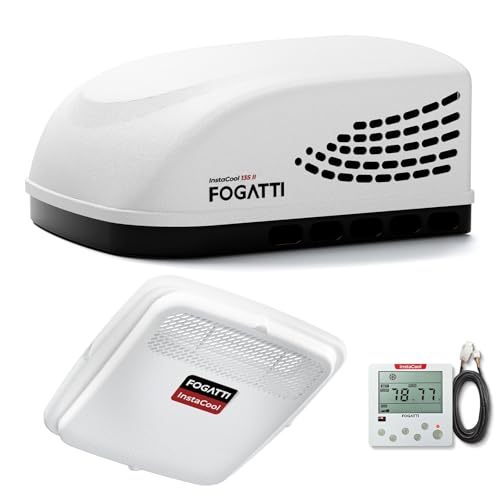
FOGATTI InstaCool RV AC combines 13,500 BTU of cooling with an all-in-one design that supports easy installation for campers and trailers. The system requires both 115V AC and 12V DC connections, ensuring compatibility with standard shore power and vehicle batteries. It features dual high-efficiency compressors and uses eco-friendly R32 refrigerant for efficient cooling. The unit includes smart energy-saving considerations through an advanced fan system and intelligent temperature regulation. This model emphasizes rapid cooling and energy-conscious operation for off-grid adventures, appealing to travelers who need solid performance with an eye toward efficiency.
Design-wise, InstaCool aims for a straightforward install in many roof layouts and provides reliable cooling even in warmer climates. The balance of high cooling capacity and energy management helps extend battery runtime when off-grid. Prospective buyers should ensure electrical supply matches the dual-power requirements and verify compatibility with existing mounting kits in their RV or trailer.
TOSOT 16,000 BTU GO Cool RV AC

The TOSOT GoCool series brings a robust 16,000 BTU cooling capacity with a 12,500 BTU heating option, designed for larger RVs and campers up to around 600 sq ft. This non-ducted rooftop unit features smart WiFi control via the Gree+ app, enabling remote temperature management. It handles wide outdoor temperature ranges from 23°F to 115°F, with an indoor range of 61°F to 86°F, helping to maintain consistent comfort across varied climates. The inclusion of heating broadens its year-round usability, making it a versatile choice for families on longer trips or in regions with cooler evenings.
For installation and operation, the GoCool system emphasizes flexible control and integration with modern smart home ecosystems. Users should verify roof compatibility, mounting hardware, and electrical requirements for a smooth setup. While powerful, the unit’s size and power draw should be matched to the vehicle’s electrical capacity and generator or shore power availability.
Furrion Chill Cube 18k BTU RV Rooftop AC

The Furrion Chill Cube delivers 18,000 BTU of cooling with a focus on high efficiency and quiet operation. This unit uses variable-speed compressors to move air more effectively and with less energy waste, making it suitable for campers and vans that require reliable performance on solar or limited power setups. It is designed for lightweight installation and offers a ducted option, expanding its applicability to different RV configurations. Chill Cube emphasizes performance attributes that support longer off-grid excursions while maintaining battery longevity.
Installation is described as straightforward with a bolt-on approach and a clear guide. Note that this listing provides the AC unit only, with additional components available separately. While it excels in cooling power, buyers should account for total system weight, electrical requirements, and compatibility with existing RV plumbing and venting arrangements.
RecPro RV Air Conditioner 15K

The RecPro 15K rooftop unit targets comfort with a balanced 15,000 BTU cooling capability and quiet operation rated around 55 dB. It offers low amp draw to support energy-efficient use alongside other RV appliances, making it a practical option for solar setups or generator-reliant travel. The unit is designed for both ducted and non-ducted configurations, with a durable, UV-resistant exterior and an aerodynamic shape that helps reduce drag and rooftop wear. RecPro emphasizes longevity and quiet performance, making it suitable for longer trips where sleep quality matters.
As with other rooftop units, compatibility with existing mounting brackets, electrical supply, and whether ducting is needed will influence installation. Its quieter operation and energy-conscious design make it a compelling option for RV owners prioritizing steadier climate control without excessive power consumption.
Buying Guide: Key Purchase Considerations
- Power source and compatibility: Determine whether the unit runs on 12V, 115V, or both, and confirm your RV’s electrical capacity, battery bank, and generator availability. Off-grid travelers may prioritize 12V operation or high-efficiency models with smart energy features.
- Cooling capacity and space: Match BTU ratings to your RV size and climate. Larger RVs in hot regions typically require 16,000–18,000 BTUs, while smaller trailers may suffice with 10,000–13,500 BTUs.
- Heat pump capability: If you need year-round comfort, select units with integrated heat pumps or heating options. This expands usefulness in shoulder seasons and colder climates.
- Installation considerations: Check roof dimensions, mounting brackets, ducting (ducted vs non-ducted), and whether the unit is designed for bolt-on installations. Some models list “unit only” options requiring additional components.
- Energy efficiency and noise: Look for energy-star-like efficiency, variable-speed compressors, and low decibel operation to reduce fatigue and power draw during long trips.
- Durability and weather resistance: RV rooftop units face UV exposure and weather. Materials like UV-stabilized plastics, rust-resistant condensers, and weather-sealing gaskets help maintain performance.
- Smart features: Apps and WiFi control can simplify climate management across multiple zones or when away from the RV. Ensure app compatibility with your mobile device and ecosystem.
- Maintenance and parts availability: Consider brands with accessible service networks and replacement parts to minimize downtime during trips.
When evaluating options, consider your typical trip length, climate zones, and whether you’ll rely on extended off-grid power. A higher BTU unit with efficient operation often yields the best balance of comfort and energy use for hot climates, while quieter, lower-power units may serve well for frequent short trips in milder weather. Cross-check installation manuals and required components to ensure a smooth setup.