Traveling in a camper or RV often requires compact cooling solutions that don’t sacrifice comfort. This guide reviews five compact AC options ideal for tents, campers, and small RV spaces, highlighting cooling power, energy use, and installation notes. Whether you’re chasing fast cooling on hot days or quiet operation for night use, these selections cover portable, roof-mounted, and windowless designs to fit different setups and power sources.
| Product | BTU / Type | Best For | Notes |
|---|---|---|---|
| WISHILO Portable Air Conditioner | 3400 BTU | Camper tent to small spaces | Compact with built-in compressor; short cooling time; needs ventilation |
| RV Air Conditioner, 12V 10000 BTU | 10000 BTU | RVs, trucks, vans | Low profile, battery-compatible option; heater included |
| Treeligo 12V RV Air Conditioner | 7900 BTU cooling / 3000 BTU heating | Non-ducted roof installs | 12V powered; good for off-grid campers |
| Dreo Portable Air Conditioners | 12000 BTU / 8000 DOE BTU | Small rooms, cabins | Quiet operation with smart features |
| Amazon Basics 5000-BTU Window AC | 5000 BTU | Small rooms and tight spaces | Simple control; easy install |
WISHILO Portable AC Unit For Camping

The WISHILO portable AC unit is a compact 3400 BTU model designed for tents, small campers, and vans. It starts cooling within minutes without requiring ice or water, thanks to a built-in Panasonic compressor. It covers roughly 64–86 square feet, which suits a two-person tent or compact RV nook. In Turbo Mode, the unit can drop temperatures by about 18°F (10°C) in 15 minutes, making it ideal for quick relief on hot days. Temperature control ranges from 60°F to 88°F (16°C–30°C). It also emphasizes airflow reach, with a unique perfusion design claiming up to 10 ft of cool air, 3–5 times longer than similar portable units. The unit is 22.4 x 11.2 x 13.8 inches and weighs 33 lbs. Warranty and U.S.-based support are highlighted as part of the offering. Ventilation is required to expel hot air.
RV Air Conditioner 12V 10000 BTU

This rooftop RV air conditioner provides 10,000 BTU of cooling for campers, trucks, vans, and other mobile setups. It features a low-profile design suitable for roof mount installations and includes a 4,500 BTU PTC heater for supplemental warmth in milder weather. The unit emphasizes rapid cooling, claiming a quick 15-minute cool-down in typical hot conditions, along with weather-resistant construction using UV-stabilized materials and corrosion-resistant components. The system is designed to operate in conjunction with a vehicle’s electrical system, with considerations for battery or auxiliary power support in off-grid scenarios.
Treeligo 12V RV Air Conditioner
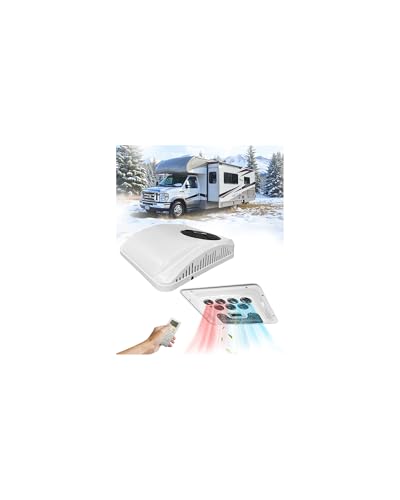
The Treeligo 12V RV air conditioner is a non-ducted, roof-mounted unit designed specifically for campers and travel trailers. It delivers 7900 BTU of cooling capacity and a 3000 BTU heating function for year-round comfort. Its 12V DC-powered operation makes it well-suited to off-grid or battery-dependent setups, potentially saving on fuel and generator use. The unit is designed for standard skylight roof installations with defined roof size compatibility. It emphasizes quiet operation and energy efficiency in a compact footprint, supporting campers who need reliable climate control without heavy power demands.
Dreo 12,000 BTU Portable AC (AC515S)

The Dreo AC515S stands out with a 12,000 BTU ASHRAE (8,000 BTU DOE) rating, offering broad cooling coverage up to 16 feet and a temperature range from 61°F to 86°F. It pairs cooling with a 3-in-1 mode that includes fan and dehumidifier functions, giving users flexibility for varied conditions. A patented noise-isolation system reduces compressor noise to about 45–46 dB, making it suitable for bedrooms and workspaces within campers or small cabins. The unit emphasizes drainage-free operation in humid environments, using a built-in pump and sensors to manage condensation, which helps simplify setup in tight spaces.
Amazon Basics 5000-BTU Window AC

The Amazon Basics 5000-BTU window air conditioner is aimed at smaller living spaces with straightforward cooling needs. It provides a two-in-one function: cooling with a separate fan option. The unit includes an easy-to-clean washable filter for basic maintenance and an adjustable window kit for flexible installation. With seven temperature settings and two-speed options, this model supports a customizable comfort profile in compact rooms such as small bedrooms or campers with window access. Its mechanical controls appeal to users seeking a simple, reliable cooling solution.
Buying Guide
Key purchase considerations for camper and RV cooling include space, power source, and climate demands. Consider these perspectives to choose the best fit:
- Space and installation: Roof-mounted 12V units save interior space but require roof access. Portable units offer flexibility but need a venting path and adequate clearance. Window units are simple but may not fit all camper window sizes.
- Power availability: 12V/DC units suit battery-powered gaps but may have modest BTU. Plug-in models consume more power and may require generator or shore power. For off-grid trips, battery capacity and energy efficiency are critical.
- Cooling capacity and climate: In hot, arid climates, evaporative or hybrid units can complement traditional AC. For humid environments, drainage-free or self-evaporating systems reduce maintenance and setup complexity.
- Noise and comfort: Look for units with noise-reduction features if quiet operation is important for sleep or work spaces inside the camper.
- Maintenance and warranties: A local support network and accessible spare parts make a difference on the road. Check warranty length and what it covers, especially for portable units exposed to travel conditions.
- Ventilation and safety: Portable units require proper ventilation to expel hot air. Rooftop units must be installed securely and sealed to prevent leaks and moisture intrusion.
For campers with limited space or off-grid tendencies, 12V models provide energy-conscious cooling that complements existing power systems. For those on shore power or planning longer stays, higher BTU portable options expand comfort without needing full RV air conditioning ductwork. When selecting, align cooling capacity with space size, climate, and available power to ensure reliable operation and comfort during travel.