Choosing a reliable unit heater can transform a cold garage into a comfortable workspace. This guide highlights five top options, spanning natural gas and electric models, to help American homeowners select a heater that fits their space, venting needs, and energy goals. Each pick is evaluated for heating capacity, installation requirements, and key features to guide an informed purchase.
| Product | Brand | BTU / Watts | Approx. Coverage | Key Feature |
|---|---|---|---|---|
| Mr. Heater F260550 Big Maxx MHU50NG | Mr. Heater | 50,000 BTU | Up to 1250 sq ft | Versatile venting options |
| TEMPWARE 7500-Watt Electric Heater | TEMPWARE | 7,500 W | Up to 1,250 sq ft | Eco mode and timer |
| Mr. Heater F260560 Big Maxx MHU80NG | Mr. Heater | 80,000 BTU | Up to 2000 sq ft | Category 1 vertical venting |
| Comfort Zone CZ230ER | Comfort Zone | 7,500 W | 1250 sq ft | Digital thermostat, remote |
| GiveBest Electric Wall Heater | GiveBest | 1,500 W | Smaller rooms to medium spaces | WiFi and remote control |
Mr. Heater F260550 Big Maxx MHU50NG
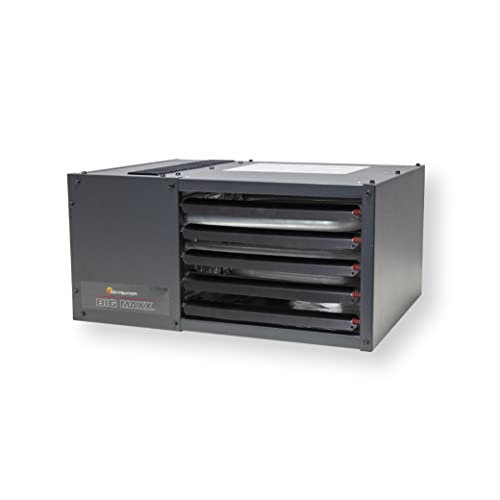
The 50,000 BTU unit heater is designed for natural gas and provides robust warm airflow for garages up to about 1250 square feet. It supports both vertical and horizontal venting, broadening installation flexibility. A key feature is easy outside access to the thermostat, A/C terminals, and gas connections, simplifying maintenance and service. Suitable for medium-to-large garages, it pairs well with standard insulated spaces and venting configurations.
TEMPWARE Electric Garage Heater, 7500-Watt
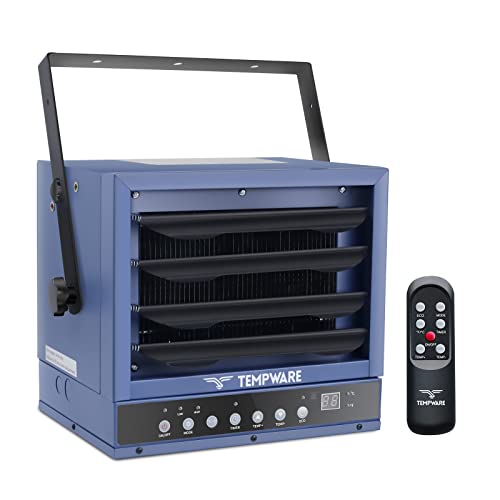
This ceiling-mount, 240-volt hardwired heater delivers up to 7,500 watts (roughly 25,590 BTU) and covers large spaces up to 1250 sq ft. It includes adjustable louvers and mounting angle to direct airflow, plus an ECO mode and programmable timer to optimize energy usage. The built-in thermostat maintains ambient temperatures between 45°F and 95°F, with an automatic shutoff if overheating is detected. Ideal for insulated garages and workshops with reliable ceiling clearance.
Mr. Heater F260560 Big Maxx MHU80NG
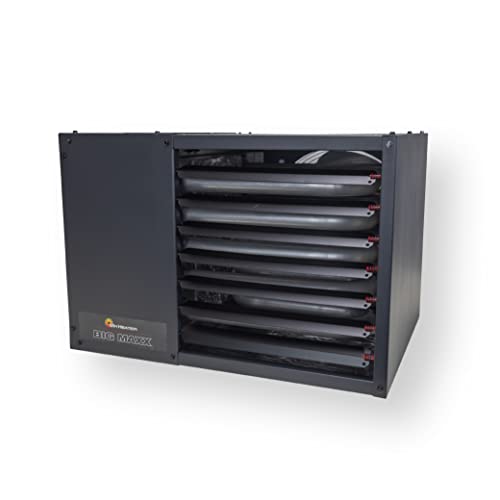
The larger Big Maxx model delivers 80,000 BTU for expansive coverage up to 2000 sq ft. It is designed for natural gas with vertical category 1 venting and horizontal category 3 venting. The package includes two angle brackets and a conversion kit for LP options, though thermostat, hose, and regulator are not included. This unit is suitable for larger garages or shop spaces requiring substantial heating capacity and durable outdoor-ready construction.
Comfort Zone CZ230ER Hard-Wired Ceiling Mount

Designed for ceiling mounting, this 7,500-watt (240V) heater emphasizes space efficiency and durable steel construction. It features overheat protection and a programmable digital thermostat with a 12-hour timer. The design targets industrial and workshop environments, delivering heat without occupying valuable floor space and ensuring steady airflow distribution via adjustable louvers.
GiveBest Electric Wall Heater With WiFi

This wall-mounted unit offers 1,500 watts of heat with a remote and WiFi control for convenient operation. It supports floor or wall mounting, giving flexibility for garages with varying layouts. The ECO mode helps conserve energy by maintaining the target temperature efficiently, while the compact form suits smaller to medium-sized spaces that require rapid heat on demand.
Buying Guide
- Heating capacity and space: Match BTU or watts to the garage size; larger spaces require higher outputs or multiple zones.
- Fuel type and venting: Gas heaters require venting and gas lines; electric units avoid ventilation but depend on electrical supply and circuit capacity.
- Installation considerations: Ceiling-mounted units save floor space but require sturdy mounting and electrical or gas line access; consider room layout, clearance, and insulation.
- Energy efficiency and controls: ECO modes, programmable thermostats, and timers reduce energy use and long-term costs.
- Safety features: Overheat protection, thermal cutouts, and proper venting are essential for safe garage heating.
- Maintenance and accessibility: External thermostat access and serviceability influence ease of upkeep and reliability.
- Cost of ownership: Initial price, installation complexity, and ongoing energy costs should be weighed against space requirements and usage patterns.