Choosing the right ventilation system for a basement can improve air quality, reduce humidity, and prevent musty odors. This article highlights five top options that combine effective airflow with smart or simple controls. Read on to compare features, installation considerations, and how each model can fit different basement sizes and climates.
Summary of Selected Products
| Product | Brand | Approx. Airflow (CFM) | Key Features |
|---|---|---|---|
| Weiworld Through the Wall Ventilation Fan | Weiworld | Not specified (multi-stage filtration, fan modes) | WiFi/Remote control, HEPA and activated carbon filtration |
| Tjernlund X2D Model Xchanger | Tjernlund | Two 90 CFM fans | Reversible air exchange, dehumidistat |
| AC Infinity AIRTITAN T8 | AC Infinity | Not specified (crawlspace/basement oriented) | WiFi app control, humidity/temperature management |
| VallisCo Fresh Air Whole House Ventilation | VallisCo | Up to 190 CFM | Remote control, 4-speed, quiet operation |
| Panasonic Intelli-Balance FV-10VEC2 ERV | Panasonic | 30-100 CFM (ERV) | Energy recovery, cold climate optimized, boost and timer |
Weiworld Through the Wall Ventilation Fan
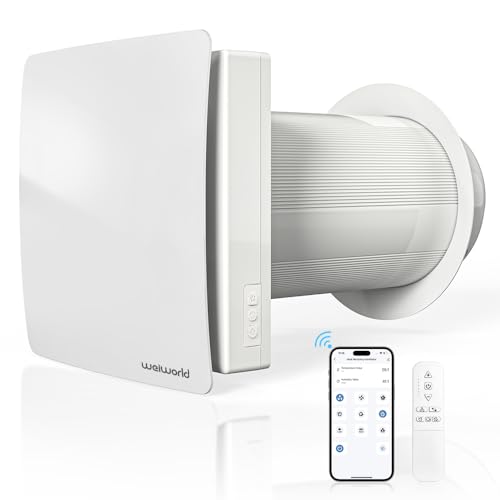
The Weiworld unit is designed to bring fresh air in while exhausting stale air, with a three-mode operation and integrated filtration. Its WiFi and remote control capabilities enable convenient adjustments to airflow, mode selection, and monitoring from a smartphone or handheld device. The filtration stack includes a G4 pre-filter, HEPA, and activated carbon filter, complemented by a pre-filter for dust capture. In basement applications, this model can help reduce odors and improve indoor air quality while maintaining comfortable temperatures.
Key considerations for this model include compatibility with smaller or standard through-the-wall openings, filter replacement intervals, and ensuring the Tuya Smart App supports the preferred ecosystem in your home. This option is well-suited for users seeking smart control without major remodeling, especially in basements that require fresh air intake and odor control.
Tjernlund X2D Model Xchanger Reversible Basement Fans

This system features reversible operation with two 90 CFM fans, designed to vent damp or musty spaces by toggling between exhaust and supply modes. The unit includes an adjustable dehumidistat and a plug-in power connection for straightforward setup. In basements prone to humidity and musty odors, the Xchanger helps balance indoor air by actively exchanging air between the interior and outdoors. The dual-fan design allows localized control for different zones or walls.
When considering the X2D, assess whether the basement layout supports the two-fan arrangement, and plan for proper duct routing and energy efficiency. Its reversible capability is a strong match for spaces needing flexible seasonal ventilation or dehumidification without a full ERV system.
AC Infinity AIRTITAN T8 Crawlspace Ventilator

AC Infinity’s AIRTITAN T8 is designed for ventilation and moisture control in crawl spaces and basements. It provides exhaust airflow to reduce humidity and odors and integrates dynamic programming for temperature, humidity, and vapor pressure deficit. Features include timers, cycles, scheduling, and a minimum speed setting to maintain baseline ventilation while keeping noise to a minimum. This model is particularly suitable for spaces where humidity swings are common and where automation helps maintain a stable indoor environment.
Users should consider power requirements, integration with any existing smart home setup, and whether the unit’s programming aligns with the preferred ventilation cadence for the basement. The T8’s emphasis on moisture management makes it a strong fit for areas with damp basements or crawlspaces that require consistent air movement.
VallisCo Fresh Air Whole House Ventilation System

VallisCo offers a quiet whole-house ventilation solution with remote control and four-speed settings. The unit delivers up to 190 CFM of air movement and is designed to improve overall indoor airflow, which benefits basements connected to common living spaces. The included remote control and timer functionality enable scheduling and adjustments without manual interaction. The system emphasizes quiet operation, making it suitable for basements adjacent to bedrooms or home offices where noise must be minimized.
Consider the size of the basement and the desired air change rate when selecting VallisCo. Larger spaces or open-floor designs may benefit from higher CFM settings, while smaller basements will prioritize lower speeds to preserve comfort and energy efficiency.
Panasonic Intelli-Balance 100 ERV

The Panasonic FV-10VEC2 Intelli-Balance ERV balances indoor air pressure by exhausting stale air and supplying fresh air with energy recovery. The cold climate model is designed to perform well in temperatures as low as -22°F (-30°C). It includes a MERV 8 filter and two EC motors with a Pick-A-Flow selector for adjustable supply and exhaust between 30 and 100 CFM. A Boost function increases speed when needed, and an adjustable Minutes Per Hour timer helps tailor runtime. This ERV is suitable for homes in colder regions seeking improved energy efficiency and controlled air exchange.
When evaluating ERVs, homeowners should consider climate, insulation levels, and whether the system will integrate with a dehumidification strategy. ERVs like Panasonic’s unit help maintain indoor air quality while conserving energy, particularly in basements that experience seasonal temperature fluctuations and humidity shifts.
Buying Guide: Key Purchase Considerations For Basement Ventilation
Choosing the right basement ventilation system involves balancing airflow, filtration, energy use, and ease of operation. Below are important factors and how they typically apply to the models above.
- Airflow and space size: Larger basements require higher CFM or multiple fans. Consider whether you need continuous ventilation, intermittent cycles, or both. ERVs and whole-house units tend to scale better for bigger spaces.
- Filtration: Multi-stage filtration (including HEPA and activated carbon) improves odor and dust control. If odors and fine particles are a concern, prioritize filtration performance alongside airflow.
- Moisture management: Basements are prone to humidity. Units with dehumidistats, humidity-sensing automation, or dedicated moisture control features help maintain comfortable humidity levels.
- Climate suitability: Cold climates may benefit from ERVs with cold-weather optimization or heat recovery, while humid regions may prioritize high airflow and dehumidification capabilities.
- Smart and remote control: WiFi-enabled devices offer convenience for monitoring and scheduling. Ensure compatibility with existing apps or ecosystems and assess whether a remote or wall control is sufficient.
- Installation and maintenance: Wall-mounted or crawlspace units usually require ducting or vent openings. Filter replacement frequency and ease of access are practical considerations for long-term use.
- Energy efficiency and noise: Look for low-noise operation and energy-efficient motor technology. Quieter models are preferable when located near living spaces or bedrooms.
- Security and safety: For basement installations, ensure electrical safety, proper sealing, and moisture resistance where applicable (IP ratings, waterproof enclosures).
In summary, the best basement ventilation solution depends on space size, climate, and how much automation you want. For smart, compact setups with robust filtration, the Weiworld unit offers integrated control and filtration. For flexible exchange between supply and exhaust, the Tjernlund X2D provides reversible operation. The AC Infinity AIRTITAN T8 emphasizes moisture management with programmable controls. For quiet, whole-house ventilation, VallisCo provides multiple speeds and remote control. Finally, the Panasonic Intelli-Balance ERV addresses energy recovery with cold-climate optimization. Evaluate these factors against your basement’s layout, occupancy, and seasonal humidity to select the most suitable system.