Choosing the right bathroom ventilation system involves balancing airflow, noise level, and installation ease. This guide highlights five top options that span compact powder rooms to larger baths, with features like humidity sensors, energy-efficient motors, and flexible mounting. Each product section provides key specs, installation notes, and what to consider when upgrading your bathroom exhaust system.
Summary table of selected products:
- Panasonic WhisperFit Retrofit Ceiling Mount FV-0511VF1 — 50/80/110 CFM, ultra-quiet, Easy installation
- Panasonic WhisperValue FV-0510VSC1 — 50/80/100 CFM, humidity sensor, ceiling or wall mount
- Fanspex Ceiling Exhaust Fan — 110 CFM, quiet operation, compact housing
- VIVOHOME AutoFlow Exhaust Fan — 30/110/160 CFM, humidity-responsive speeds
- Broan-NuTone 688E — 50 CFM, energy efficient, compact installation
Panasonic WhisperFit Retrofit Ceiling Mount Exhaust Fan

The Panasonic WhisperFit FV-0511VF1 is designed for retrofit installs with a slim profile and flexible airflow options. Its DC/ECM motor and SmartFlow technology deliver efficient, quiet performance while meeting Energy Star standards. The Pick-A-Flow feature lets you select 50, 80, or 110 CFM, making it adaptable to room size and usage. Installation is streamlined by the Flex-Z Fast Bracket, which positions the unit with a single hinge bracket. The compact 5-5/8″ housing depth fits 2 x 6 joists or larger, enabling substitution in many existing ceiling setups.
Considerations include compatibility with existing ductwork and space constraints. For bathrooms with tight ceilings, the low-profile design minimizes bulk without sacrificing performance. For homes seeking long-term energy savings, the ECM motor’s efficiency is a key benefit, along with the flexible airflow settings that avoid over-ventilating small rooms.
Panasonic WhisperValue Ceiling/Wall Mount, Humidity Sensor FV-0510VSC1
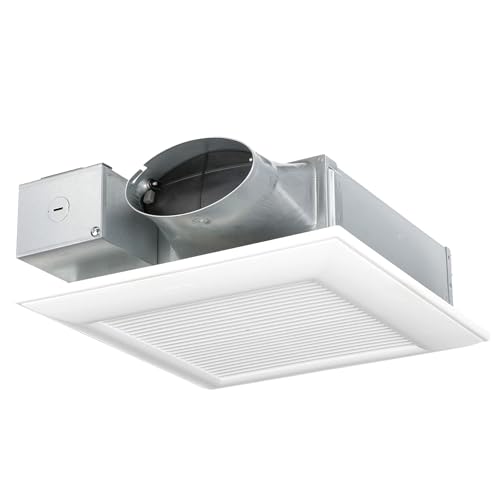
This model combines a DC/ECM motor with a humidity-sensing control to automatically increase ventilation as moisture levels rise. The DC motor supports energy efficiency while delivering selectable airflow at 50, 80, or 100 CFM. It is UL listed for ceiling or wall mounting and includes a distinctive L-shaped bracket design to ease installation and provide solid support. With energy efficiency in mind, the unit helps manage moisture in bathrooms and reduces the risk of mold and mildew over time.
When evaluating, note the installation orientation (ceiling vs. wall) and whether your ducting and framing can accommodate the unit’s size. The humidity sensor is particularly useful in busy family bathrooms or guest rooms where humidity fluctuates quickly after showers. This model is a solid choice for users prioritizing automatic humidity-responsive control without sacrificing performance.
Fanspex 110 CFM Ceiling Exhaust Fan

Fanspex offers a 110 CFM bathroom exhaust fan designed for mid- to large-sized bathrooms. The unit emphasizes quiet operation at 1.0 sones, ensuring that strong airflow does not disrupt daily activities. Its relatively compact housing (around 9.1″ x 9.1″) helps fit in standard ceiling cavities. This model is versatile for bathrooms, kitchens, living rooms, and other spaces requiring robust ventilation. The airflow capacity makes it suitable for rooms up to approximately 172 square feet, depending on duct length and static pressure.
Investors should assess housing size in relation to the available ceiling space and ensure the ductwork aligns with a 4″ or larger outlet. For bathrooms with high moisture generated by showers or baths, this unit provides a balance of strong CFM with low noise, supporting healthier moisture control and mold prevention in the home over time.
VIVOHOME AutoFlow Bathroom Exhaust Fan

The VIVOHOME AutoFlow exhaust fan features a high-efficiency EC motor and an automated airflow system that adjusts to humidity and duct conditions. With a wide range of speeds—30 CFM at low humidity up to 160 CFM at higher humidity—the unit provides stable ventilation while conserving energy. The three-speed configuration supports variable moisture control, and the built-in AutoFlow technology maintains consistent performance even when duct bends or dust buildup occurs.
Key considerations include the duct size, installation depth, and electrical wiring. The unit’s self-regulating airflow helps prevent over-ventilating or under-ventilating, making it attractive for bathrooms with inconsistent moisture levels. The energy-saving EC motor and durable design are suitable for long-term use in busy households or spaces that see frequent showers and humidity spikes.
Broan-NuTone 682 Duct-Free Ventilation Fan

The Broan-NuTone 682 is a duct-free option designed for spaces where ductwork is impractical. This compact unit is suitable for smaller baths and powder rooms, offering 50 CFM with a 2.0 Sones rating to balance effectiveness with quiet operation. Its design allows easy installation between ceiling joists or wall studs, and the included grille is designed for a clean, modern look. Duct-free models are convenient when retrofitting existing layouts without major duct runs.
When choosing a duct-free option, consider whether the space is truly suitable for duct-free ventilation and whether odor and moisture removal will be adequate for your needs. If you anticipate higher moisture levels or want faster moisture removal, a higher-CFM ducted model may be preferred. For compact bathrooms, this unit provides a straightforward and low-profile alternative with simple maintenance.
Buying Guide: Key Purchase Considerations
- Room size and airflow needs: Choose a unit with appropriate CFM for the bathroom size. Larger baths typically need 80–110 CFM, while smaller powder rooms may function well with 50 CFM.
- Noise level: Look for fan ratings in sones or decibels. Lower numbers indicate quieter operation, especially important for bathrooms connected to bedrooms or living spaces.
- Motor type and efficiency: DC/ECM motors offer energy efficiency and longer life than traditional AC motors. Energy Star certification can be a helpful benchmark.
- Humidity sensing and automatic control: Humidity sensors prevent mold and mildew by increasing airflow when moisture rises. This feature is valuable in busy households with frequent showers.
- Installation flexibility: Consider ceiling- vs. wall-mount options, duct size compatibility, and whether the unit fits in existing joist cavities. Brackets and quick-install features can simplify retrofits.
- Ducting and installation constraints: Always plan for duct length, bends, and whether you need a ducted or duct-free solution. Longer runs reduce effective CFM and require higher initial airflow capacity.
- Maintenance and build quality: Corrosion-resistant housings and washable grilles simplify long-term maintenance. Materials like galvanized steel and durable plastics extend service life.
- Smart considerations for homes: In multi-room homes, ensure consistent ventilation to prevent stale air in adjacent spaces. Units with automatic humidity control can adapt to seasonal humidity shifts without manual adjustments.
In summary, selecting the right bathroom ventilation system involves balancing airflow, noise, and installability. For retrofit projects where space is tight, the Panasonic WhisperFit offers adjustable CFM and a slim profile. If humidity-triggered control is important, the WhisperValue provides automatic response to moisture levels. For larger or more humid bathrooms, the Fanspex, VIVOHOME, and Broan options present strong alternatives with varying CFM ranges, installation approaches, and maintenance considerations. Each model has strengths depending on space, budget, and desired automation.