Finding a trustworthy wood stove that fits a compact living area or a backpacking setup can be challenging. The following selections are designed for small spaces, offering portability, efficient burning, and adaptable designs. This article highlights five suitable options, with practical features for cooking, heating, or both in tents, cabins, campers, or tiny homes.
| Product | Brand | Main Use | |
|---|---|---|---|
| Lineslife Wood Burning Camp Stove | Lineslife | Backpacking and camping cooking | Large-capacity chamber with 16 air vents for efficient burning |
| Hot Tent Stove | AVOFOREST | Tent heating and cooking | 7-section detachable chimney with glass observation window |
| Guide Gear Outdoor Wood Burning Stove | Guide Gear | Outdoor camping heating and cooking | Galvanized steel fire box with cast iron front door |
| LEMVUZ Wood Burning Stove | LEMVUZ | Tent camping and backpacking | 2-in-1 adapters for tent mode and camp cooking |
| REDCAMP Wood Burning Folding Camp Stove | REDCAMP | Portable camping stove for hiking or picnics | Stainless steel grid and stable cuboid design |
All five options emphasize compact design, rugged construction, and versatile use in tight spaces. The list balances traditional wood-burning efficiency with modern portability, ensuring options for tents, cabins, or small apartments where space is at a premium. Each choice supports sustainable heating and cooking without relying on electricity, making them suitable for off-grid living, emergency preparedness, and outdoor adventures.
Lineslife Wood Burning Camp Stove

The Lineslife stove is crafted from high-quality cast iron, ensuring durability and rust resistance for long-term outdoor use. Its 16 air vents support efficient burning, and the large-capacity chamber can sustain a fire for 40-60 minutes per fill. The design includes adjustable pot supports to accommodate various cookware, and rotatable, foldable legs to match different setups. This model suits backpackers who want a compact unit that still delivers substantial heat and cooking capability.
Hot Tent Stove by AVOFOREST

AVOFOREST’s wood-burning stove features seven detachable chimney sections for easy transport and adjustable height. A standout is the visual glass window made of high-temperature silicone fiber, allowing users to monitor the fire from inside the tent. The damper under the glass provides control over flame size, which can help conserve fuel. The stove body is constructed from sturdy iron, with stainless steel components for the chimney lift, making this unit versatile for cold-weather camping, ice fishing, or hunting camps where space and weight matter.
Guide Gear Outdoor Wood Burning Stove
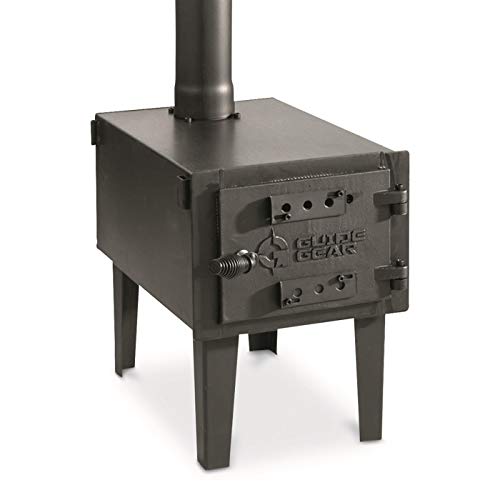
Guide Gear’s outdoor stove emphasizes durability and practicality for backyard or campsite use. It features a galvanized steel fire box with a heat-resistant finish and a front cast-iron door with ventilation holes. Its design is suitable for burning kindling and larger wood when capacity is not an issue, providing reliable warmth and cooking capabilities in open-air environments. The unit’s robust construction makes it a solid option for extended outdoor stays where space is available for a larger setup than ultra-compact models.
LEMVUZ Wood Burning Stove

LEMVUZ offers a versatile two-in-one setup with square and circular adapters, enabling a tent stove mode or a traditional camp stove configuration. This flexibility is ideal for one-to-two-person trips where weight and packability matter. The stove uses high-temperature microcrystalline glass for clear flame viewing and adjustable chimneys to fit different tent heights, enhancing control over heat and venting. Its semi-split structure assists in easier cleaning and improved stability in uneven terrain.
REDCAMP Wood Burning Folding Camp Stove
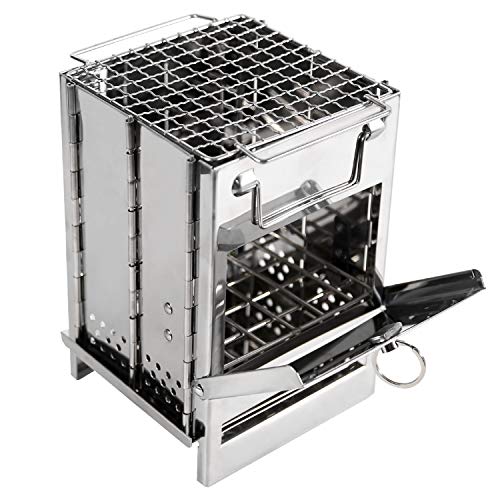
REDCAMP’s folding camp stove combines a stainless steel grid with a compact, cuboid footprint, delivering a stable cooking surface while remaining lightweight and easy to transport. It accommodates various fuels, including leaves and twigs, making it a practical option for wilderness trips where collecting wood is feasible. The folding design simplifies packing for hikers and campers who prioritize quick setup and teardown without sacrificing cooking and heating performance.
Buying Guide: Key Considerations For Small-Space Wood Stoves
- Size and weight: For small spaces, choose models with compact footprints and foldable or detachable components. Weigh the stove against its fuel efficiency and cooking capacity to ensure it fits your activities.
- Heat output and efficiency: Look for stoves with controllable air vents, adjustable chimneys, and insulated fire boxes. Higher efficiency reduces wood use and keeps the surrounding area cooler to the touch.
- Portability vs. durability: Backpacking stoves prioritize lightness, but durable cast iron or stainless steel constructions improve longevity in rugged environments. Balance weight with build quality based on anticipated use.
- Ventilation options: Detachable chimneys and damper mechanisms help manage burning rate and flame height. Glass windows allow fire monitoring from inside a tent, aiding safety and fuel management.
- Versatility: Some models double as cooking stoves, while others focus on heating. Consider whether you need a unit that accommodates different cookware, or one that excels at warmth per square foot.
- Fuel flexibility: If you want to use readily available materials, choose stoves that accept twigs, leaves, or charcoal, depending on your typical outdoor settings.
- Setup and maintenance: Quick assembly and straightforward cleanup save time in cold or damp environments. Non-stick or heat-resistant finishes reduce maintenance.
- Safety and warranty: Check for sturdy legs, secure doors, and reliable warranties. Ensure ventilation paths are clear to prevent smoke buildup in enclosed spaces.
The five options reviewed offer a spectrum of capabilities for small-space heating and cooking, from ultralight backpacking models to more robust tent stoves. Each product emphasizes portability, efficient burning, and flexibility to meet varied outdoor scenarios while keeping the user within compact spatial constraints.